Contacts

Bird Rock, St Kitts, St Kitts and Nevis, West Indies

info@lakehealthandwellbeing.com

+1 869 765 8702

Tag: women’s health

PanelDiscussionFlyerWeb
Fibroids

A Global Discussion on Fibroids

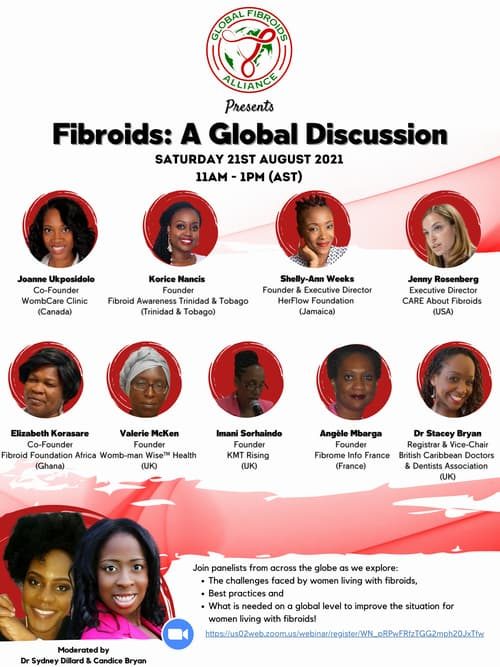
On 21st August 2021, the Global Fibroids Alliance hosted a virtual global panel discussion featuring speakers from Canada, Trinidad & Tobago, Jamaica, Ghana, France, the UK and the US

Panelists explored the challenges faced by women living with fibroids, how their organisations are trying to address these challenges and what is needed on a global level to improve the situation for women living with fibroids.

Panelists included:

  • Joanne Ukposidolo, Co-Founder and Co-Owner, WombCare Clinic (Canada)
  • Korice AQ Nancis, Founder, Fibroid Awareness Trinidad and Tobago
  • Shelly-Ann Weeks, Executive Director, HerFlow Foundation (Jamaica)
  • Jenny Rosenberg, Executive Director, CARE About Fibroids (USA)
  • Imani Sorhaindo, Founder, KMT Rising (UK)
  • Elizabeth Korasare, Co-Founder, Fibroid Foundation Africa
  • Valerie McKen, Founder, Womb-man Wise™ Health (UK)
  • Angèle Mbarga, Founder, Fibrome Info France (France)
  • Dr Stacey Bryan, Obstetrics and Gynaecology Registrar and Vice-Chair of the British Caribbean Doctors and Dentists Association (UK)

If you missed this event, you can watch the recording below.

Fibroids: A Global Discussion

Fibroids: A Global Discussion

Join panelists from across the globe as we explore the challenges faced by women living with fibroids, best practices and what is needed on a global level to improve the situation for women living with fibroids.

CoverImageSweetTalk (2)
Podcasts

Sweet Talk E3: SSBs and Women’s Health

It’s Fibroids Awareness Month and in this episode of Sweet Talk we discuss the links between SSBs and women’s health conditions like PMS, PCOS, fibroids, painful periods and other hormonal health issues with certified wellness coach, Davina Baptiste.

ZoomCoverPicture
Fibroids

Fibroids, Diet and Hormones Webinar

July is Fibroids Awareness Month and we’re delighted to be hosting a series of webinars especially for women in St Kitts and Nevis. These events are aimed at informing and empowering women affected by fibroids by providing practical and useful guidance to enable women to take control of their health and wellbeing.

Our series includes three webinars focusing on diet, hormones, exercise and emotional wellbeing.

On 17th July, we were delighted to host a webinar on fibroids, diet and hormones. Led by Davina Baptiste,  a Certified Wellness Coach, this webinar explored the role that hormones play in the development of fibroids and how by making simple changes to their diet, women with fibroids may be able to alleviate their symptoms and thus improve their health and wellbeing.

This was a very comprehensive and informative webinar and if you missed it, you can watch the recording below. 

Recording of GFA’s Fibroids and COVID-19 Webinar Now Available
FibroidsNews

Recording of GFA’s Fibroids and COVID-19 Webinar Now Available

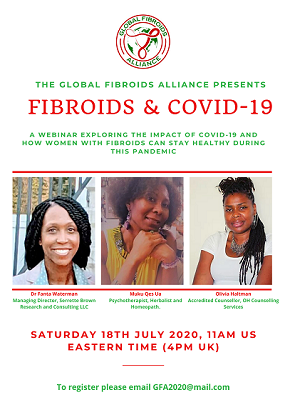
On Saturday 18th July 2020, we were delighted to have assisted with the Global Fibroids Alliance’s first event which was a webinar on Fibroids and COVID-19. This webinar aimed to explore the impact that the COVID-19 pandemic may be having on women with fibroids and discussed what women can do to improve their physical and mental health during this challenging period.

Speakers on the day included:

  • Dr Fanta Waterman, Managing Director, Serrette Brown Research and Consulting LLC who provided an overview of COVID-19, the latest information with regards to the pandemic, fibroids management during lockdowns and quarantine and re-opening considerations.
  • Muku Qes Ua, Psychotherapist, Herbalist and Homeopath who discussed natural and holistic approaches to managing fibroids
  • Olivia Haltman, Integrative Humanistic Counsellor, OH Counselling Services who discussed emotions, fibroids and the lockdown and highlighted the emotional impact of fibroids, how this intersects with the emotional impact of COVID-19 and strategies for coping and improving mental health.

If you missed the webinar, you can watch the recording below and if you have any questions, please don’t hesitate to send the Global Fibroids Alliance an email.

To keep informed of the work of GFA and to be alerted of future events, you can sign up to their newsletter here.

Fibroids, Soursop and Guava
BlogFibroids

Fibroids, Soursop and Guava

Over the past month, as we have been conducting our regular monitoring of the traffic to our website, we have noticed a lot of visitors are coming to our website to find out whether soursop or guava are beneficial for fibroids. So, today, we will visit published research to see if we can answer this question.

 How We’re Going to Approach This Question

The first thing to say about this topic is there isn’t a lot of evidence-based information out there. What we found were discussions by scientists about the possibilities, there wasn’t any concrete data that could definitively answer this question.

To explore whether guava and soursop may be beneficial in treating fibroids, we will focus on one scientific paper, which was the only one we could find that was related to this topic.

This paper was published by the Department of Experimental and Clinical Medicine at the Polytechnic University of Marche in Italy, in 2014.

Their paper, the ‘Use of dietary phytochemicals to target inflammation, fibrosis, proliferation, and angiogenesis in uterine tissues: Promising options for prevention and treatment of uterine fibroids?,’  is a review of a  selection of substances (phytochemicals) found naturally in certain fruits and vegetables which, because of their properties, could be useful in treating and preventing fibroids.

This paper is important in our exploration because some of the phytochemicals included in the researchers’ review are found in soursop and guava.

Some Background: What are Phytochemicals?

Before we summarise the relevant information provided in this paper, we thought it would be useful to define the term phytochemical. Harvard University describes phytochemicals as:

”…plant (phyto) chemicals: compounds in plants (fruits, vegetables, whole grains, nuts, seeds, and legumes) that contribute to their color, taste, and smell.”

Some commonly known phytochemicals are carotenoids, found in carrots, pumpkin, corn and tomatoes; flavonoids, found in citrus fruits, berries, apples and legumes and anthocyanins, which are found in berries, eggplant and red cabbage.

It is widely known that phytochemicals have a range of health benefits. These benefits include reducing our risk of heart disease, cancer and other chronic diseases and this is achieved because of their antioxidant and anti-inflammatory effects as well as a range of other effects.

What Does This Research Paper Tell Us?

The researchers who wrote this paper began their exploration by describing four possible factors that contribute to the development of fibroids. These are:

  • A chronically active inflammatory immune response
  • Fibrosis (a process that leads to the formation of scar tissue) which is a result of inflammation
  • Increased rate of cell growth in fibroid cells
  • The development of new blood vessels which feed fibroid cells

Researchers explained that if phytochemicals are able to address these four factors, they may be useful in preventing and treating fibroids.

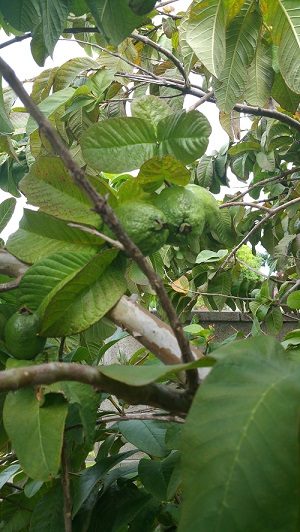
Like many fruits, guava and soursop are rich in phytochemicals.  Guava is known to contain the phytochemicals lycopene, quercetin, anthocyanin, and many others.  Whilst soursop contains reticuline, coreximine, quercetin, gallic acid and others.

In their paper, researchers discuss a range of phytochemicals including ones that are relevant to guava and soursop – lycopene and quercetin. They explain that at the time of the publication of their paper, lycopene and quercetin have not been tested in fibroids, but based on what scientists know about these two chemicals they may be beneficial in the prevention and treatment of fibroids.  This is because when we look back at the four possible ways that fibroids develop, these two phytochemicals can potentially target these processes. They have both been found to have the following effects:

  • An anti-inflammatory effect
  • Anti-fibrotic effect
  • Prevent the growth of different types of tumour cells (fibroids are benign tumours)
  • Prevent the development of blood vessels that feed tumour cells

Researchers couldn’t make any conclusions on these phytochemicals with regards to fibroids, but their discussion has identified these and other phytochemicals which could be beneficial in the prevention and treatment of fibroids. These include:

  • Allicin (found in garlic)
  • Ellagic acid (found in strawberries, raspberries, cranberries, blackberries, pecans, pomegranates, walnuts, wolfberry and grapes)
  • Indole-3-carbinol (found in cruciferous vegetables e.g. broccoli, cabbage, cauliflower, Brussel sprouts, bok choy, collard greens, kale etc.
  • Lycopene (found in tomato, watermelon, papaya, pink guava, pink grapefruit and apricots)
  • Quercetin (found in lemon, tomato, onion leaves, strawberries, soursop and tea)

They stated that based on the information they presented, there is a need to understand whether these phytochemicals are indeed beneficial for fibroids and this should be explored through future studies that carefully and accurately determine their mechanism of action and effectiveness in the treatment and prevention of fibroids.

What Does this Mean for Women With Fibroids?

This research study has raised the idea that the phytochemicals in soursop and guava may be beneficial in the treatment and prevention of fibroids. It doesn’t mean that eating soursop and guava will cure your fibroids, the reason for this, and this is discussed in the research paper, is that when you eat these fruits we don’t know if your body is absorbing enough of these phytochemicals to have a significant impact on the growth and development of fibroids.

What we can say is that if you have fibroids, if you haven’t already, we recommend that you adopt a healthy diet that is rich in fruits and vegetables, this can include soursop and guava, but should include cruciferous vegetables.  Studies have shown that making dietary changes can be helpful in improving some of the symptoms of fibroids as can introducing more exercise into your routine.

It is also recommended that women with fibroids avoid certain foods such as alcohol, caffeine, red meat and foods that may contain high levels of hormones like oestrogen.

If you have fibroids and would like to explore dietary changes and exercise as a way of managing your symptoms, please speak to your doctor first. She/he will be able to advise you on the best approach based on your specific situation as the success of these approaches will depend on the size of your fibroids and other factors.  You may also want to speak to a registered dietitian who along with your doctor will be able to provide some advice on the dietary changes that you can make.

Was this Helpful?

Were you one of the people looking for information on fibroids and guava and/or soursop? Was this article helpful? Let us know your thoughts by leaving a comment below. We would love to hear from you.

References

  1. Agu KC, Okolie PN. Proximate composition, phytochemical analysis, and in vitro antioxidant potentials of extracts of Annona muricata(Soursop). Food Sci Nutr. 2017;5(5):1029-1036. Published 2017 Jun 29. doi:10.1002/fsn3.498
  2. Chiari-Andréo, Bruna & Trovatti, Eliane & Marto, Joana & Almeida-Cincotto, Maria & Melero, Ana & Corrêa, Marcos & Chiavacci, Leila & Ribeiro, Helena & Garrigues, Teresa & Isaac, Vera. (2017). Guava: Phytochemical composition of a potential source of antioxidants for cosmetic and/or dermatological applications. Brazilian Journal of Pharmaceutical Sciences. 53. 10.1590/s2175-97902017000216141.
  3. Deepa PC., Kumaria IR., and Lavanya B. (2015) Phytochemical Analysis, Antioxidant and Anti Microbial Activity of White and Pink Psidium Guajava Linnaeus. International Journal of Current Pharmaceutical Research, 7(2), pp 29-31.
  4. Harvard Health Publishing., (2019). Fill up on phytochemicals [Online]. Harvard Medical School. [Viewed on 4th July 2020]. Available from: https://www.health.harvard.edu/staying-healthy/fill-up-on-phytochemicals
  5. Islam MS, Akhtar MM, Ciavattini A, et al. Use of dietary phytochemicals to target inflammation, fibrosis, proliferation, and angiogenesis in uterine tissues: promising options for prevention and treatment of uterine fibroids? Mol Nutr Food Res. 2014;58(8):1667-1684. doi:10.1002/mnfr.201400134
  6. Jacoby VL, Jacoby A, Learman LA, et al. Use of medical, surgical and complementary treatments among women with fibroids. Eur J Obstet Gynecol Reprod Biol. 2014;182:220-225. doi:10.1016/j.ejogrb.2014.09.004
  7. Leitzmann C. Characteristics and Health Benefits of Phytochemicals. Forsch Komplementmed. 2016;23(2):69-74. doi:10.1159/000444063
  8. Shen Y, Wu Y, Lu Q, Ren M. Vegetarian diet and reduced uterine fibroids risk: A case-control study in Nanjing, China. J Obstet Gynaecol Res. 2016;42(1):87-94. doi:10.1111/jog.12834

Our Second Fibroids Infographic
FibroidsNews

Our Second Fibroids Infographic

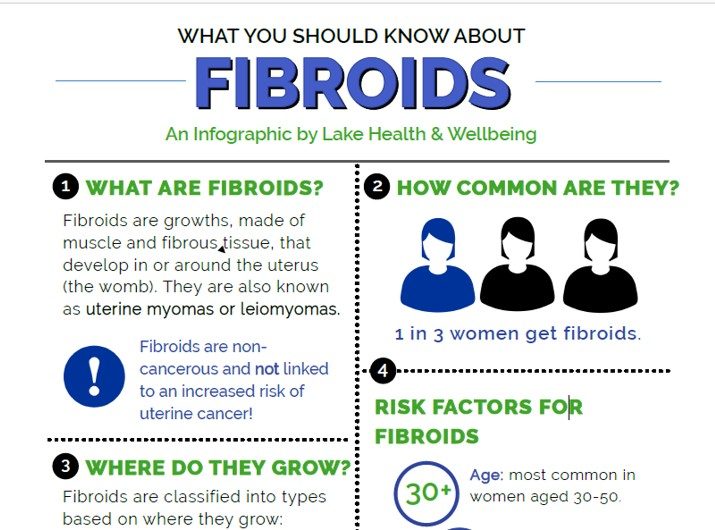
Following on from the publication of our ‘Fibroids and COVID-19’ infographic, we’re delighted to notify you of the publication of our latest fibroids infographic.  

This infographic, entitled ‘What You Need to Know About Fibroids’ covers what fibroids are, the different types of fibroids, risk factors, symptoms and tips for women living with fibroids.

The aim of this resource is to provide women with a simple overview of fibroids and to address the concern that women expressed to us about the lack of accurate reliable information on this important women’s health issue.

We had the pleasure of working with newly qualified doctor, Sofia Miah, to create this resource. Sofia carried out some desk-based research in order to prepare the content and designed the infographic.

Sofia’s experience of working on this short project highlighted some very important lessons for those working in the healthcare field, with Sofia stating that:

“As a newly qualified doctor with clinical experience in women’s health, I was shocked by the higher incidence of fibroids among African-Caribbean women and how little it is spoken about in medical education and the workplace. Black women are disproportionately affected by fibroids and more likely to have hysterectomies. This is worsened by the lack of high-quality, comprehensive and accessible information out there on fibroids for patients. As healthcare professionals, we need to be more open and vocal about the impact of fibroids on patients and their quality of life. We need to be better.”

We are very grateful to Sofia for working with us on this project and to the experienced gynaecologist who reviewed the infographic. You can download the infographic below and if you have any questions or comments about this resource, please don’t hesitate to get in touch with us by sending us an email

COVID-19 and Fibroids: Tips for Self-Care & Managing Stress
BlogCOVID-19FibroidsVolunteer Bloggers

COVID-19 and Fibroids: Tips for Self-Care & Managing Stress

Today’s blog post comes from Mariana Ndrio. Mariana is a second-year medical student at the University of Medicine & Health Sciences (UMHS) in St. Kitts and is currently serving as the President of the American Medical Student Association (AMSA) on campus.

Mariana has recently started volunteering with us as a research assistant and is supporting us as we conduct our fibroids qualitative study. She is also creating a fibroids and COVID-19 infographic which will be published shortly.  

Today, Mariana discusses the challenges that fibroids patients may be experiencing during this COVID-19 pandemic and shares some evidence-based self-care and stress management tips to help women with fibroids manage during this difficult period.


As the COVID-19 pandemic continues to prompt stressful changes to our daily routine and lifestyle, health-related worries regarding ourselves and loved ones have undoubtedly intensified. While the growing uncertainties stemming from financial difficulties and social isolation impact the health and personal decision-making of everyone across the globe, women suffering from uterine fibroids are facing unprecedented challenges in their attempts to preserve their mental and physical wellbeing.

Uterine fibroids are the most common benign tumours among women. While some cases of fibroids are accompanied by no side effects, other cases contain patterns of heavy menstrual bleeding, long and irregular periods, pelvic pressure and pain, constipation, frequent urination, and in rare occasions, infertility.

Treatment for fibroids can range from no treatment at all to surgery, depending on the severity of symptoms. Aside from apparent physical symptoms, the psychological impact of fibroids should not be disregarded. In a 2013 national survey of 968 women suffering from fibroids, 79% of the surveyed women expressed fear that their fibroids will grow or experience further health complications. According to a 2014 study assessing the emotional impact of fibroids half of the participating women reported feeling helpless and that they had no control over their fibroids, because of the difficulty managing and predicting the heavy menstrual flow.

Black women are 3 times more likely to become diagnosed with fibroids than white women, just as they are more likely to develop fibroids at a younger age; moreover, their fibroid size, frequency, and symptom severity are much greater.

As a medical student that remains generally impressed by the increasing amount of existing medical and scientific knowledge, researching gynaecological diseases such as fibroids have led me to a stark realization: that despite the high prevalence of uterine fibroids among women, not enough high-quality data is available to formulate evidence-based guidelines that address patients’ needs adequately. This points to a larger, unforgiving gap in medical knowledge pertaining to common diseases affecting women, and when combined with the gap in medical knowledge regarding COVID-19, a mixture of increased emotional stress and confusion is to follow. Such stress can hinder overall physical health and may exacerbate fibroid symptoms by influencing cycle length, vaginal bleeding patterns, and painful periods. If you are feeling uncertain or anxious, know that you are not alone; your worries and feelings are valid.

For that matter, we compiled some scientifically-backed tips that could be helpful in restoring a sense of control and ease in these difficult and unprecedented times.

First, don’t hesitate to reach out.

While staying home and self-isolating is the best way to stay protected from COVID-19 and prevent the spread of the virus, this should not halt or compromise access to necessary medical care for women suffering from fibroids.

If you need to see a healthcare provider for a gynaecological reason, reach out to your medical provider and try to see if they are able to set up a virtual appointment or address non-urgent concerns over the phone (such as prescription refills). 

While it is true that a lot of non-urgent appointments and elective surgeries are cancelled, many medical professionals and medical facilities are encouraged to use and have already embraced telehealth services which allow long-distance patient and clinician care via remote and virtual appointments, intervention, education, and monitoring. Telehealth services vary based on your location and medical provider. But even if you are having difficulties accessing gynaecological telehealth services locally, you might be able to reach out to service providers in other countries such as the U.K, U.S, or Canada. For example, USA Fibroid Centers provide virtual appointments you can schedule online. Women to Women OB GYN Care, located in Florida, states in their website that they welcome appointments from women internationally and the Caribbean. The Pan American Health Organization (PAHO) has also attempted to establish or expand telehealth services in a lot of Caribbean countries.

Keep up to date with your prescribed medications.

medications

Keeping up to date with your prescribed medications can be confusing during a pandemic. You might feel like your regular access to your medical provider or pharmacy is compromised, you might worry that your current medications might be making you vulnerable to the COVID-19 or you might be feeling uncertain regarding the continuation of your current prescribed medications or supplements.

Nonetheless, it is important that you continue taking your prescribed medications and/or supplements unless otherwise advised by your physician.  If you are receiving preoperative therapy (Zoladex, Lupron, etc.) but your surgery is cancelled, ask your physician regarding the course of your current prescribed therapy. If you have been prescribed a drug called Esmya (Ulipristal Acetate), you must consult with your physician regarding its discontinuation; as of 2020, Esmya’s license has been suspended due to the risk of serious liver injury. As mentioned previously, do not hesitate to discuss any concerns you might have regarding your current medications and supplements with your medical provider.

Plan ahead.

Studies show that women with fibroids might present heavier, prolonged bleeding and frequent, irregular periods. While everyone during a pandemic is worrying and trying to secure produce and disinfecting supplies, women suffering from fibroids have to also think about stocking up on female hygiene products. Especially, since frequent trips to the stores must be limited due to social distancing/quarantine rules.

Ensure that you have enough gynaecological hygiene products at home, to eliminate frequent trips to the store and avoid exposure to the virus. This by no means should be considered as the green light to go into a buying frenzy. Try to remain conscientious of the needs of others.

If buying hygiene products in bulk is not an option due to financial difficulty or store availability, reach out to local non-governmental organizations (NGOs) or philanthropic entities, that might be willing to donate hygiene products such as the Days for Girls International Organization or even by reaching out directly to product manufacturers. Local grassroots organizations or associations in your region might also be able to donate hygiene items. Moreover, the governmental departments of public health or genders affairs might be willing to assist women in need of hygiene products.

This pandemic could also be a good time to consider reusable, more economical and environmentally friendly menstruation products such as washable pads, menstruation caps, or absorbent underwear.  Check Days for Girls .org and learn how to make sanitary washable period pads during the COVD-19 pandemic, diligently following sanitary safety precautions.

Maintain healthy eating habits. 

Research has shown that following a healthy balanced diet, filled with fruits and vegetables, could lower the risk of developing fibroids and may help to alleviate symptoms.

While access to your usual healthy foods might be compromised at the moment, try to make healthy dietary choices while in quarantine. More specifically, dieticians recommend an increase in the consumption of cruciferous vegetables such as cabbage, broccoli, and kale. This category of food contains a phytochemical called indole-3-carbinol which recent research has suggested may prevent the cellular proliferation of fibroids and consequently prevent exacerbation of fibroid symptoms.

For many years, there has been a significant amount of scientific evidence that vitamin D may inhibit fibroid growth. Get your serum vitamin D levels tested and supplement (with medical supervision) as needed to correct a deficiency. A few recently published studies assessing the role of vitamin D against COVID-19, suggested that there is a possible link between the two and that vitamin D can have a protective effect against COVID-19.

Stay hydrated by consuming adequate amounts of water during the day and eliminate alcohol and caffeine. Researchers are advising women to avoid alcohol and caffeine because these substances are metabolized by the liver adding more stress on it and making it work less effectively at metabolizing oestrogen in the body.  Additionally, amidst the COVD-19 pandemic, the World Health Organization (WHO) urged the public to reduce alcohol consumption because alcohol compromises the body’s immune system and increases the risk of adverse health outcomes, making people more vulnerable to COVID-19. In other words, by cutting out alcoholic beverages, you are protecting yourself from adverse outcomes from both the COVID-19 and fibroids.

In addition, researchers believe that endocrine-disrupting chemicals (EDCs) which mimic oestrogen activity, may fuel fibroid growth. Examples include processed foods which contain various oestrogen-like preservatives; bisphenol A in water bottles, canned foods and plastic containers; various pesticides, herbicides, insecticides; and additive hormones and steroids used in meats and dairy products.

Try to choose organic, locally grown and in-season foods that are hormone and pesticide-free. Attentively wash any produce and peel fruits and vegetables. Reduce the use of plastics whenever possible and avoid reusing plastic water bottles or microwave food in plastic containers.

Stay active.

Research shows that a higher BMI – body mass index – is linked to the development of fibroids. By exercising you can reduce your BMI and prevent the fibroids’ growth. It may also help alleviate symptoms caused by fibroids. At the same time, exercise improves mental health by reducing anxiety, depression, and negative mood and by improving self-esteem.

Continue performing simple or recreational household chores and find an indoor workout routine such as yoga or aerobic exercises that you can perform at home while keeping up with the rules of quarantine. Choose what works best for you, based on your physical fitness and medical advice.

Be gentle to yourself—your body & your mind

On days that you are feeling pain and other fibroid symptoms, rest up and give your body time to heal. Try to soothe cramps by applying heat and wear comfortable clothes.

It’s okay to spend a whole day in bed recovering. Be gentle with yourself and do not undermine what your body is trying to tell you.

We live in a society where time and productivity are precious and synonyms for money and self-worth. Yet, nothing is more precious than your physical and emotional well-being. Do not feel guilty for taking some time to rest and recover.

Although self-care looks different for everyone and should be based on your personal needs and situation, there are a few suggestions that could work for you and help you boost your mental well-being:

  • Try to meditate and practice mindfulness. You can find a lot of free guided meditations online or on YouTube.
  • Monitor your thoughts and feelings in a journal.
  • Practice good sleep hygiene. Maintain a sufficient sleep schedule, stay away from electronic devices while in bed, and start a regular bedtime routine—such as drinking a soothing tea, taking a warm bath or shower, reading, etc.
  • Limit the amount of media you ingest daily.
  • If you live alone reach out to family and friends via phone or video. If you live with family, roommates, or a partner use this time to connect and nurture your relationships.

And remember, during these confusing and unprecedented times and while you are feeling that this pandemic is affecting you, in particular, a bit harder than the rest, there is always a community of women who are feeling exactly like you—you are not alone.


Sources

  1. Mayo Clinic website: “Uterine Fibroids.” – http://www.mayoclinic.com/health/uterine-fibroids/DS00078.
  2. Seminars in reproductive medicine: “Uterine Fibroids: Burden and Unmet Medical Need.” – https://www.ncbi.nlm.nih.gov/pmc/articles/PMC6193285/
  3. CARE About Fibroids: “Uterine Fibroids: The Emotional, Physical, and Economic Toll.” – http://www.careaboutfibroids.org/toll-of-fibroids.html
  4. The BMJ, British Medical Journal Publishing Group:  “Uterine Fibroid Drug Is Recalled after Case of Liver Failure Requiring Transplant Prompts EU Review.” www.bmj.com/content/368/bmj.m1112.
  5. American Journal of Clinical Nutrition: “Dietary glycemic index and load in relation to risk of uterine leiomyomata in the Black Women’s Health Study.” – https://www.ncbi.nlm.nih.gov/pmc/articles/PMC2854903/
  6. Journal of Obstetrics and Gynaecology: “Vegetarian diet and reduced uterine fibroids risk: A case-control study in Nanjing, China.” https://www.ncbi.nlm.nih.gov/pubmed/26458740
  7. Reproductive Biomedicine Online Journal: “Quercetin and indole-3-carbinol inhibit extracellular matrix expression in human primary uterine leiomyoma cells” – https://www.sciencedirect.com/science/article/abs/pii/S1472648320300249
  8. Fertility and Sterility Journal:  “Endocrine-disrupting chemicals and uterine fibroids.”- https://www.ncbi.nlm.nih.gov/pmc/articles/PMC5051569/
  9. Healthline Magazine: “How Alcohol Can Affect your Immune System.”- https://www.healthline.com/health-news/can-alcohol-hurt-your-immune-system-during-covid-19-outbreak
  10. The Elusive Magical Solution: The Relationship between Vitamin D and Fibroids- https://scholars.direct/Articles/gynecology-and-obstetrics/ago-3-008.php?jid=gynecology-and-obstetrics
  11. The role of Vitamin D in the prevention of Coronavirus Disease 2019 infection and mortality- (https://www.researchsquare.com/article/rs-21211/v1)
  12. American Journal of Epidemiology: “Association of Physical Activity with Development of Uterine Leiomyoma.”                – https://academic.oup.com/aje/article/165/2/157/97971
  13. Mayo Clinic: “ COVID-19 and Your Mental Health”- https://www.mayoclinic.org/diseases-conditions/coronavirus/in-depth/mental-health-covid-19/art-20482731
  14. Lake Health and Wellbeing: “Fibroids and your Mental Health.”- https://lakehealthandwellbeing.com/newsite/wp-content/uploads/2019/05/FibroidsANDEmotionalWellbeingVersion2.pdf
OH Services Is Hosting Another Online Emotional Impact of Fibroids Course
FibroidsNews

OH Services Is Hosting Another Online Emotional Impact of Fibroids Course

We’re delighted to inform you that OH Services will be hosting another four-week course on the emotional impact of fibroids which starts on Wednesday 4th March 2020.

This course is aimed at women who have been affected by fibroids, professionals who would like to support and understand their clients better and family members and friends who would like to learn more about fibroids so they can help their loved ones.

The course will be led by Olivia Haltman who is an accredited Integrative Humanistic Counsellor and an Eye Movement Desensitization Reprocessing (EMDR) Therapist.  She is also a member of the British Association for Counselling and Psychotherapy (BACP), EMDR UK & Ireland and BAATN (Black and Asian Therapist Network). Ms Haltman has over 10 years experience working in the mental health sector having worked for organisations like Mind and established her organisation to support people who want to develop their lives on a personal level and reach their best potential.

The Aim of the Course

This course will empower attendees, enabling them to

  • Get an understanding of how fibroids affect your emotions and life
  • Create a stepping stone to start a routine to work on their self-care
  • Create their own self-care plan
  • Learn how to support and understand others with fibroids
  • Start a self-development journey to improve their general wellbeing

It will be interactive and include: a lecture, break out exercises, Q & A, guest speakers, homework, hand-outs and a Certificate of Attendance upon attending the full 4 weeks.

We’ve Teamed Up With OH Services

We’re delighted to have formed a partnership with OH Services. Those who register for the OH Services course will be able to claim a 20% discount on any of our services and products

More Information

For more information, you can visit OH Services’ Eventbrite page, visit their website or email us

Fibroids Lecture in Dominica
FibroidsNews

Fibroids Lecture in Dominica

On Tuesday 19th November, KMT Rising will be organising a public lecture on fibroids in Dominica. This lecture will focus on holistic approaches to tackling fibroids.

Attendees will be taken on a personal journey to womb-wellness, exploring some of the factors which contribute to the production and accelerated growth of fibroids amongst women, and the range of holistic strategies which can be adopted for more informed choices around health and womb-wellness.

Imani Sorhaindo, a qualified Holistic health practitioner, teacher and lecturer invites the audience to look at this growing global epidemic, and the need to raise more awareness amongst women, their families and health practitioners towards the elimination of this types of disease.

The event takes place at the UWI Open Campus in Roseau, Dominica from 7 pm to 8:45 pm. You can register for this event by visiting KMT Rising’s website.

About KMT Rising 

KMT Rising is a UK-based organisation that is dedicated to the optimum health and wellness of all women around the globe; ensuring that their personal, emotional and health-related needs are catered for through a range of bespoke holistic packages. They also provide very unique Fibroid products on sale internationally:

  • Fibroid Assessment Check List
  • So you have Fibroids – Next steps guide
  • Get yourself checked for Fibroids guide

Website: https://www.kmtrising.com/

Email address: kmtrisingltd@gmail.com