Contacts

Bird Rock, St Kitts, St Kitts and Nevis, West Indies

info@lakehealthandwellbeing.com

+1 869 765 8702

Tag: physical activity

Elevate 2017
BlogPhysical Activity

Elevate 2017

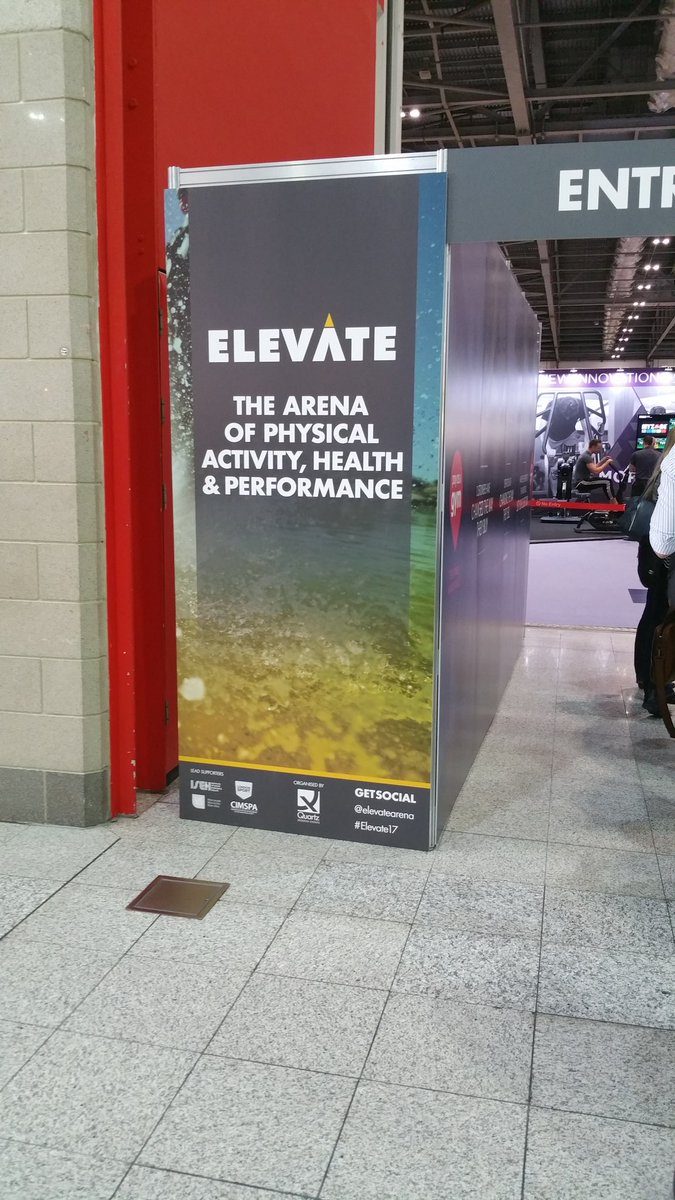
On Wednesday 10th May, we attended the second annual Elevate conference, an event that aimed to tackle the issue of inactivity in the UK and provide a forum for cross-sector debate on physical activity, health and wellbeing.

This conference included seminars, a tech lab, a stage area showcasing interesting projects and products, and there was also an exhibition area.

The seminar programme was divided into four streams: Physical Activity for Health and Wellbeing; Inclusivity – Creating an Active Nation;  Future Performance; and The Business of Physical Activity.

Inclusivity

We attended the sessions in the inclusivity stream which started with a keynote debate ‘Tackling Inactivity: What are the priorities?  On the panel of this debate was: Steve Gray, the Chief Executive of Nuffield Health, Steven Ward, Executive Director of UK Active, Professor Robert Copeland, from Sheffield Hallam University and Paul Tuohy, Chief Executive of Cycling UK.

This was a very interesting discussion with the panellists giving their view on where we need to focus our attention if we are to ensure that exercise is more inclusive.

Steve Gray from Nuffield Health  provided some good background stating that  1 in 3 people in the UK are inactive, 1 out of every  10 deaths  in the UK is linked to an inactive lifestyle and inactivity costs the NHS £1Billion. He also explained that we have more people living in urban areas and most people are very much dependent on technology which has led to a more sedentary lifestyle.

He explained that there is no single solution to address this issue but felt that firstly everyone needs to take accountability and that includes the government, businesses and individuals. He also explored the fact that exercise needs to be more accessible practically (made more affordable, easy to fit into a person’s day) and emotionally (everyone needs to feel that they can do it). Finally he also discussed the fact that we need to look at new approaches that are bespoke, suit the individual and are holistic, so they go beyond just the physical.

It was also interesting to hear from Steve Ward from UK Active who explained that their work focuses on communicating the message that it doesn’t matter how long you move for just as long as you move. This is a simple message that makes exercise less daunting.

One of their main priorities is getting more children and young people active as we currently have the most inactive children compared to  previous  generations.

One area they are working on is making sure that children keep active during the summer holidays. He explained that during term time children tend to be very active but once they go on holiday all physical activity ceases.

Another focus area for them is targeting workplaces and ensuring that businesses have a health and wellbeing offer for their staff.

Paul Tuohy also provided some useful insight explaining that 90% of people in the UK own a bike but only 2% of people commute to work or school regularly. The challenge is how to get people from good intentions to action. He also explained that exercise needs to be made simple and people need to get away from the artificial idea that to be fit they need to be a member of the gym. With regards to cycling, he felt that there was a need to normalise cycling rather than feeding the idea that it is an elite sport. People need to see cycling as fun and something they can do everyday.

Engaging with the  least active

We also really found the seminar session on addressing the least active very interesting. This focused on projects that have explored the motivations, attitudes and lifestyles of the most inactive people.

We first heard from Barry Horn from the English Federation of Disability Sport. He spoke about their project Get Out Get Active which is a sport and active recreation project for people with a disability. He explained the need for the project – people with a disability are the single most inactive people in the nation. He stated that their project looked at reaching inactive groups through outreach, engagement and effective marketing and a major priority for them was ensuring sustainability – making disabled people active for life.

As part of their project they explored what disabled people wanted from an exercise program and 64% wanted to take part in physical activity and sport with non-disabled people, they didn’t want to be excluded.

They have also developed some key principles for getting people active – drive awareness, engage the audience and offer support and reassurance.

In this session we also heard from Age UK about how they are getting the elderly more active and the Women’s Sport Trust on the work they’re doing with girls and women.  We were particularly interested in the presentation by Anun King from Sporting Equals about exercise and ethnicity.  He showed data that looked a physical activity and participation in different ethnic groups and this suggested that black and Asian women were the least active.  He explained that some of the barriers to participation were cultural, attitudes to exercise,  socio-economic and organisational.  To address this Sporting Equals have implemented a number of project including a faith centre model. This focused on people from an Asian background. Anun explained there were a number of benefits of working with faith based organisations, these include their large footfall and they have indoor and outdoor facilities. He discussed other projects which included their cultural events model, community sport zones and ethnic minority media work.

Great day out

This was a really busy day that we thoroughly enjoyed it. We attended so many presentations but just wanted to highlight a few interesting ones in this blog. Other projects that you may find interesting that we learnt about at Elevate were:

You can find out more about Elevate on their website and look out for the next event in May 2018.

AfroFit at the Eve and Grace Wellness Centre
BlogPhysical Activity

AfroFit at the Eve and Grace Wellness Centre

It can be really hard fitting in the recommended amount of physical activity (150 minutes a week) into our day-to-day routine and even when we do manage to find the time, let’s be honest, exercise can be really dull!

Many times we start exercising with great intentions, but alas we lose motivation within a few weeks as it’s just not fun. For any kind of exercise plan to be effective, we have to commit to it, be persistent and push through the pain, but this can only be achieved if we’re enjoying the activity we’re taking part in. An exercise routine that’s fun has a better chance of long-term success, particularly if it is group exercise. Fun and a sense of camaraderie gets you through the pain, cold mornings and rainy days that may stop you from achieving your physical activity goals.

If you want to get fit and active this year, the key is to find something that you love doing. Now, we all  like a good party, so if you can combine exercise with a party feel, then you’ll definitely commit to that, right?

So, today we decided to test out a class on your behalf (AfroFit) and we are so sure you’re going to love it. AfroFit is a new class at the Eve and Grace Wellness Centre in Battersea.

The class was led by the very elegant and friendly Rebecca Adebiyi from Afrofit and Afrotales, a new organisation that has two elements to it: African-inspired cardio workouts for adults and children and African-inspired story and drama sessions for children aged 2 to 6.

Today was the launch of the class and we started with getting ourselves familiar with Afro Beat music and moves. For 60 minutes we worked our way through a dance routine that worked every part of our body. We got our hips moving,  arms waving, legs tapping, necks popping and bodies waving,  and we were smiling for the entire 60 minutes (it was fuuun!!). There was also a freestyle session where we got to show off our favourite moves, in our own unique style.

Rebecca was a great, patient teacher and by the end of the session we were looking like professional dancers :-),  but importantly we got a good full-body workout. It was wonderful to attend a class that uses African culture to get us active in a fun way that we could truly relate to.

If you’re looking to get more active this year, then we highly recommend this class. AfoFit takes place every Saturday at 1:30pm.

You can find out more about this class on the Eve and Grace Wellness Centre’s website. Whilst on their website you can check out all the other great classes at the centre.  We’re sure you’ll find a number of classes that you’ll like. Next we’ll be trying out the Mash It Up Dancercise class, an authentic Jamaican dancehall and fitness class.

Taking a Short Walk After Eating May Be Good for Type 2 Diabetics
DiabetesNewsNon-communicable diseases

Taking a Short Walk After Eating May Be Good for Type 2 Diabetics

This week researchers from the University of Otago in New Zealand published the results from their study which showed that taking a short walk after a meal may be effective in controlling the blood glucose levels of type 2 diabetics.

The researchers conducted this study to expand on the current advice that regular physical activity is effective in diabetes management. They wanted to determine whether the timing of  physical activity in relation to meals enhances the benefit of physical activity.

How did the researchers explore this?

To explore this, researchers conducted a study with 41 adults with type 2 diabetes. Participants either took part in 30 minutes of physical activity every day or were advised to walk for 10 minutes after their main meal. Both of these scenarios met the t physical activity guidelines for people with type 2 diabetes.   The blood glucose level of participants was then  measured 3 hours after each main meal.

What did they find?

The researchers found that  blood glucose levels were 12% lower when participants had walked after their meals compared to if they had just carried out physical activity once a day.  They also determined that the improvement was enhanced after the evening meal (22%), as this is the meal where the most carbohydrate is eaten and when people are more inactive.

What were their conclusions?

The study concluded that

“The benefits relating to physical activity following meals suggests that current guidelines should be amended to specify post-meal activity, particularly when meals contain  a substantial amount of carbohydrate.”

The importance of this research

The black community is three times more likely to develop type 2 diabetes than their white counterparts and the African and Caribbean diet tends to be quite rich in carbohydrate so this research is helpful for black type 2 diabetics in understanding how they can manage their condition.

As well as following your doctor’s advice on the type of diet you should be consuming, as a type 2 diabetic, make sure you are engaging in enough physical activity and from the results of this research, taking a short walk after your main meal appears to be of benefit.

Reference

Reynolds, A.N., Mann, J.I., Williams, S. et al. Diabetologia (2016). doi:10.1007/s00125-016-4085-2

Getting Every Adult Active Every Day
NewsPhysical Activity

Getting Every Adult Active Every Day

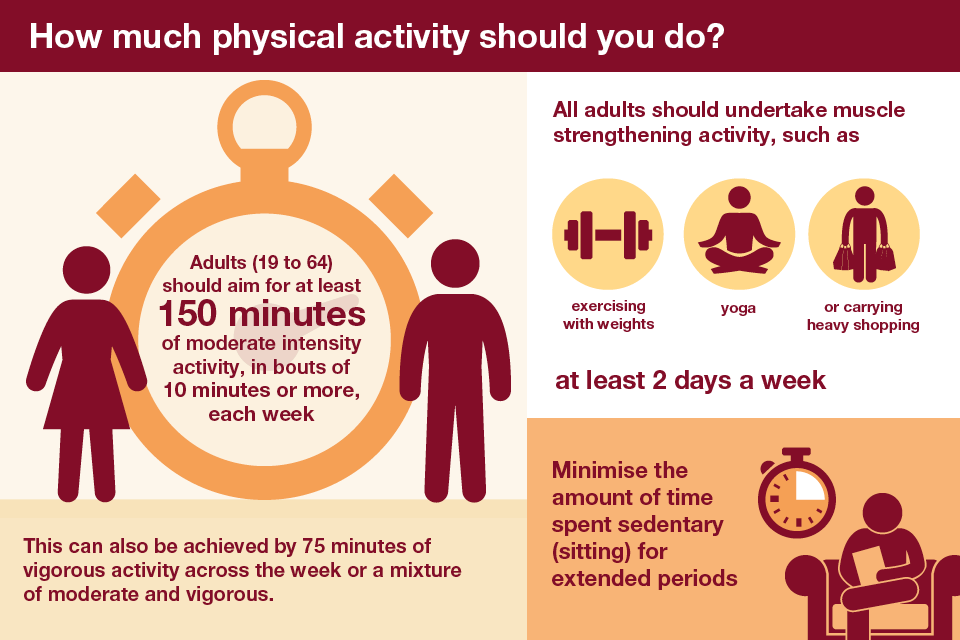
Yesterday, Public Health England published its guidance on how to get adults more active. In their report they state the benefit of physical activity –  it improves the physical and mental wellbeing of individuals. Then they explain how much activity adults should take part in. They recommend that adults should aim for at least 150 minutes of moderate-intensity physical activity each week, in bouts of 10 minutes or more.

They describe moderate-intensity activities as anything that causes you to get warmer and breathe harder and gets your heart rate up,  such as cycling or a brisk walk.

It is also recommended that adults aim to be active daily. Additionally, adults should include a muscle-strengthening activity on at least two days of the week to prevent loss of muscle mass.

6.2368_PHE_CP_Health_Matters_-_physical_activity_in_adults_online_960x640__5

Finally, their guidance stresses the importance of minimising the amount of time spent sitting for extended periods of time. This increases the risk of a number of health conditions.

They suggest the following to reduce the amount of time sitting:

  • Reducing the time spent watching TV, using a computer or playing video games
  • Reducing the amount of time sitting during work
  • Walking part of the way on a long bus or car journey

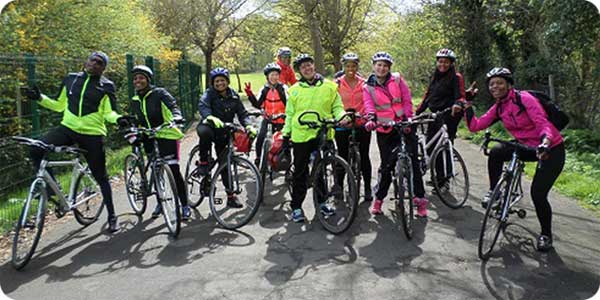
Research has shown that many of the UK’s minority ethnic groups have lower rates of physical activity participation and do not achieve the recommended levels of physical activity. Therefore it’s very important that the black community takes notice and becomes more active. The Lake Foundation through its cycling club is aiming to get our community more active. Please do join us for a fun way to get some exercise. For more information email events@thelakefoundation.com

Volunteers Needed For Research into Physical Activity and Cancer
CancerNewsPhysical Activity

Volunteers Needed For Research into Physical Activity and Cancer

Macmillan Cancer Support has commissioned TNS BMRB, an independent research company, to explore the barriers and motivations for physical activity for those living with and beyond cancer. This research will help inform the development of interventions to help those living with and beyond cancer engage with the benefits of physical activity. TNS BMRB is an independent research agency which conducts work for a range of government departments and charities.

In April, TNS BMRB will be conducting one hour face-to-face home interviews with people living with and beyond cancer. This can be at a date and time most convenient for the individual.  TNS BMRB will be conducting additional research online later in May, which will be conducted through a smartphone app and online. This may be more appropriate for those who do not wish to have a face to face interview, or prefer to participate remotely.

In the interview participants will be asked about their attitudes towards physical activity, after treatment and at other times.  Participation in interviews is flexible – we can pause or stop the interview at any time for any reason. Taking part in this research is  completely confidential and anonymous, and the information provided will be used for research purposes only. We offer all participants a £40 gift as a thank you for their time.

We wish to include a broad spectrum of people living with and beyond cancer as part of the research – so we are interested in speaking to everyone. However, we are also aiming to reach some particular groups:

  • People aged 14-20
  • Aged 75 and over
  • People currently receiving treatment
  • People post-treatment, who have a non-curable cancer, or an advanced cancer and are in palliative care
  • Those who do not have very active lifestyles

If you are interested in taking part or would like more information please contact Rebecca Paton (Rebecca.paton@tns-bmrb.co.uk, +44 7831 702513)

UK Active’s Moving More, Living More Event
NewsPhysical Activity

UK Active’s Moving More, Living More Event

Between the 2nd and 13th of March 2015, UK Active, Public Health England (PHE), the County Sports Partnership Network (CSP Network) and the Local Government Association (LGA) will deliver the second round of the Moving More Living More Physical Activity Fora.

Physical inactivity is the fourth largest cause of disease and disability in the UK and action is required by a collaboration of partners at a national and local level in order to address the problem and create a more active nation.

The Moving More, Living More regional physical activity fora were established to provide national insight into what can be done to tackle physical inactivity from a national level, as well as fostering conversations and producing partnerships at a local level to make an impact on local outcomes.

The second round of Moving More, Living More regional fora will present the most recent developments in the national movement for a more active England  and develop tangible actions that will make a difference at a local level.

The events will move the local agenda for physical activity forward and drive down into the details of how we can begin to tackle inactivity and create happier, healthier societies.

They will explore the evidence behind physical activity interventions from across the country – as well as giving a more localised focus to individual initiatives – and begin to assess the next steps for how local partners can work together collaboratively to combat physical inactivity.

Events news you:

Taunton: Monday 2nd March
Somerset County Cricket Club,
The County Ground,
Taunton,
Somerset,
TA1 1JT
South East Region: Wednesday 4th March
Etc venues (The Hatton),
51-53 Hatton Garden,
London,
EC1N 8HN
London: Friday 6th March
The Grange St Pauls,
10 Godliman Street,
London,
EC4V 5AJ
Blackpool: Wednesday 11th March
Winter Gardens
97 Church Street,
Blackpool,
Lancashire,
FY1 1HL
Birmingham: Friday 13th March
The Studio,
7 Cannon Street,
Birmingham,
B2 5EP
For more information and to book a place please visit  UK Active’s website. The Lake Foundation will be attending and we hope to see you there!

AfroFit Pilot Comes to an End
AfroFit PilotBlogPhysical Activity

AfroFit Pilot Comes to an End

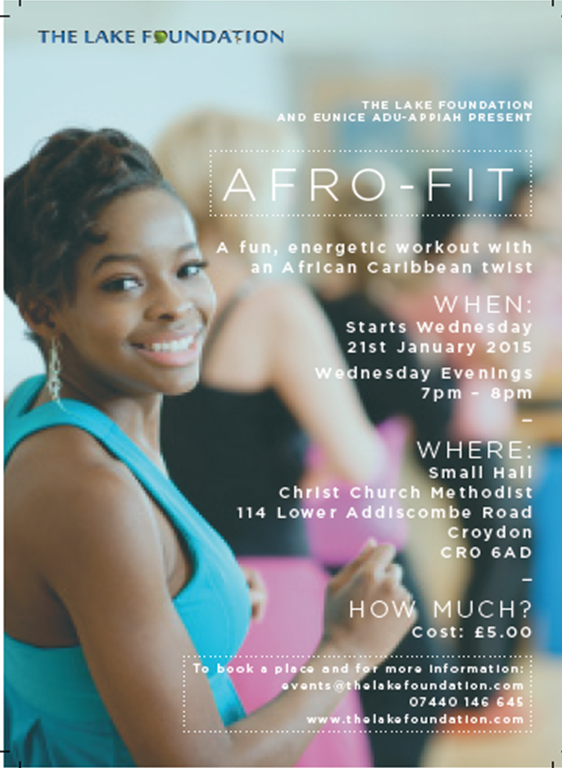
Wednesday was our last session of AfroFit for the season. We had a great six sessions and now it’s off to evaluate it and see how we can make it bigger and better for, hopefully, the summer season.

Wednesday’s session was great fun and our instructor Eunice focused mainly on muscle toning. After  our warm-up Eunice brought out some resistance bands which we made use of for a series of strength training exercises. Resistance bands are not something that I have used before when exercising and it was a great addition to the workout. This very simple piece of equipment was very versatile and allowed us to perform a variety of exercises that worked our entire body. They are in effect a simple and cheap way to strength train without going to the gym or using weights

Our series of exercises included band squats, band lunges, leg lifts, biceps curls and much much more. This was a painful yet effective workout.

After the core part of the workout we cooled down and then went on to my favourite part, relaxation. Lovely!

We’ll be back with AfroFit later in the year and would like to say a big thank you to everyone who attended and a very big thank you to Eunice Adu-Appiah for leading a great set of sessions.

See you next time!