Contacts

Bird Rock, St Kitts, St Kitts and Nevis, West Indies

info@lakehealthandwellbeing.com

+1 869 765 8702

Tag: physical activity

Caribbean Wellness Week in St Kitts: Health Checks and Soca-cise
BlogPhysical Activity

Caribbean Wellness Week in St Kitts: Health Checks and Soca-cise

Last week was Caribbean Wellness Week and on Friday we celebrated the last day of this week with the grand finale  at the Marriott in Frigate Bay.

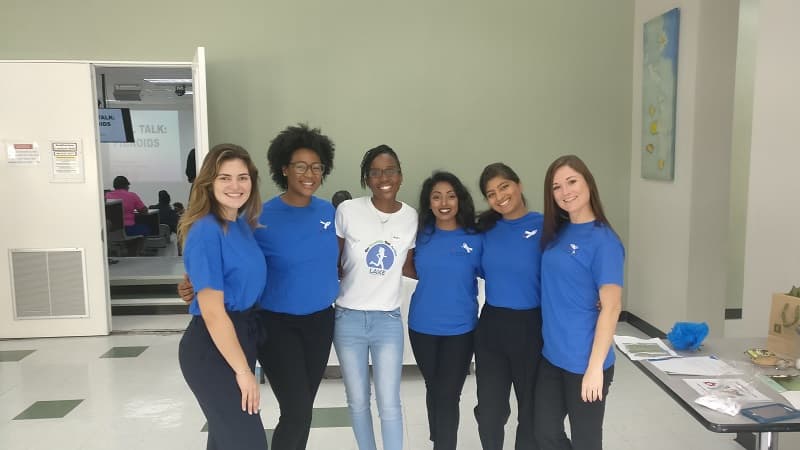
This event was organised by the Ministry of Health in collaboration with the Marriott Resort and we were delighted to have been invited to have an information table.

The event started with free health checks at 2:30pm where members of public and Marriott staff were able to get their blood pressure, blood glucose, BMI and cholesterol levels measured as well as have an HIV test conducted. Also, attendees had the opportunity to visit information tables, one of which we hosted.

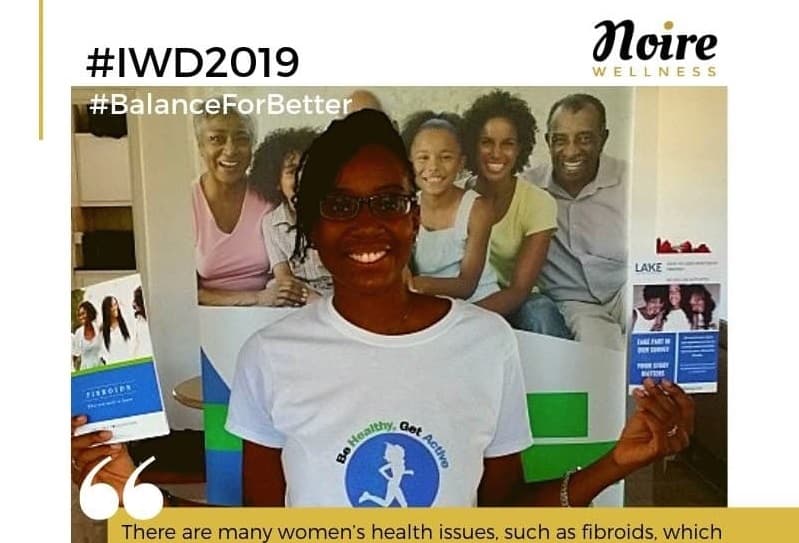
We were delighted to welcome people to our information table to introduce the public to our work and raise awareness of our upcoming Living Well With Chronic Disease Course, let women know about our fibroids survey and promote the Healthy Caribbean Coalition’s childhood obesity prevention campaign and call-to-action

[metaslider id=”4928″]

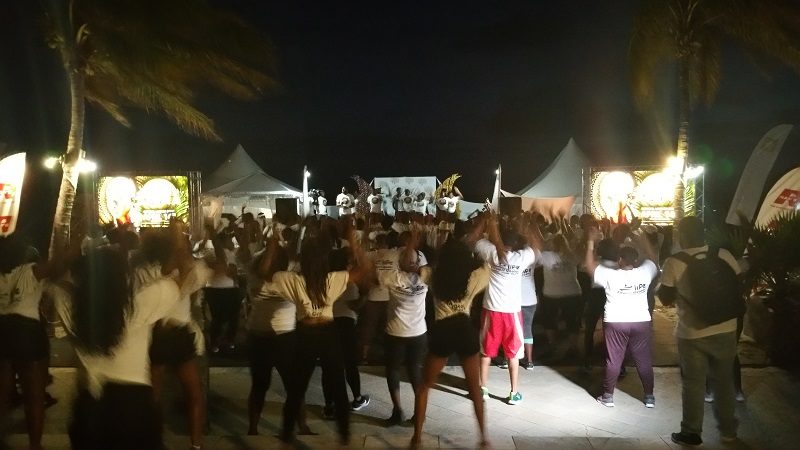
Then, at 4pm it was party time! The chairs were cleared away, the music was turned on and soca-cise began. This was a fun, fast-paced aerobics session with a Caribbean twist. Instructors led the audience through a 2-hour routine that got our heart rates up and worked every part of our bodies. It was a fun session and the 2 hours flew by and before we knew it the session was over ☹, proving that exercise doesn’t have to feel like torture to be effective.

We had a great time on Friday and would like to thank the Ministry of Health for the opportunity to be a part of this event. We’d also like to say a big thank you to everyone who visited our information table, it was lovely meeting you all.

We look forward to Caribbean Wellness Week next year and for more information about Caribbean Wellness Day and Week vist CARPHA or PAHO’s websites.

Improving Our Health and Wellbeing Through Gardening: Fruit Trees – Sour Orange and Mango
BlogGardening

Improving Our Health and Wellbeing Through Gardening: Fruit Trees – Sour Orange and Mango

Our gardening and health series is back and Abi Begho, in this two-part blog, focuses on fruit trees. In this article she discusses her sour orange and mango trees.


I have really been enjoying my gardening journey, it has been fulfilling and rewarding in so many ways. I’ve grown enough okras and tomatoes to keep us going for months, overcome the challenges of growing peppers and delved into the world of sweet potatoes. This has given me a new-found love of the outdoors and provided an outlet to relieve stress, unwind and relax. I can’t begin to express the significant impact that just five minutes in the garden has on improving my mood and lifting the heaviness of a bad day. It’s been fabulous.

In my previous blogs I have covered vegetables and fruits that I have grown from seeds or cuttings, but in today’s blog  I want to focus on the lovely fruit trees that we inherited from the previous owners of our house.

We moved to St Kitts about ten months ago and when we moved into our new house we were just so happy about the fruit trees that came with it, and we have thoroughly enjoyed exploring each one of them, and they are:

  • Sour orange
  • Mango
  • Soursop
  • Guava

Today I am going to focus on our sour orange and mango trees.

Sour Orange

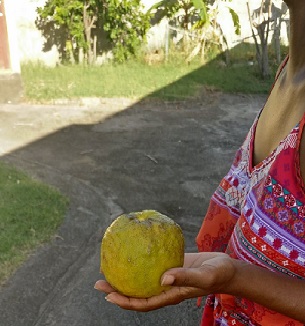
A sour orange from our tree

You may know sour orange by another name,  such as bitter orange, Seville orange, bigarade orange or marmalade orange.

It originated in south-east Asia and was believed to have been taken to Arabia in the 9th century and then made its way to many countries in the years to follow. An interesting fact about its journey around the world is: it was the first orange to arrive in the Americas.

Sour oranges, to me, taste like a cross between an orange and a lime. They are too sour to eat on their own but that hasn’t stopped them from being used in many recipes – its juice and peel are the key ingredients in marmalade, its oil is used as flavouring, its fruit is used in the preparation of liqueur and the dried peel is oftentimes used as a seasoning. And, just about every part of the plant itself  (the flower, leaf, fruit, juice and peel) has been used for medicinal purposes  but caution is needed as bitter orange supplements have been found to be “possibly unsafe”, especially if taken in combination with caffeine which can lead to high blood pressure, heart attack, fainting etc.

Our Sour Orange Experience

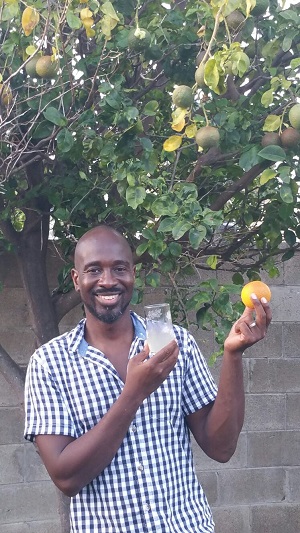
Sour Orange: From Garden to Glass 🙂

When we arrived, our sour orange tree was laden with fruit and continued to produce fruit for a couple of months and then stopped for several months and now, about 8 months later, copious amounts of fruit are starting to appear again.

For us, we have kept it very simple with our sour oranges and have used them to make a refreshing juice, very similar to lemonade but with more of an orangy-lime flavour (delicious!). The trick to making the juice is getting your proportions of sour orange juice, water and sugar just right. After several tries, I think I mastered it. I found that the juice from two medium sour oranges mixed with 1L of water and sweetened with 1-2 tablespoons of sugar makes the perfect drink, we couldn’t get enough of it and were so sad when we had used up all our fruit. We can’t wait to make some more juice when the current batch of oranges ripen.

Mango

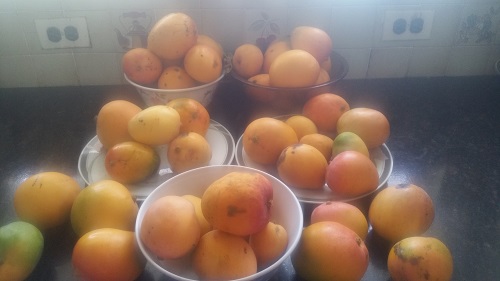
Mango overload!

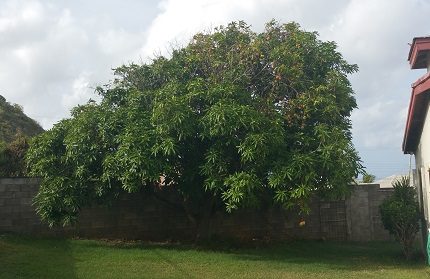
When we first saw the mango tree in our garden it looked like it was on its last legs – the leaves were brown and dropping, in what seemed like large numbers. We kept looking at the tree and thinking: ‘is it going to survive?’, but then a few months later there was a re-birth. We noticed new leaves, and the tree started to look really healthy. Then, in March, we were so excited when we noticed lots of little flowers and it was at that point that we knew we were going to be inundated with mangoes. And, sure enough, a few months later, in May, our tree was absolutely covered with young mangoes (yay!) and in June we had so many mangoes we honestly didn’t know what to do with them. We started giving bags of them away and we’ve also frozen bags, and bags, of mangoes, and still they keep coming, so we’re probably going to run out of space in our freezer soon.

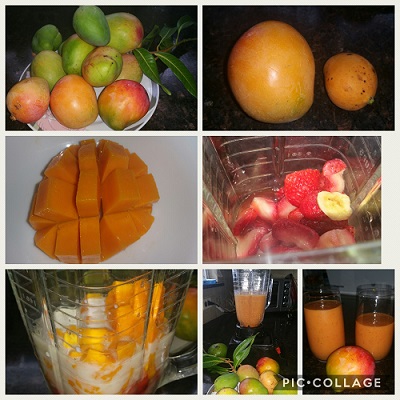
Making a strawberry, mango and banana smoothie

So far, apart from eating the mangoes as is, we’ve made a lot of smoothies. We’ve tried the simple, so almond milk, banana and mango (nice), then moved on to adding pineapple (very nice) and then added some spinach (not as nice). We then tried mango, strawberry, banana and almond milk and that was delicious, the best so far.

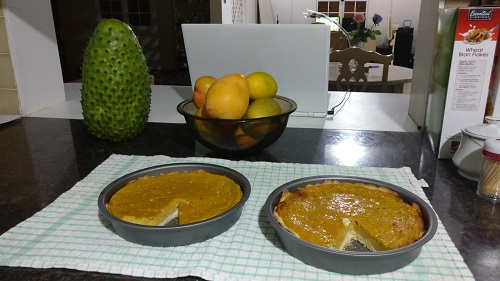
I continued experimenting with recipes and made a  mango tart/pie (same concept as a French lemon tart, but I used almond milk to make it a bit healthier) and it was absolutely delicious. All I can say is thank God for the internet, I pretty much combined three recipes to get what I had pictured in my mind (I wanted a mango pie with a key-lime pie/lemon tart consistency) and it turned out much better than I expected. I highly recommend it.

Next I would like to make dried mangoes because I have liked buying them in the past as a quick and easy snack.  I’m also contemplating making mango ice-cream as I found a very straightforward recipe online. I will let you know how it all goes!

At the moment I have to admit that I am getting a bit tired of mangoes – we have waaay too many and as I type I have about 10 more that dropped overnight that I need to get from the garden. This is truely mango overload!

Freshly baked mango tarts

Mangoes are very well-known so I won’t say much more about them except that I have discovered so many creative, simple recipes that we wouldn’t have come across had we not had an abundance of mangoes to experiment with.  So,  if you’re looking for something tasty, healthy and tropical then mangoes are a great option as they are very versatile.

Next Time

Our fruit trees have really been a blessing and we’re enjoying experimenting with various recipes. It has been fun. In my next blog I’ll tell you about the final two trees, our soursop and guava trees.

See you next time and happy gardening!

Previous Blogs

If you missed the previous blogs in this series you can read through them here:

  1. Improving Our Health and Wellbeing Through Gardening: An Introduction
  2. How I Got Started
  3. Growing Tomatoes
  4. Growing Okra
  5. Growing Peppers

You Can Get In Touch

Are you a gardener? Are you new to gardening or an experienced gardener? We’d love to hear your story and experiences with gardening and how its impacted your health and wellbeing.  You can email us at info@lakehealthandwellbeing.com with your experience and we’ll include it in this blog series.

Episode 10: Fitness Party Reflections
PodcastsUncategorized

Episode 10: Fitness Party Reflections

Wednesday 18th April 2018

Welcome to episode 10 of our podcast where we reflect on the effectiveness of fitness parties in getting people fit and active.

Improving Our Health and Wellbeing Through Gardening: Growing Okra
BlogGardening

Improving Our Health and Wellbeing Through Gardening: Growing Okra

Welcome back to our gardening and health blog series where we’ve been taking you on a personal journey as we explore the health and wellbeing benefits of gardening for ourselves. Today, Abi Begho is back and this time she’s sharing her experience of growing okra and why she thinks okras are the stars of the show.

Growing okra plants has been fantastic. So far, they have been the star of the show! They seem to absolutely love the hot climate here in St Kitts and have really thrived producing lots and lots of okra pods. We have had so much okra that we ran out of okra recipes and weren’t sure what to do with them – we have made gumbo (multiple times), crispy okra (a few variations), stewed okra and tomatoes (many times), Nigerian okra stew, okra in scrambled eggs (!) and okra in various salads. It’s been a fun experience.

Let’s Start at the Beginning: What is Okra?

Okra also called okro, ochro and ladies fingers is a popular vegetable in West Africa, India and the Southern States of the US. It is a very hardy plant being heat and drought tolerant and as you guessed, it is a tropical plant and doesn’t do well in cold temperatures.

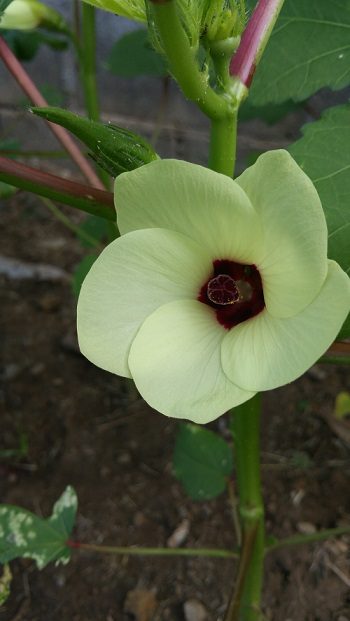
It belongs to the mallow family of plants making it a close relation to the hibiscus (it was hard to believe this until I saw the okra flower myself), cotton and cacao, just to name a few of its cousins.

There are many varieties of okra, I read somewhere there are thousands (who knew! I am learning so much from gardening). Some of the popular varieties of okra are Clemson Spineless,  Red BurgundyBurgundyEmerald and Cajun Delight.

Okra is a healthy, tasty addition to your diet containing vitamin B, vitamin C, folic acid, potassium and calcium. It is also very high in fibre.

How I Got Started Growing Okra

We love okra so it was one of the first things on my list of things to grow in our garden.

Having read that there are so many varieties of okra, I was a bit confused and unsure about what variety of okra to grow. So I consulted with my trusty friend, YouTube, and the consensus was that Clemson Spineless was a good variety to start with.  So, I headed to the shop and bought a packet of seeds and planted several of them  in a container.

I was shocked by how quickly the seeds germinated. I expected them to germinate in 5-7 days, but just three days later I had little seedlings growing happily in my container.  I left them for a week or so and then transplanted them into the garden, being careful with the roots, as they are very delicate, and left them to do their thing. I just watered them every now and again and made sure they were in a nice sunny spot and I watched them grow.

Buds, Flowers and Okra Pods

About a month after I planted the seeds I noticed my very first okra buds. I literally squealed with delight when I saw them, it was so unexpected as was my squeal – my husband thought I was being attacked or something! Then three weeks later, the most beautiful okra flower appeared and then promptly disappeared within a couple of hours – if you blink you miss the beauty (Okra flowers only open for a few hours and then they close up  in preparation for okra pod formation). Two days after the flower appeared a tiny little okra pod had formed and then, voila, two days after that I had picked my first okra – yay!

Below you can see the progression from okra bud to okra pod.

Okra bud Okra floweryoung okra podokra pod growing nicely okra

In total I have 9 okra plants and for months they were serious okra producing machines! Like I mentioned earlier, we had so much okra we didn’t know what to do with them. It was great! And, I just have to mention how perfect the okras have been. I have never ever seen such good-looking okras and we used to buy okra all the time in the UK. Every okra I picked was beautifully formed, no defects and very tasty.

 As I type  the okra plants are 5 months old and sadly they are looking a bit tired, okra pod production has slowed down, their leaves have dropped and the plants don’t look as healthy as they did a few months ago. I think they are coming to the end of their lifespan or maybe they have some kind of fungal disease as I read they are supposed to keep producing for a really long time.  So, I have bought some new seeds and will be planting these soon.

Final Thoughts

I have really enjoyed growing (and eating!) okra. It has been pretty straightforward as okras are very low maintenance and, as I mentioned previously, very hardy,  so they have given me no problems whatsoever.

If you live in a warm climate I highly recommend you try growing okra and if you live in a cold country, you can still jump on board and grow them during the summer months.

WelI… that’s it for now. In my next blog I’ll be discussing my lovely little bell peppers. See you then and happy gardening!

If you want purchase some okra seeds, I recommend the Clemson Spineless, which is what I grew and had great success with. You can order some seeds from Amazon below


If you missed our previous blogs you can read them using the links below

  1. Improving Our Health and Wellbeing Through Gardening: An Introduction
  2. Improving Our Health and Wellbeing Through Gardening: How I Got Started
  3.  Improving Our Health and Wellbeing Through Gardening: Growing Tomatoes

WCRF’s Latest Cancer Prevention Recommendations
CancerNews

WCRF’s Latest Cancer Prevention Recommendations

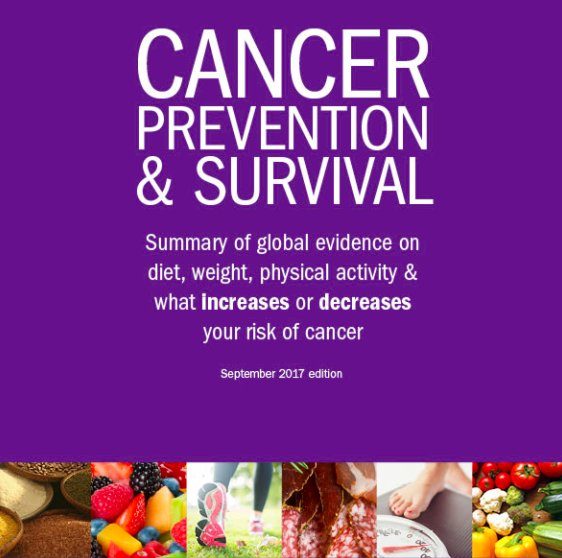
In September, the World Cancer Research Fund published the latest data from their Continuous Update Project on cancer prevention highlighting what increases and decreases our risk of developing cancer.

Their summary is a very concise, easy-to-read booklet based on the latest evidence on risk factors for cancer. One of their main messages is that one third of the most common cancers could be prevented by a healthy diet, maintaining a healthy weight and being physically active.

Their summary is divided into three sections:

  • Strong evidence on what increases cancer risk
  • Strong evidence on what decreases cancer risk
  • Cancer prevention recommendations

When looking at what increases cancer risk, factors such as being overweight or obese, consuming alcohol, processed meat and red meat are listed as well as a number of other factors. Whilst non-starchy vegetables, fruit,  physical activity, dietary fibre, wholegrain and a number of other factors are listed as reducing cancer risk.

The WCRF end their summary with a list of cancer prevention recommendations as follows:

  • Be a healthy weight
  • Move more
  • Avoid high calorie foods and sugary drinks
  • Enjoy more grains, veg and beans
  • Limit red meat and processed meat
  • Don’t drink alcohol
  • Eat less salt
  • Avoid mouldy grains and cereals
  • Don’t rely on supplements, eat a healthy diet
  • If you can, breastfeed your baby

WCRF Continuous Update Project is an ongoing initiative to review global research on cancer prevention focusing on how lifestyle factors such as diet, exercise and weight impact our risk of developing cancer.  Based on these findings the WCRF will update their Cancer Prevention Recommendations which they hope will provide the public, governments and charitable organisations with accurate information on how to reduce cancer risk.

For more information you can download the full summary below or visit the WCRF’s website.

The HCC Publishes Another Excellent Report – NCDs and Trade Policy in the Caribbean
NewsNon-communicable diseases

The HCC Publishes Another Excellent Report – NCDs and Trade Policy in the Caribbean

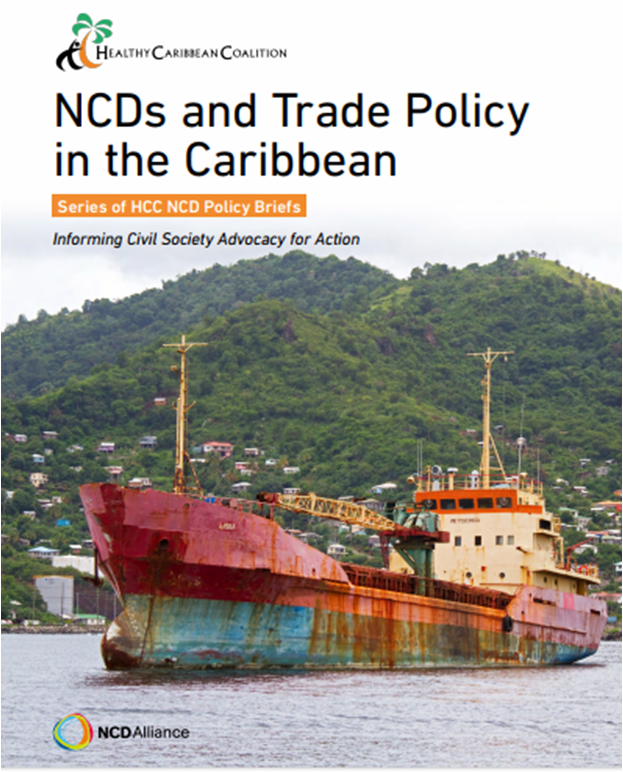
The Healthy Caribbean Coalition published an excellent report on non-communicable diseases (NCDs) and trade policy in the Caribbean. This briefing document discusses how trade policies affect the public’s health and what needs to be done to ensure that policies have a positive effect on the health of countries’ citizens.

The report clearly explains, with examples, how specific policies can influence our health. For example, low taxes on items like sugary drinks, alcohol, tobacco and processed foods lowers their cost enticing the public to purchase them. The consumption of these items, over time, increases our risk of developing non-communicable diseases such as  type 2 diabetes, cancer and cardiovascular disease. The report details how policies like this in the Caribbean have had a detrimental effect with families shifting from a traditional plant-based, home-made diet to a processed, meat-based diet.

The report states that the Caribbean shockingly has the highest mortality due to NCDs in the Americas,  the Caribbean has some of the highest rates of obesity and there are significant levels of tobacco use and binge drinking.  There is an urgent need to address these issues and exploring trade policies is just one strategy that can be introduced to improve the public’s health.

The Healthy Caribbean Coalition’s report explores policies around three main areas:

  • Unhealthy/healthy food
  • Alcohol
  • Cigarettes

These recommendations are based on global approaches such as the WHO Framework Convention for Tobacco Control, the WHO strategy to reduce alcohol consumption and the ICN2 Framework for Action. The HCC’s recommendations for the Caribbean are illustrated below.

This report was an excellent, comprehensive, clear and informative report that gives concrete actions that can be taken to tackle NCDs through policy changes.

You can download the report below.

The Lake Foundation’s Cycling Club Project
BlogCycling

The Lake Foundation’s Cycling Club Project

The Lake Foundation aims to improve the health and well-being of the black community and to achieve this general aim a core part of our work is to get the black community more active.

Exercise can be very intimidating for many people and thus we sought to explore various options on how we could get people active in a way that could be incorporated into everyday life and would ultimately be fun.

Cycling is an interesting option as it is very practical and can be introduced into a person’s life as a method of transport (commuting to work), as a leisure activity (exploring the local area) and as a form of structured exercise.

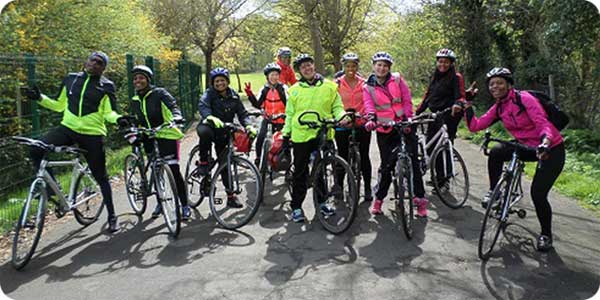
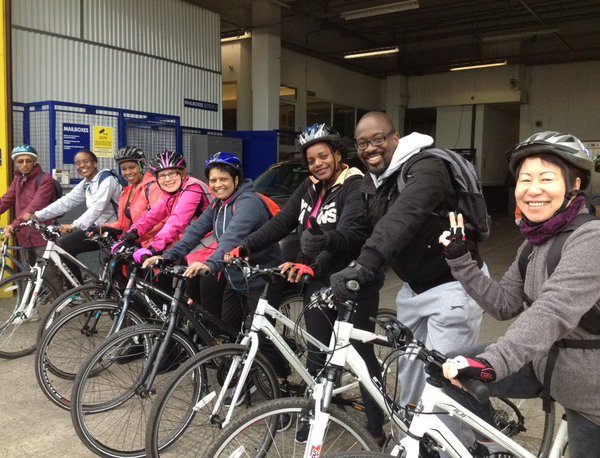
We began our work by teaming up with the Cycling Instructor in 2014 to run a short-term initiative of bike-ability sessions aimed at the black community to teach basic cycling techniques and improve confidence. We worked with the Cycling Instructor for two summers and this proved very popular with us having to extend the sessions beyond their initial four-week period. With this in mind, we decided to build on the popularity of these sessions and we ran a cycling club, with funding from Sport England, from February 2016 to April 2017.

The need for our project

5.3% of the UK’s black population has type two diabetes (versus 1.7% of the white population), 33% suffer from high blood pressure, (compared to 16% of white adults), black African women have been found to have the highest prevalence of obesity, the black community is twice as likely to suffer from a stroke, is twice as likely to develop prostate cancer, is 2-3 times more likely to develop fibroids and as a result of their increased risk of diabetes are at increased risk of developing heart disease. One of the key lifestyle factors that tie these conditions together is physical activity.

Research has shown that the risk of developing these conditions can be reduced significantly by being more physically active, but unfortunately, studies have shown that over half of people from black and minority ethnic  (BME) groups do not take part in sports nor do they do any physical activity.

By increasing the number of BME people taking part in a sporting activity we can begin to address some of the health challenges that plague the black community, but we need to create better opportunities for the black community to take part in sports. To successfully achieve this we need to present the community with fun, engaging, practical and easily accessible sporting activities; cycling can do this.

According to TFL “BME groups, women, people from more deprived neighbourhoods, those with disabilities and older people are typically under-represented in cycling” and “the typical London cyclist is white, under 40 and male with a medium to high household income”. This means that there is a huge inequality in cycling but this creates a huge opportunity to introduce BME communities to cycling.

Through the bike-ability courses, we were able to show that if cycling is presented to members of the BME community without any barriers (bikes and helmets provided) they will happily take up this activity and easily meet the government’s recommended amount of physical activity.

To ensure that our BME community kept cycling beyond the short bike-ability sessions we needed a sustainable long-term opportunity for them to cycle and our cycling club provided this.

Overview of the Cycling Club Project

Aims and Objectives

The aims of our cycling club project were to:

  • Increase the number of people from a BME background who cycle regularly
  • Improve attendees’ confidence in cycling
  • Provide opportunities for members to develop in cycling
  • Introduce the BME community to a fun and easy way to achieve the recommended amount of physical activity

We achieved the above by:

  • Running two-hour cycling sessions every 2nd and 4th Saturday of the month
  • Providing direction from experienced instructors and encouraging  members to take part in national and local cycling events
  • Making each session engaging and encouraging members to develop good friendships within the group. Each cycling session involved fun routes that allowed members to discover the beauty of their local area but also challenged members. We had socials to encourage relationships to be built that centred around cycling
  • Ensuring that each session was definitely two hours so that members participated in a significant amount of physical activity.

Outcomes

Our project progressed well, the targeted number of participants for our project was 18 and we had 23 participants join our club over the 14-month period.

Outcome 1: Improved confidence in cycling

We hired trained experienced instructors from the organisation Cycling Instructor to lead sessions and provide participants with training on cycling techniques. This included cycling in traffic, hand signals, making sure bikes are road-worthy, cycling off-road and on-road and cycling uphill. This meant that members were given a good foundation when it comes to proper cycling technique and this has helped improve their confidence.  Members completed feedback forms and before joining the club 10% felt not confident at all, 30% felt a little confident, 20% felt confident and 20% felt very confident with cycling. A year after joining our club only 9% of members felt a little confident whilst 45% of members felt confident and 36% felt very confident,  with one member saying:

“I’m not a regular cyclist but it [the club] gives me confidence, particularly, on the roads”

Outcome 2: Provided opportunities for members to develop in cycling

Having sessions with experienced instructors helped develop the cycling skills of our club members and we also challenged members through extended 4-hour rides to Chislehurst Caves and the Olympic Stadium, and also several uphill routes. Additionally, we encouraged members to take part in local and national cycling events such as the Croydon Interfaith Cycle Ride, the Crystal Palace Road to Rio Ride and others. One member of our group took part in the London to Brighton ride, which was the first time she had participated in such an event, she said:

“I barely could cycle very far but after a few months of cycling with the club I was able to cycle 20-23 miles” – Sam, Cycling Club Member

We asked members how much they feel their cycling technique has improved since joining the club and 45% said their technique had improved a lot, 36% said their technique improved somewhat, 9% said it improved a little and 9% said they didn’t know.

Outcome 3:  Introduced the BME community to cycling

The majority of people that attended our cycling club were from a BME background – 20 out of 23 were from a BME background, some of whom didn’t cycle regularly before joining our group. Before joining the group 18% had never cycled, 18% cycled once or twice a year, 27% cycled monthly, 27% cycled weekly and 9% cycled more than 5 days in a week. Through our club we have introduced cycling to some (18%) and the club ensured that the others engaged more regularly in cycling.

Some keys to success

Our project worked well due to the excellent freelance cycling instructors we hired who were very experienced and made each session very enjoyable. They found interesting routes each time, and the sessions were informative with members learning about cycling techniques, so it was a good balance of fun, exercise and instruction.

Additionally, we recruited a cycling coordinator who was very warm, friendly and encouraging this provided a really good atmosphere at each session. She ensured everything ran smoothly, being the point of contact for members and instructors and she worked well with the instructors to plan each route. She also organised socials for members which were well-attended and this gave members the opportunity to get to know each other. Importantly our coordinator was a member of the BME community and a keen cyclist.

Conclusion

Similar to the short bike-ability courses we have been able to show that if cycling is presented to members of the BME community without any barriers (bikes and helmets provided) they will happily take up this activity and easily meet the government’s recommended amount of physical activity.

One important point to note is that the social aspect of the club was very important. We found that many club members didn’t cycle in-between sessions nor did they cycle when sessions were cancelled. When we probed further we found that members liked cycling as a group activity and valued the time spent with others. It would appear that our group of BME cyclists looked at cycling as more of a leisure activity rather than a method of transport or structured exercise. This suggests that to encourage more people from a BME background to cycle, projects that promote cycling for leisure rather than for commuting and exercise are more likely to appeal to the BME community; and these projects would need to be group activities that promote social interaction.


We are very grateful to Sport England for funding this project and Cycling Instructor for their advice and support.

Are you getting enough exercise?
BlogPhysical ActivityVolunteer Bloggers

Are you getting enough exercise?

In this week’s blog our guest blogger, freelance journalist, Stacey Mensah, asks the question: ‘Are you getting enough exercise?’ and explores the barriers to exercise.

A poll has estimated that Britons spend twice as long on the toilet every week as they do exercising. With adults clocking up an average of three hours and nine minutes on their loos every week. This is serious business! Now to some this isn’t really going to mean anything and others frankly would not want to know. However, the reason why we’re making this comparison is to show the stark differences between the two activities and why we should be doing one of them for a lot longer. With the NHS recommending we perform 150 minutes’ worth of exercise each week, it makes me wonder what could be the possible barriers towards reaching this goal and if it in fact is enough.

Having lived in a cosmopolitan city for the majority of my years I can say with ease that exercising for 30 minutes a day is more than probable. And just remember that this is coming from a person who would choose the escalator over the stairs every single time! When the NHS is talking about moderate exercise this includes brisk walking – can I get a hallelujah! That sprint to catch the train, the light jog to the meeting and even the walk to pub for after work drinks’ count. But here is the dose of reality – the office treats, the regular intake of alcohol and your hate for vegetables isn’t doing you any favours. For those of us that like to indulge in the naughtier items on the menu we should also be willing to increase our doses of daily exercise.

But let’s be real that doesn’t always happen! UKactive has found that one of the biggest barriers to exercise were busy working lives which was followed by family commitments. At certain phases in my life I have found myself several days into my week without having worked out or done any significant bouts of exercise. When the delivery driver, waitress or restaurant manager knows me by name and order the I know it’s time to switch a few things up.

According to the organisation, a lack of exercise claims over 30,000 lives each year and costs the UK £20 billion. I know to some working professionals working out in groups or having someone to be accountable to helps them to stick to their goals. A personal trainer, a nutritionist or even just an active Instagram feed bulging with fitness pictures is enough for some. And it seems as though 41%* of 18 to 24-year-olds prefer using social media as a source of motivation, as it encourages them to head down to the gym.

Although there has been much attention in regards to young people and exercise, chief knowledge officer to the NHS, professor Sir Muir Gray offers a sentiment that we all need to be reminded of: “People often think exercise is only for young people, but older adults are the people who stand to gain most from the mental, social and physical benefits of being active”.

How many hours of exercise do you get every week? What challenges do you face? We would love to hear from you…

Healthy Weight Workshop in Croydon on 26th July
NewsObesity

Healthy Weight Workshop in Croydon on 26th July

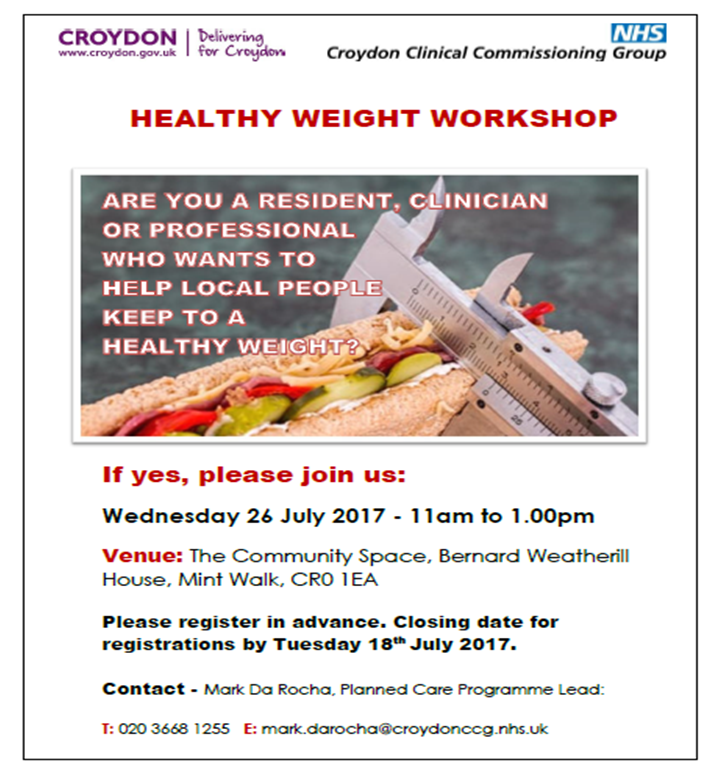
Croydon CCG in collaboration with Croydon Council are hosting a Healthy Weight workshop on July 26th at 11am to 1pm.

It is being held at Bernard Weatherill  House on the Ground Floor in the Community Space rooms with lunch and refreshments provided.

The aim of the workshop is to raise awareness about healthy weight topics within Croydon and to invite stakeholders, patients, clinicians and front line staff, to talk about how we can build the best services for Croydon residents.

The workshop aims to cover the following topics;

  • Healthy weight within Croydon
  • Identify priorities to promote healthy weight
  • Raising awareness of healthy weight initiatives within the community
  • Gain feedback from Patients and Clinicians on current services and how we can improve them

You can book a place on EventBrite or by emailing mark.darocha@croydonccg.nhs.uk

Volunteers Needed for Research on the Physical Activity Advice Given to Cancer Patients
CancerNews

Volunteers Needed for Research on the Physical Activity Advice Given to Cancer Patients

The University of Northumbria would like to say a big thank you to everyone who took part in their survey. The survey is now closed and they are no longer collecting data.

Researchers from the Northumbria University are conducting a new piece of research that will investigate the advice that cancer patients are receiving about physical activity after their diagnosis. They will explore whether the advice given to patients is appropriate for them and their needs. The findings from this work will help inform the development of future interventions to try to optimise the nature of physical activity advice being given to people after a cancer diagnosis.

If you have experience with cancer, you can take part in this important piece of work by completing an online survey. The survey asks participants about their current health, their physical activity habits and about any physical activity advice they received. Most of the questions have multiple choice answers with only a couple asking for further details.

This research has been approved by an institutional research ethics committee. Participation in the survey is completely voluntary, and all answers people provide will be kept anonymous and so no one can be identified from any information they provide.

You can complete the survey here: https://goo.gl/forms/GaAK81TJVu877Tj93  and if you have any questions or would like any additional information please email us and we will contact the researchers on your behalf.