


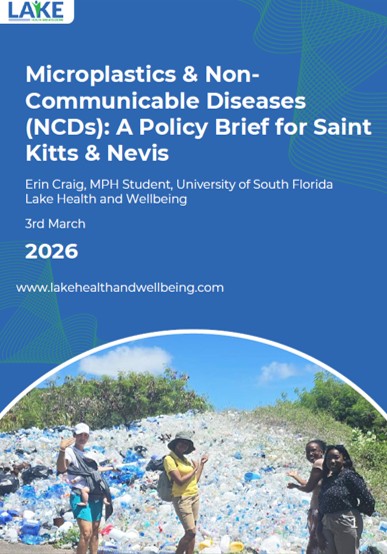
Today, we are delighted to highlight the work of our recent practicum student, Erin Craig, an MPH student at the University of South Florida. During her time with us, Erin conducted desk-based research exploring the links between non-communicable diseases (NCDs) and microplastics, which informed the development of her comprehensive policy brief.
We would like to congratulate Erin on her hard work, dedication, and valuable contribution throughout her placement.
You can read a summary of Erin’s work below and download her full policy brief.
Microplastics are an emerging environmental and public health threat, with accumulating evidence linking exposure to inflammation, oxidative stress, endocrine disruption, and an increased risk of non-communicable diseases (NCDs) such as cardiovascular disease, diabetes, and cancer.
St. Kitts and Nevis faces significant environmental risks, with heavy reliance on imported goods packaged in plastic, limited waste management infrastructure, high per capita waste generation, and a marine-dependent economy (tourism and fisheries). These factors increase the prevalence of plastic waste, which can degrade into fine particles (microplastics) and shed, contaminating the food, water, and coastal environments, thereby increasing chronic human exposure, which can affect the public’s health. This may include contributing to the public’s NCD mortality and morbidity burden, which is the major public health challenge facing the Federation.
This practicum examined the current state of microplastic exposure in St. Kitts and Nevis, evaluated scientific evidence linking microplastics to NCD development, and assessed existing environmental and public health policies. Findings identified major gaps in environmental monitoring, human health surveillance, waste management infrastructure, and regulatory enforcement as it relates to microplastics. While policies such as the Plastic Waste Reduction Bill represent substantial progress, additional action is
needed to mitigate ongoing exposure to microplastics to prevent further damage to environmental and human health.
This project developed a policy brief outlining evidence-based recommendations, including establishing a national microplastics monitoring program, improving import and waste management regulations, strengthening surveillance systems, and increasing community and private-sector collaboration.
You can read the full policy brief here.
We would love to hear from you
Thank you for visiting our website. We value your feedback and would be very grateful if you could share your thoughts on the article you read and any supporting information that was presented. This will help us improve our website content. You can complete a short 3-question survey here
You Can Support This Work
If you feel this type of work is worthwhile, please consider supporting our small NGO so we can continue delivering health education, advocacy initiatives and community projects. Your donation, no matter the size, helps us make a lasting impact. Thank you so much!