Contacts

Bird Rock, St Kitts, St Kitts and Nevis, West Indies

info@lakehealthandwellbeing.com

+1 869 765 8702

Category: Blog

We Attended the Launch of Prostate Cancer UK’s Stronger Knowing More Campaign
BlogCancer

We Attended the Launch of Prostate Cancer UK’s Stronger Knowing More Campaign

Last week, we had the pleasure of attending the launch of Prostate Cancer UK’s Stronger Knowing More campaign. This campaign is aimed at black men and puts the spotlight on the fact that black men have a higher risk of developing prostate cancer. Black men have a 1 in 4 chance of developing prostate cancer, which is double the risk faced by white men.

The campaign was formally launched on 17th January at 15 Hatfields . The event started with a networking session where we were able to speak to staff members involved in developing this much-needed campaign, hear from men who have been affected by prostate cancer and view the very powerful images being used for Stronger Knowing More.

Powerful Imagery

Our first mission as we walked around the beautiful venue was to look at the exhibition of images which were created for the campaign.

Prostate Cancer UK worked with photographer Dennis Morris to create a collection of photographs of black men from the worlds of sport, politics and the arts as well as prostate cancer survivors in a show of strength against prostate cancer. The collection of images featured former WBA World Heavyweight champion David Haye, Olympic gold medallist, Linford Christie Labour MP, Chuka Umunna, writer and musician Benjamin Zephaniah, ex-England footballer Viv Anderson and Red Dwarf star Danny John-Jules.

Reading through the captions of the each picture was really inspiring, moving and empowering and we’re sure that as men see these it was make them reflect on their health and perceptions of prostate cancer.

It was also interesting to read the behind the scenes view of the creation of the pictures with photographer Dennis Morris explaining that each shot was carefully thought through. For his photo shoot he asked each of his subjects to select a location where they felt the strongest and he was able to capture moments of defiance, strength and vulnerability.  It is hoped that the pictures will tap into the inner strength of men and when combined with information will defeat the silence and stigma around prostate cancer.

Moving Stories

During the networking session we spoke to several men with experience of prostate cancer and were so moved by their experience and the fact that despite their health they were working tirelessly to raise awareness and support other men.  It was also interesting to learn of how some men came to be diagnosed, many by chance encounters with people who made them think which really highlighted that small gestures can make a huge difference in someone’s life.

We spoke to one man whose first words to us were: “that man saved my life” as he pointed to one of Prostate Cancer UK’s most well-known patient volunteers, Errol McKellar. He told us that he was waiting at a train station one day when Errol began speaking to him about prostate cancer and ended the conversation by giving him a leaflet, which he only took to “shut him up!” He said that leaflet stayed on his desk at work for two weeks and then during a slow day at work he read the leaflet and realised he had some of the symptoms of prostate cancer. He visited his GP and was later diagnosed with prostate c,ancer, which he said was devastating.  All he could think about was not being there for his wife and children and not being around to see his children grow up, “they are still so young”. Luckily he was diagnosed at a fairly early stage and his future is bright, but had he not met Errol McKellar his story could have been so different.

Inspiring Speeches

After the networking session it was time for speeches. We first heard from Tom Shrophire, Trustee of Prostate Cancer, UK who gave some background to the campaign and how it came into being. He said that there was a need to publically acknowledge the heightened risk black men have and start implementing a solution that seeks to raise awareness as many men don’t realise they are at an increased risk.  He said this work is part of Prostate Cancer UK’s aim to tame prostate cancer in the next 10 years and this means they have to make black men, black families and black communities a priority.

We also heard from Prostate Cancer UK ambassador, Errol McKellar, who shared his touching story about his experience with prostate cancer. He was diagnosed after reading a leaflet about the PSA test and then decided to have the test done. He explained how prostate cancer totally changed his life and was the most difficult challenge of his life. He described the importance of having a good support system and said he would have never made it through this disease without the support of his wife (“my wife was my strength”). He gave hope to men by saying his prostate cancer diagnosis had knocked him down, yes, but it hadn’t knocked him out.  He gave a realistic view telling the audience that he is still battling some of the side effects of treatment and of the disease itself and it has taken him a long time to come to terms with how it has affected his life.  He also described his more vulnerable moments, like when he was diagnosed, he said “he cried like a baby.”

We were so inspired by all the work Errol has done since his recovery.  After he recovered from his treatment and was fit to return to work he was contemplating how he could make difference. So he decided that he would speak to every man that came into his mechanic shop about prostate cancer.

On his first day back to work he started with his first customer and  asked him: “When last did you get your prostate checked?”  He then offered his customer a 20% discount if he got a PSA test done and reported back to him. Sure enough a few months later the man return for his 20% discount having completed his PSA test but was shockingly diagnosed with early stage prostate cancer. The man said that Errol should donate the discount to charity and keep raising awareness. That was back in 2011 and since then Errol has spoken to hundreds of men about prostate cancer which has resulted in 26 men being diagnosed with prostate cancer, sadly two of those men have since passed away.

Finally we heard from actor Rudolph Walker, who has been working with Prostate Cancer UK for a number of years to raise awareness. Whilst he hasn’t had prostate cancer himself he spoke of his close friend who sadly lost his life to prostate cancer, but had he known the symptoms and been diagnosed earlier he may still be here today.

Getting Involved

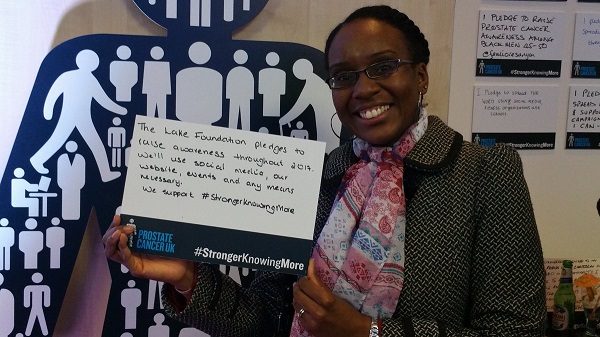
On the night Prostate Cancer UK asked us all to make a pledge to support their campaign and raise awareness and we’ve pledged to do just that.

You can also get involved in this campaign and Prostate Cancer UK have said you could do any of the following:

So let’s all get involved in raising awareness, breaking down the walls of silence and work towards saving our husbands, fathers, brothers, uncles, grandfathers, cousins and friends from prostate cancer.

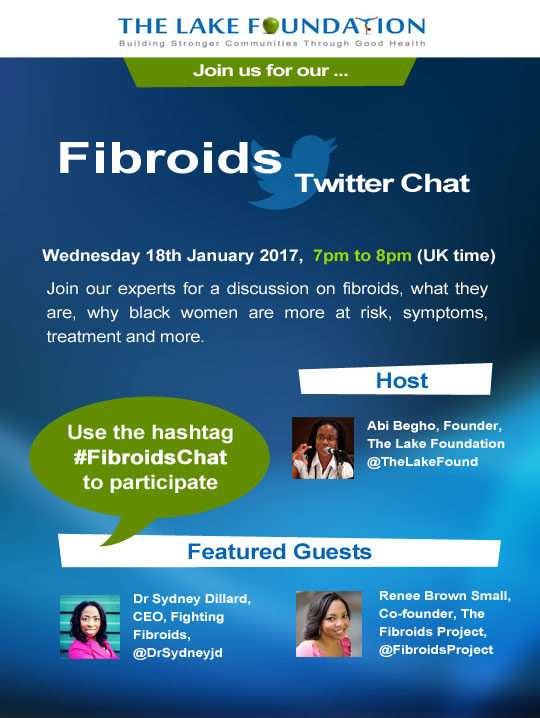
Did you miss our fibroids Twitter chat with Dr Sydney Dillard and Renee Brown Small?
BlogFibroids Twitter Chats

Did you miss our fibroids Twitter chat with Dr Sydney Dillard and Renee Brown Small?

Last night, we were so excited to host our first fibroids Twitter chat. We were joined by special guests Dr Sydney Dillard, CEO of Fighting Fibroids and Renee Brown Small Co-founder of The Fibroids Project with host, our own Abi Begho, founder of The Lake Foundation.

If you missed our Twitter chat you can check out our conversation below and look out for our next Twitter chat on Wednesday 15th February at 7pm (UK time).

Update June 2018: Please note that tweets from Renee Brown Small are no longer available so some information is missing from the chat below.

I Would Rather Not Leave It To Luck
BlogCancerVolunteer Bloggers

I Would Rather Not Leave It To Luck

In this week’s blog post we hear from freelance journalist, Stacey Mensah, who reflects on the importance of setting resolutions that ensure we become fully rounded individuals.

As we go into another week of the new year it’s so easy to become consumed with the gimmick of new year’s resolutions. As the time passes by we slowly become desensitised to why we’re actually setting these goals – in particular, our health goals. We become obsessed by the numbers; the dress size, the number on the scale and the number of super food salads we have posted on our social media platforms and obviously consumed – obviously! But, it’s time for a reality check; what happens when that isn’t enough? Yes, you’ve changed your diet but what happens when the other aspects of your lifestyle put you and your loved ones in danger? I spoke to the daughter of a woman who was initially diagnosed with cervical cancer, but after various check-ups it turned out to be something entirely different. Here is what she had to say:

“My mother is a workaholic, that is all she has ever known. In order to provide for my siblings and I she has had to work a great deal. This meant that she didn’t really have time to go to the doctors for her check-ups. She was far too busy worrying about everyone else in the family, to worry about herself. That wasn’t until she started bleeding heavily. At first no one knew what it was until the doctors diagnosed her with cervical cancer. We couldn’t believe it.”

 In the UK alone, Cancer Research UK reports that around 3,200 new cases of cervical cancer are discovered each year. Meaning that 9 cases are diagnosed every day. With cervical cancer rates remaining stable in the UK this would not be the time to shy away from getting checked out and keeping your loved ones in the loop.

“Of course, being the protective mother she is she wanted to prepare us, trying to figure out the best way to slowly tell us. I had never felt so vulnerable. It was too late and I could do nothing about it. This was a wake-up call, none like any other. We started cooking healthier foods, making sure she was getting her nutrients in. And of course she had to realise that working the amount that she did was not good for her health. Luckily, the doctor re-diagnosed her with having an extreme case of menopause. My mother turned out to be one of the lucky ones that day. I hope she realises that.”

 I don’t know about you but I’d rather not leave it to luck. With the rates of the survival of cervical cancer improving, now would be a great time to be proactive and go to see your local GP. It’s good to have goals and it’s even better to accomplish them, but in the process let’s not forget about the other 30%. For 2017 let’s work on becoming better fully rounded individuals. This can be done by focusing on a number of things including how many hours of sleep you’re getting, your working hours, your social life and more.

Here’s to a happy and most importantly healthy 2017  🙂

We’ll see you next week!

AfroFit at the Eve and Grace Wellness Centre
BlogPhysical Activity

AfroFit at the Eve and Grace Wellness Centre

It can be really hard fitting in the recommended amount of physical activity (150 minutes a week) into our day-to-day routine and even when we do manage to find the time, let’s be honest, exercise can be really dull!

Many times we start exercising with great intentions, but alas we lose motivation within a few weeks as it’s just not fun. For any kind of exercise plan to be effective, we have to commit to it, be persistent and push through the pain, but this can only be achieved if we’re enjoying the activity we’re taking part in. An exercise routine that’s fun has a better chance of long-term success, particularly if it is group exercise. Fun and a sense of camaraderie gets you through the pain, cold mornings and rainy days that may stop you from achieving your physical activity goals.

If you want to get fit and active this year, the key is to find something that you love doing. Now, we all  like a good party, so if you can combine exercise with a party feel, then you’ll definitely commit to that, right?

So, today we decided to test out a class on your behalf (AfroFit) and we are so sure you’re going to love it. AfroFit is a new class at the Eve and Grace Wellness Centre in Battersea.

The class was led by the very elegant and friendly Rebecca Adebiyi from Afrofit and Afrotales, a new organisation that has two elements to it: African-inspired cardio workouts for adults and children and African-inspired story and drama sessions for children aged 2 to 6.

Today was the launch of the class and we started with getting ourselves familiar with Afro Beat music and moves. For 60 minutes we worked our way through a dance routine that worked every part of our body. We got our hips moving,  arms waving, legs tapping, necks popping and bodies waving,  and we were smiling for the entire 60 minutes (it was fuuun!!). There was also a freestyle session where we got to show off our favourite moves, in our own unique style.

Rebecca was a great, patient teacher and by the end of the session we were looking like professional dancers :-),  but importantly we got a good full-body workout. It was wonderful to attend a class that uses African culture to get us active in a fun way that we could truly relate to.

If you’re looking to get more active this year, then we highly recommend this class. AfoFit takes place every Saturday at 1:30pm.

You can find out more about this class on the Eve and Grace Wellness Centre’s website. Whilst on their website you can check out all the other great classes at the centre.  We’re sure you’ll find a number of classes that you’ll like. Next we’ll be trying out the Mash It Up Dancercise class, an authentic Jamaican dancehall and fitness class.

Modern Lifestyle is Creating a Health Crisis in the Middle Aged
BlogDiabetesObesityPhysical Activity

Modern Lifestyle is Creating a Health Crisis in the Middle Aged

This week, a new analysis by Public Health England has revealed a troubling conclusion: 40 to 60 year olds in the UK are facing a health crisis. This health crisis has been attributed to modern lifestyles, particularly “the car, the desk job and the computer”, which means that people are not as physically active as 20 years ago.

“People are busy with work, with families, with the daily grind and sometimes their own health is the least of their priorities.” – Professor Kevin Fenton, Director of Health and Wellbeing, Public Health England

Public Health England’s analysis explored how the behaviour and health of people aged 40 to 60 has changed over the past 20 years. They found that 83% of 40-60 year olds either drink too much,  are inactive or are overweight or obese.

When we looked at their data on obesity, their report states that 77% of men and 63% of women within the 40 to 60 age group are overweight or obese compared to 67% of men and 55% of women 20 years ago. Public Health England also noted that many middle aged people couldn’t identify what a healthy body looks like and they suggest that it is possible that obesity is now becoming the new normal. This is worrying as many people may not realise they are at an unhealthy weight.

Another important area the analysis looked at was diabetes. They found that the diabetes rate in 40 to 60 year olds has doubled – 3% of middle aged people had diabetes 20 years ago and today that has increased to 7%.  Apart from diabetes they found that the rate of heart conditions in men has increased, rising from 8.5% to 11.4% and mental health conditions had trebled (2% to 6%.) Although, with regards to mental health, it was felt that the increase could be due to a better understanding and recognition of mental health conditions.

Solutions

In order to address this health crisis Public Health England’s One You campaign will be reaching out to 40 to 60 year olds to help people assess their lifestyle and then provides tools on how to adopt a healthy lifestyle. These tools include apps like Couch to 5K, Alcohol Checker and Easy Meals.

Other similar solutions include Croydon Council’s online health programme, JustBe, which aims to get local people to adopt a healthier lifestyle by offering a number of recommendations and pointing Croydon residents to local services. To get their messages across they use a variety of tools such as apps, podcasts, expert advice, videos, diet plans and exercise routes.

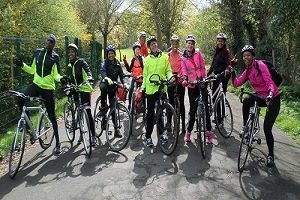
At the Lake Foundation, we’re aiming to get people active through our free cycling club which is open to everyone. A limited number of bikes and helmets are available. For more information email us

Conclusions

Public Health England’s analysis concluded that compared to 20 years ago:

“Men aged 40 to 60 are:

  • more likely to be obese
  • less likely to smoke and less likely to drink alcohol (although most do)
  • more likely to suffer from a heart condition
  • more likely to be diabetic
  • more likely to report suffering from a mental health disorder

Women aged 40 to 60 are:

  • more likely to be obese;
  • less likely to smoke and less likely to drink alcohol
  • more likely to be diabetic
  • more likely to report suffering from a mental health disorder”

Although the health of middle aged people seems to be declining, there is hope. We can turn things around if everyone makes simple changes to their lifestyle.

Merry Christmas, Happy New Year and a Big Thank you :-)
Blog

Merry Christmas, Happy New Year and a Big Thank you :-)

It’s just a couple of days until Christmas and we’d like to take a few moments to wish you all a Merry Christmas and a happy New Year, and as the year draws to an end it’s the perfect opportunity to reflect on the work that we’re doing.

As a result of all your support and encouragement we have been very productive and have made significant progress in working towards our mission of improving the health and well-being of the black community. Thank you for all your support, we really appreciate it.

We are delighted to share our achievements for 2016 with you. Over the past year:

  1. Our African Caribbean Cancer Support Group which met monthly continued but came to end as our grant came to an end. We’d like to thank the facilitator of the group Hazel Williams who did a excellent job in providing support to group members and we’d like to thank Macmillan Cancer Support and Croydon Council for funding this project.

2. We continued to offer support to women affected by fibroids through our Fibroids Ask the Expert which provides women with questions or concerns with access to experts in the field who can provide them with accurate reliable information.

Our fibroids focus conference

3. We organised our first annual fibroid focus conference which was very well attended.

4. We once again teamed up with Black History Walks, Amanda Epe and Dr Sydney Dillard to run a fibroids awareness event with over 200 women attending.

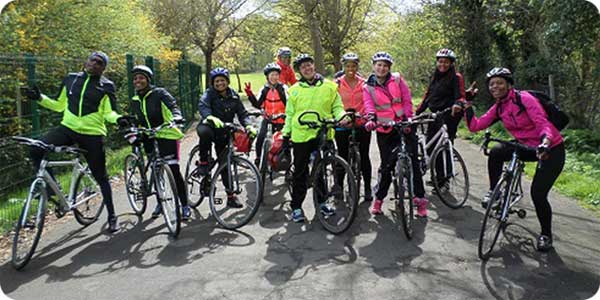
5. We received a grant from Sport England to run our cycling club for a year. Our club began in February 2016. We have 20 members with a core group that have attended regularly come rain or shine. This project is part of our ‘Keep Active’ work which aims to get the black community active.

6. We delivered a range of health awareness presentations to the community.

7. We were featured on Croydon Radio

8. We developed relationships with a number of organisations including Noire Wellness, Voices for Autism, Kinetic Root Services, Diabetes UK, Croydon CCG and the Eve and Grace Wellness Centre

Our cycling club members

9. We were offered a grant from Croydon Council to run a 12 month diabetes community champion programme in collaboration with Diabetes UK which will start in 2017.

10. We were selected as Noire Wellness’ charity of the year and they will be raising £2000 which will go towards our fibroids education and support programme.

11. On World Mental Health Day we teamed up with film makers and mental health professionals to provide advice on how we can all support someone with a mental health condition.

We’ve thoroughly enjoyed 2016 and look forward to continuing our work in 2017. See you next year!

Cancer Deaths in the Caribbean
BlogCancer

Cancer Deaths in the Caribbean

This week the Centre for Disease Control and Prevention (the CDC) published the results of their research exploring cancer deaths in the Caribbean. This was an interesting piece of work revealing what the common causes of cancer deaths are in the region.

This piece of research looked at 23 Caribbean islands and looked at the most recent five years of mortality data during the period from 2003 to 2013. When they looked at all cancers combined the number of cancer deaths ranged from 32 deaths in the Turks and Caicos Islands to 26,135 in Puerto Rico. They converted the deaths into an age-standardised rate which allows a better comparison because this rate takes into account the size of the population and the age of the people in that population. This is important because a larger country will have more deaths simply because they have a larger population and a region with an older population will have more deaths because cancer is more common in older people. By taking these two factors into account we can get an idea of other underlying factors that may be causing cancer deaths which could be prevented, or in countries where cancer deaths rates are low we can explore what factors are contributing to this so other countries can learn from this.

When cancer deaths were converted into an age-standardised rate it was found that the lowest  cancer death rate was found in the Turks and Caicos Islands at  46.1 cancer deaths per 100,000 people and the highest rate was in St Kitts and Nevis at  139.3 per 100,000 people.

The researchers then looked at specific cancers and they found that across 20 of the Caribbean islands prostate cancer was the most common cause of cancer deaths amongst men accounting for 18.4% to 47.4% of cancer deaths.  This was followed by lung cancer which accounted for 5.6% to 24.4% of cancer deaths.

When they looked at women, breast cancer was the most common cause of cancer deaths in 16 of the Caribbean islands accounting for 14% to 29.7% of cancer deaths.  Cervical cancer was found to be the second most common cause of cancer deaths in women with 4.5% to 18.2% of cancer deaths being attributed to cervical cancer.

The researchers also found that bowel cancer was the third most common cause of cancer deaths in men and women and that overall cancer was second leading cause of death in all islands.

When the deaths rates in the Caribbean were compared to those in the US, it was found that death rates for cervical cancer were  2 – 9 times higher in the Caribbean, prostate cancer death rates were 2 -8 times higher in the Caribbean and lung cancer death rates were lower in the Caribbean.

It was explained, in the publication of the research, that there could be an under or overestimation of the data in the Caribbean for several different reasons such as missing, unknown, invalid and non-specific information. Despite this, important conclusions can be made from this work with researchers concluding that:

“Lung and cervical cancers are important preventable causes of morbidity and mortality in most of the Caribbean countries. Lung cancers can be prevented through primary prevention of exposure to risk factors such as smoking, and cervical cancers can be prevented through human papillomavirus vaccination.

The leading causes of cancer deaths in the Caribbean region for both males and females also can be reduced through screening, early detection, and effective treatment for cervical, breast, and colorectal cancers. Although prostate cancer is the leading cause of cancer mortality among men in the Caribbean, effective screening strategies that result in reduced mortality have not yet emerged globally, highlighting the need for strengthening referral and treatment strategies.”

The Lake Foundation welcomed this research which provides some good insight into areas that require attention in order to improve cancer outcomes in the Caribbean.

Do Optimistic Women Live Longer?
BlogMental Health

Do Optimistic Women Live Longer?

This week several media outlets ran the story that women who are optimistic live longer. You may be asking: where did the media get this story from? This story was based on a research study, conducted at the Harvard T.H Chan School of Public Health, which was published in the Journal of Epidemiology on 7th December 2016.  The study found that women who were optimistic were less likely to die from cancer, heart disease, stroke, respiratory disease and infection.

The study involved 70,021 women and ran from 2004 – 2012.  Women’s levels of optimism were measured by asking women to rate how optimistic they thought they were on a scale of 0 to 24 and then researchers determined how optimism and other factors such as race, diet and physical activity affected a woman’s chance of dying from a particular condition.

They found that the most optimistic women were 30% less likely to die from any of the diseases explored in the study than the least optimistic women. Looking at individual diseases the most optimistic women were 52% less likely to die from infection, 39% less likely to die from stroke, 38% less likely to die from heart disease, 38% lower risk of dying from respiratory disease and 16% less likely to die from cancer.

They did find that some of this effect could be explained by health behaviours and health conditions. So, for example, the most optimistic women smoked less and were more physically active. Additionally,  more of the least optimistic women had  a history of high blood pressure, high cholesterol, type 2 diabetes, cancer and stroke. Despite this, health behaviours and conditions only partially explained the link between optimism and the lower risk of dying from various conditions which means that there is something about optimism in itself that is beneficial to our health.

The researchers suggested that optimism may have a biological and psychological effect on the body and they concluded that: “it [optimism] may provide a valuable target for new research on strategies to improve health.”

This study shows the power of the mind and demonstrates that if we have a positive outlook on life this can contribute to improving our health.

The researchers stated that the good news is:

“Previous studies have shown that optimism can be altered with relatively uncomplicated and low-cost interventions—even something as simple as having people write down and think about the best possible outcomes for various areas of their lives, such as careers or friendships. Encouraging use of these interventions could be an innovative way to enhance health in the future.”

So, if you struggle with having an optimistic view on situations, you can actually learn to be more optimistic and you may benefit from a mindfulness class. Mindfulness helps people change the way they think about stressful situations helping people respond in a positive way.

The UK government have recognised the benefit of mindfulness and formed the Mindfulness All-Party Parliamentary Group who described mindfulness as:

“Mindfulness means paying attention to what’s happening in the present moment in the mind, body and external environment, with an attitude of curiosity and kindness. It is typically cultivated by a range of simple meditation practices, which aim to bring a greater awareness of thinking, feeling and behaviour patterns, and to develop the capacity to manage these with greater skill and compassion. This is found to lead to an expansion of choice and capacity in how to meet and respond to life’s challenges, and therefore live with greater well-being, mental clarity and care for yourself and others.”

For further information you can read the All-Party Parliamentary Group’s report on mindfulness.

Finally, organisations like The Eve and Grace Wellness Centre in Battersea, the Mindfulness Project and SLaM offer mindfulness sessions. You can get in touch with them to try out this concept.

Our cycling trip to the Bethlem Museum of the Mind
BlogCyclingMental Health

Our cycling trip to the Bethlem Museum of the Mind

Last Saturday, our cycling club decided to do something a bit different – combine cycling with another activity.  We opted for a visit to the Bethlem Museum of the Mind in Beckenham.

We started our session with a 30 minute ride from our starting point in Elmer’s End and took a very picturesque route to Monks Orchard Road in Beckenham, where the museum is located.

Upon arrival we were welcomed by very friendly staff who gave us a quick overview of the museum, the current exhibitions (The human influencing machine and the Art of Louis Wain), upcoming events and their collection of work, and we then proceeded upstairs to visit the main collection.

During our visit we learnt that the museum was formally opened in 2015. It explores the history of mental healthcare and treatment, looks at the use of art as therapy and provides insight into the former patients at the Bethlem Royal Hospital.

The Bethlem Royal Hospital first opened its doors in 1247 and is the UK’s first psychiatric institution. The museum takes visitors on a journey that explores the hospital’s history and the history of mental health in general. The museum covers how mental health is labelled, diagnosis, patient narratives, physical restraints, medical treatment and more. There is also an interesting collection of artwork from patients which, during their stay in hospital, would have provided them with the opportunity to address their battle with mental ill-health and express how they feel. This collection of artwork gave us an informative and touching look at how mental health conditions affect patients.

One set of artwork that stood out for us were the two pieces created by William Kurelek .  His first painting, ‘The Maze’, which he painted whilst in hospital, conveys how he felt in the lead-up to and during his battle with clinical depression and other emotional problems.  Whilst his second painting  reveals his state of mind after recovery (the paintings are shown below).

Bethlem

The Maze by William Kurelek

bethlem3

Out of The Maze by William Kurelek

We found the museum to be very engaging with good use of a range of media to powerfully take us through the world of mental health. There were audio recordings of patient stories, paintings, hospital record books, samples from a padded room and a short film that allowed us to reflect on where we should draw the line between freedom and restraint.

Another interesting feature was the Human Influencing Machine exhibit. This was based on the paranoid delusions of James Tilly Matthews, a former patient of Bethlem Royal Hospital who believed that influencing machines were being used by those in power and that one of these machines had been placed in or near the hospital with bad intentions against him.

We thoroughly enjoyed our visit to the Bethlem Museum which ended with a nice stop at their cafe for a warm drink to prepare us for our ride back to Croydon. We highly recommended visiting the museum and will definitely be returning as they do organise a number of interesting events.

Why joining The Lake Foundation Cycling Club Is a Good Idea Part 1
BlogCycling

Why joining The Lake Foundation Cycling Club Is a Good Idea Part 1

In this week’s blog our cycling club coordinator, Sheila, inspired by a challenging and invigorating cycling session, discusses the benefits of cycling.

This month The Lake Foundation Cycling Club ventured on a 4-hour ride to Greenwich (great!). We cycled in the rain – erm, I’ll see you next month! (I don’t blame you). Had it not been for enthusiastic members and a guest from the USA I’d have headed to Costa Cafe. In hindsight the ride was invigorating. In spite of the rain, I can’t deny the satisfaction pressing through the desire to go home. So we thought we’d share the love and break down some benefits that you too can enjoy on our Saturday morning rides.

Early to Rise

“Early to bed, early to rise makes a person healthy wealthy and wise” so the proverb goes. Sleep experts say going to bed earlier and waking up early is good for your body.

Why? The Circadian Rhythm. That’s the flashy word to describe the internal 24-hour clock that all living organisms have e.g. when to sleep, rise, eat etc.  Our Circadian Rhythm is linked to light, darkness and our environment. The theory says that if we follow this cycle, e.g. through better sleep patterns, we will be in tune with nature. Sleep regenerates the protein molecules that make up our immune system.

Cycling and Psychology

Psychologists say that taking an active role in your exercise benefits mental health. This action can create a sense of control and has the added bonus of boosting self-esteem, which is how we see ourselves, our place in the world and value to others. Self-esteem impacts how much we trust, our relationships and actually spills out into most areas of life.  

Cycling and the Brain

White matter (not to be confused with grey matter) sits below the surface of the brain. It’s likened to a subway that connects different regions of the brain. This brain connectivity is key to everyday life. In developing adults it’s linked to motivation, demeanour and executive function (i.e. our ability for mental control and self-regulation). A study in the Netherlands reported that practising motor skills improves flow between regions. So a repetitive physical activity like cycling is perfect.

Cycling and your mood

Another buzz word today is endorphins ( endorph… what?). Discovered 40 years ago endorphins are a natural painkiller. We generate them through exercise. Activity releases chemicals that interact with receptors in your brain. Their function is to reduce discomfort and make you feel good. Another benefit of cycling is that exercise can be a helpful distraction from worries.

Next time, we’ll inspire ourselves by breaking down the physical benefits of cycling.


Sources

http://www.health.harvard.edu/staying-healthy/the-top-5-benefits-of-cycling

https://www.psychologytoday.com/blog/minding-the-body/201505/bicycling-can-sharpen-your-thinking-and-improve-your-mood

http://dana.org/Cerebrum/Default.aspx?id=39152

http://blogs.biomedcentral.com/on-biology/2014/03/14/the-subway-of-the-brain-why-white-matter-matters/

https://www.ucdmc.ucdavis.edu/hr/hrdepts/asap/Documents/Self_esteem.pdf

https://www.ncbi.nlm.nih.gov/pmc/articles/PMC3256323/