
Contacts

Bird Rock, St Kitts, St Kitts and Nevis, West Indies

info@lakehealthandwellbeing.com

+1 869 765 8702

Category: Blog

LawAndHealthPolicyWebinarFinal (Web)
BlogHealth Policy

The Role of Lawyers in the Prevention and Control of NCDs

When it comes to the prevention and control of non-communicable diseases (NCDs), we may not immediately think that lawyers have a role to play, but to ensure an effective NCD response, lawyers are a very important actor in tackling this public health issue.  

The role of lawyers involves using the law as an instrument to facilitate the implementation of an equitable NCD strategy. This is achieved through the development of health-related legislation, treaties and statutes as well as advising on the legalities of Government policy.

One of the core principles of the legal aspect of an NCD response is upholding the public’s right to health.

Health As A Human Right

The World Health Organisation defines health as “a state of complete physical, mental and social well-being and not merely the absence of disease or infirmity” and with this definition in mind, the WHO declares in its constitution that everyone should have “the right to the enjoyment of the highest attainable standard of physical and mental health”  and that this right “is one of the fundamental rights of every human being without distinction of race, religion, political belief, economic or social condition.”

Furthermore, the Universal Declaration of Human Rights, Article 25 states that:

Everyone has the right to a standard of living adequate for the health and well-being of himself and of his family, including food, clothing, housing and medical care and necessary social services, and the right to security in the event of unemployment, sickness, disability, widowhood, old age or other lack of livelihood in circumstances beyond his control.

Taken together, these statements mean that we all have the right to achieve the best health possible and we also have the right to access nutritious food, clothing and other such elements to achieve good health.

In furthering the conversation about the right to health, the ‘UN Special Rapporteur on the right to health on the adoption of front-of-package warning labelling to tackle NCDs’, explained that when it comes to the right to health, States have a legal obligation to respect, protect and fulfil. This is the basis of human rights law and can be applied to health in the following ways, as described by CESCR General Comment No. 14: The Right to the Highest Attainable Standard of Health (Art. 12)

  1. Respect – requires States to refrain from interfering directly or indirectly with the enjoyment of the right to health
  2. Protect – requires that States to prevent third parties from interfering with a person’s right to health
  3. Fulfil -requires States to adopt appropriate legislative, administrative, budgetary, judicial, promotional and other measures towards the full realisation of the right to health.

Taking into account the right to health,  one of the roles of lawyers in the NCD response is to ensure that the State fulfils their above-mentioned obligations through equitable legislation and policies.

NCD Risk Factors, the Food Environment and Human Rights

In order to implement an effective NCD strategy, one important aspect of the strategy is the prevention of NCDs and most responses focus on the key modifiable risk facts of physical inactivity, an unhealthy diet, tobacco use, harmful use of alcohol and air pollution. This means that countries have and continue to develop laws and policies that address these risk factors.  

NCDs and their Modifiable Risk Factors (Image credit: NCD Alliance)

Through our You’re Sweet Enough campaign, we have been focusing on one of these risk factors, an unhealthy diet.  The reason for focusing on this risk factor is to address the concerning state of our food environment; we live in a very unhealthy and obesogenic food environment. This is an environment where unhealthy food is more accessible than healthy options and, furthermore, the pervasive marketing of unhealthy foods is dictating the choices that the public makes. This means that our food system is promoting unhealthy weight gain through the removal of choice and through psychological conditioning of consumers – this is a violation of the right to health, but also is a violation of a number of human rights including:

  • The right to information: many foods lack enough information or understandable information about their nutritional content, and therefore the public is unable to make an informed choice about the foods they purchase
  • Right to food: the current food environment where unhealthy food is easily accessible means that the public doesn’t have easy access to real, nutritious food
  • Right to life: the lack of access to information and food, means that the public is being deprived of the nutritious food that is required to sustain their lives
  • Right to scientific progress – researchers have now proved the link between unhealthy foods and NCDs, but industry interference, marketing and manipulation has meant that this evidence is not always reaching the consumer or has taken many years to reach the consumer
  • Children’s rights –  The UN Convention on the Rights of the Child states that “Children have the right to the best health care possible, clean water to drink, healthy food and a clean and safe environment to live in.”

Lawyers, therefore, must assist the State in developing laws and policies that reverse the obesogenic environment and create a healthy food environment where we can all thrive. 

NCD Policies and Laws

Our You’re Sweet Enough project focuses on sugar-sweetened beverages (SSBs)  and this is because of their high sugar content.  The consumption and overconsumption of SSBs  has been linked to the development of obesity and other NCDs such as type two diabetes and some cancers. As a result of this we have be advocating for Government policies and laws to create a healthy drinking environment. These policies are evidence-based and have been recommended by the World Health Organisation as part of their ‘Best buys’ for the prevention and control of NCDs. These policies include:

  • Front of package warning labels on SSBs to provide consumers with a quick and easy way of identifying beverages that are high in sugar
  • The restriction of the sale and marketing of SSBs to children
  • The introduction of an excise tax of at least 20% on SSBs to reduce the purchase and consumption of these products

Currently, the Government of St. Kitts and Nevis is developing an SSB policy and lawyers can play an instrumental role in the development of this policy by ensuring that these policies are not only effective at preventing and controlling NCDs, but are fair, equitable and protect human rights. Additionally, they must ensure that the policies and legislation are legally sound and can stand up to the interference from the food and beverage industry which in other countries has sought to block or reverse evidence-based healthy food policies.

Building the Capacity of Lawyers

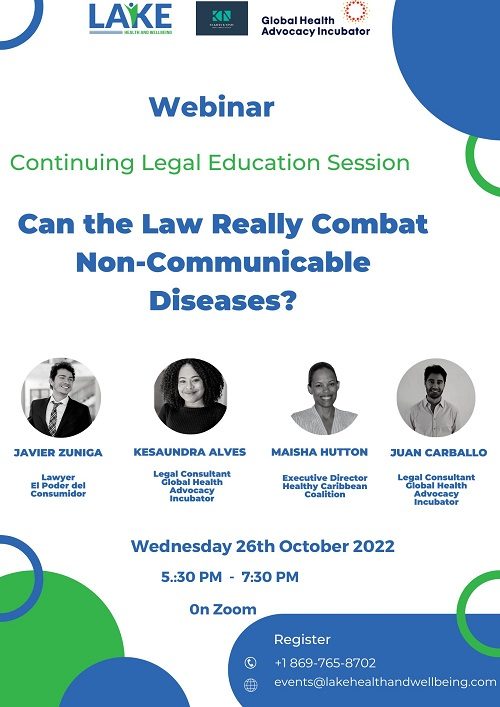
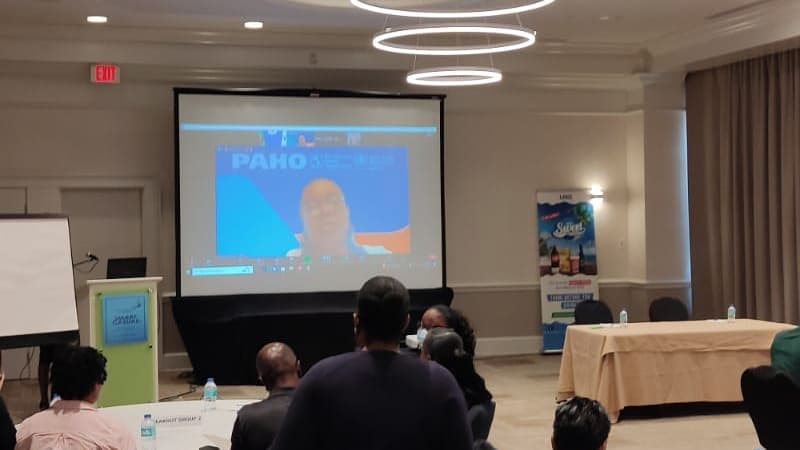
As part of our work to ensure that lawyers are equipped to contribute to the NCD response, we teamed up with the Ministry of Health and the Law and Health Research Unit at the University of the West Indies to host a webinar on the role of law in public health policy. This webinar focused on tobacco control and SSBs and sought to provide lawyers in St Kitts and Nevis with guidance on how they can support the development of tobacco control and SSB policies. Speakers included:

  • Dr Marissa Carty, the NCD Programme Coordinator at the Ministry of Health in St Kitts and Nevis
  • Nicole Foster, Deputy Dean and Head, Health and Law Research Unity at the University of the West Indies

Welcome remarks were provided by Mr Garth Wilkin, the President of the Bar Association and closing remarks were delivered by Rhonda Nisbett-Browne, Member of the Bar Association

This was a very informative session and we would like to thank Dr Marissa Carty and Nicole Foster for their excellent presentations, the Bar Association for partnering with us and all the lawyers who attended.  A recording of the event is below.

Conclusion

Lawyers have a very important role to play in preventing and controlling NCDs. They ensure that the State fulfils its human rights obligations of securing everyone’s right to health by supporting the development of equitable legislation and policies.

Sources
  1. Office of the United Nations High Commissioner for Human Rights and Word Health Organisation (2008). Right to Health. Factsheet No. 31, June 2008
  2. UN (1946). Universal Declaration of Human Rights
  3. UN (1989). Convention of the Rights of the Child
  4. UN Committee on Economic, Social and Cultural Rights (CESCR), General Comment No. 14: The Right to the Highest Attainable Standard of Health (Art. 12 of the Covenant), 11 August 2000, E/C.12/2000/4, available at: https://www.refworld.org/docid/4538838d0.html  [accessed 16 April 2022]
  5. World Health Organization. (‎2017)‎. Tackling NCDs: ‘best buys’ and other recommended interventions for the prevention and control of noncommunicable diseases. World Health Organization.https://apps.who.int/iris/handle/10665/259232. License: CC BY-NC-SA 3.0 IGO
GMSKN
BlogNewsYou're Sweet Enough

We Were on GMSKN

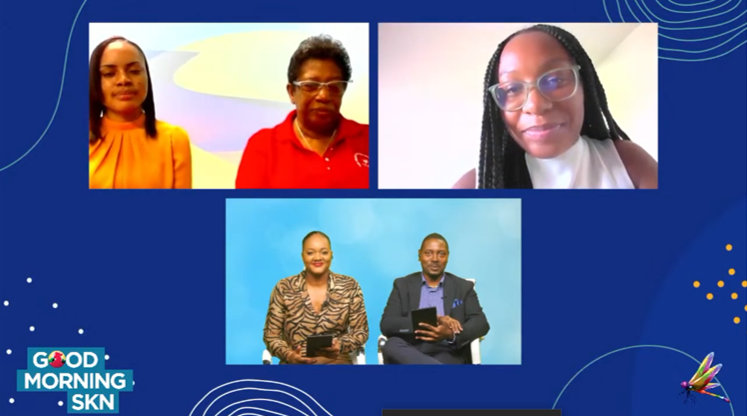
On Tuesday 5th April,  our Creative Director, Oyehmi Begho, and our Advocacy and Research Officer, Isalean Phillip, joined the hosts of Good Morning St. Kitts and Nevis to discuss our animation, Meet the Willbuts.

Meet the Willbuts was recently shortlisted for the WHO Health for All Film Festival in the very short film category for conveying messages about NCDs and the need for families to improve their diets for better health outcomes.

Our submission was recognised out of over 1000 submissions from 110 countries and we are just so proud of this achievement. So, we were very happy to join the Good Morning St. Kitts and Nevis team to discuss the animation, its message and the future of our You’re Sweet Enough campaign. 

CSO Health Advocacy Workshop Flyer 2022
BlogYou're Sweet Enough

Strengthening Civil Society’s Role in Health Advocacy

The World Bank describes civil society as “the wide array of non-governmental and not for profit organizations that have a presence in public life, express the interests and values of their members and others, based on ethical, cultural, political, scientific, religious or philanthropic considerations.”

The Role and Impact of Civil Society

Based on this definition, civil society organisations (CSOs) play an important role in ensuring that Governments and the private sector act in the best interest of the public and this involves advocating for policies and actions that benefit society.

In public health, civil society organisations from across the world have a long history of successfully advocating on behalf of patients for better care and treatment, and to reduce health inequalities. For example, Cancer Research UK and other cancer charities in the UK have consistently advocated for improvements to the cancer diagnosis pathway leading to a more streamlined and structured pathway that aims to reduce delays in diagnosis and thus reduce cancer mortality.

Additionally, CSOs have fought for the introduction of policies that have improved the health of the public and prevented and controlled diseases.  For example, the tobacco control policies that have been implemented throughout the world leading to a reduction in the public’s exposure to tobacco and second-hand smoke leading to reduced rates of tobacco-related illnesses. 

Civil Society in Small Island Developing States

In countries such as the UK and US, the CSO environment is a very strong and cohesive one with a variety of organisations advocating for change, having a positive influence on the development and implementation of effective health policies, forming strategic alliances to bring about change and implementing effective advocacy campaigns.  Conversely, in many countries, such as here in the Caribbean region, CSOs, because of the small size of our countries and lack of resources, face many challenges when advocating for change and this leaves the public, patients and vulnerable communities without organisations who can effectively advocate on their behalf or hold Governments and the private sector accountable.

Building a Strong Civil Society Sector

With this in mind, we have started a series of capacity-building webinars aimed at CSOs in St Kitts and Nevis with the aim of strengthening the sector. Our overall goal is to build up this sector, empower organisations and thus create an environment where organisations can work collaboratively to advocate for the changes that are required to tackle the major public health challenges that our country faces.

Our first capacity-building event was an online workshop on strengthening civil society’s role in health advocacy and this event was held over two days – on 25th February and 25th March 2022. The first session focused on how to develop and implement successful health-related advocacy campaigns and featured the following speakers and presentations:

In the second session, we explored how to monitor and evaluate advocacy campaigns and looked at the successes of advocates from across the world using sugar-sweetened beverages as a case study. During this session attendees heard from:

  • Dr Shelly Trim, Development Coordination Officer, Data Management & Results Monitoring/Reporting, Office of the UN Resident Coordinator – Measuring Success: The Importance of Monitoring and Evaluation
  • Maisha Hutton, Executive Director, Healthy Caribbean Coalition – The Need for Action on SSBs in the Caribbean
  • Shirley Ewang, Advocacy & External Engagement Specialist, Gatefield Impact– Lessons Learnt: The Role of Civil Society in the Introduction of an SSB Tax in Nigeria
  • Dr Marissa Carty, NCD Coordinator,  Kitts and Nevis Ministry of Health – Developing a Federal SSB Policy for St. Kitts and Nevis

.

Through this first two-part workshop, we were able to bring civil society organisations together  to build their capacity so that together we can more effectively advocate for the evidence-based policies that St Kitts and Nevis needs to improve the public’s health. 

Conclusion

Capacity-building is a useful first step in building a strong civil society sector, but we recognize that strengthening this sector requires more than just capacity-building; it requires a commitment from decision-makers to transform the sector from an informal, voluntary sector to a dynamic, sustainable sector that becomes a viable career option for those wanting to make a difference in society. To support this transition requires an investment of time, funding and resources; these investments are more than worth it because of the many benefits that CSOs can bring to the health, development and economy of a country.

MeetTheWillbutsCover
BlogNewsYou're Sweet Enough

Our Animation in the News

We were absolutely delighted that our recent achievement of being shortlisted for the World Health Organisation Health for All Film Festival was featured on the ZIZ News on 1st April 2022. 

We’d like to say a big thank you to ZIZ for this feature and if you missed it, you can watch it in the clip below. 

Womb Wellness (3) (Web)
Women's Health

International Women’s Day Webinar

This year, the theme for International Women’s Day was ‘Break the Bias,’ and organisers asked us all to imagine a world that is free of bias, stereotypes and discrimination and built on equity and inclusivity. A world where women have full access to opportunities, information and the freedom to define their own success.

When it comes to women’s health issues like fibroids, endometriosis and PCOS, many biases exist, such as: these conditions are “not that bad”, “not really that painful” and “not a public health priority.”  These biases have left women with subpar treatment options, a lack of information to make informed choices about their health and a lack of appropriate support.  As we neared International Women’s Day, one of this year’s missions reminded us to stand up and address these health-related biases so that women are empowered and can take control of their health. Therefore, in recognition of International Women’s Day, we hosted a virtual womb wellness presentation with guest speaker, Dr Keriise Manchester, an obstetrician and gynaecologist in St. Kitts and Nevis and founder of Manchester Medical.

Our womb wellness session was aimed at women in St. Kitts and Nevis and focused on providing women with information and guidance on what they need to know about their womb health.  Dr Manchester provided a very comprehensive presentation exploring womb wellness throughout a women’s life course from childhood to the post-menopausal stage. The session was accessible in the way it was presented, informative and empowering and we would like to thank Dr Manchester for being a guest speaker for this session and sharing her expertise.

There is still a lot of stigma and sensitivity around the challenges that women may face with their womb health and we hope that this session provided a safe space where women could learn about an important health issue and made them feel more comfortable about talking about these issues so that they are can be addressed and treated promptly.

If you missed this session, you can watch the recording below and if you have any questions, please don’t hesitate to send us an email.


MeetTheWillbutsCover
BlogDietNewsYou're Sweet Enough

We’ve Been Shortlisted for WHO Film Festival

Meet the Willbuts, a short animation depicting how sugar-sweetened beverages and an unhealthy diet impact a typical Caribbean family, has been shortlisted for the World Health Organisation (WHO) Health for All Film Festival.

The WHO Health for All Film Festival is held annually to demonstrate how creative media is being mobilised for health promotion and education. The festival invites submissions from patients, health workers, health activists, NGOs, public institutions and professional filmmakers of short films on a wide range of health-related topics, including non-communicable diseases (NCDs), mental health, disability, and communicable diseases as well as environmental and social determinants of health, such as gender-based violence, road safety and pollution.

Meet the Willbuts was submitted by Lake Health and Wellbeing, a public health NGO in St. Kitts and Nevis. The animation was shortlisted under the very short film category for conveying messages about NCDs and the need for families to improve their diets for better health outcomes. Lake Health and Wellbeing’s submission was recognised out of over 1000 submissions from 110 countries – a major achievement that places St. Kitts and Nevis on the global stage for health promotion and education.

The winners will be announced in May; in the meantime, WHO is encouraging the public to get involved by selecting a film that they would like to champion and then commenting on its story or topic before May 10, 2022. Comments can be posted on social media using the hashtag #Film4Health or through the WHO’s YouTube playlists available on the festival’s website. Some comments from the public will be featured during the Health for All Film Festival’s virtual awards ceremony in mid-May.

Meet the Willbuts was produced as part of Lake Health and Wellbeing’s You’re Sweet Enough campaign which aims to tackle the high rate of non-communicable diseases locally and regionally by encouraging the public to adopt a healthy lifestyle. Specifically, the campaign focuses on encouraging the public to reduce their consumption of sugar-sweetened beverages and consume water instead.

Dr Fanta Waterman, a board member of Lake Health and Wellbeing, said:

“With campaigns like You’re Sweet Enough, Lake Health and Wellbeing continuously demonstrates its commitment to making health literacy accessible, actionable and fun for all. This will only help to improve the health outcomes of people living in this region – and now, globally! I am so proud to be affiliated with this organisation and am glad many others will get to see this animation about how to maintain one’s health.”

Maisha Hutton, Executive Director of the Healthy Caribbean Coalition, stated that:

“We’re extremely delighted that one of our civil society members has been shortlisted for the WHO Health for All Film Festival. This highlights that civil society can occupy the tech-innovation space to reach the public with important public health messages. This is a major achievement for the Caribbean and showcases the talent and creativity that exists in our region.”

Finally, one of Lake Health and Wellbeing’s main project partners, the Ministry of Health, said:

“The Ministry of Health is grateful for the partnership cultivated with Lake Health and Wellbeing as one of the leading organisations dedicated to improving the health and wellbeing of our local, regional and now global community. The You’re Sweet Enough campaign has generated conversations regarding healthy drinking and the importance of consuming adequate water. As a civil society organisation, their aim is to contribute to the improvement of public health. Therefore, their positive influence is having a profound impact on the healthy decisions made by members of our society.”

World Obesity Day Image
Childhood ObesityObesityYou're Sweet Enough

World Obesity Day Activities

Every year, the 4th March is set aside as World Obesity Day and this year the theme was ‘Everybody Needs to Act.’

Obesity is defined by the World Health Organisation as ‘abnormal or excessive fat accumulation that presents a risk to health.’ Today, obesity is one of the major global health challenges that we face with 800 million people across the world being affected. Those affected by obesity are at an increased risk of developing non-communicable diseases (NCDs) such as type 2 diabetes, cancer, heart disease and hypertension and it can also negatively impact mental health.  Additionally, obesity itself is seen as a non-communicable disease.

The cause of obesity is multi-faceted and complex. A variety of factors such as genetic risk, biology, an unhealthy diet, physical inactivity, mental health and the environment all contribute to the development of obesity. Therefore, to tackle obesity a comprehensive, all-of-society approach is required i.e. ‘Everybody Needs to Act’

In St. Kitts and Nevis, we have not escaped the reach of obesity. Like many Caribbean countries our obesity rates are high and one of the highest in the world. Research has shown that 45% of adults and 26% of children in St Kitts and Nevis are obese, and this is contributing to the high rate of NCDs in the Federation. Sadly, data shows that NCDs contribute to 63% of deaths in St Kitts and Nevis and 83% of hospitalisations. To improve the health of our nation action is required and, therefore, on World Obesity Day, led by the Healthy Caribbean Coalition, we joined civil society organisations from across the region to call on Caribbean leaders to introduce evidence-based healthy food policies. These include:

  • Front of package warning labels which easily alert consumers to foods that are high in salt, sugar, saturated fat and trans fat
  • A tax of at least 20% on sugar-sweetened beverages to deter the purchase of these drinks
  • The restriction of the sale and marketing of unhealthy foods in and around schools

These policies have been shown to facilitate healthy behaviours and contribute to the creation of a healthy food environment, in short, these policies make it easy for the public to be healthy.

Also, as part of World Obesity Day, we hosted a childhood obesity webinar entitled ‘Community-Based Approaches to Tackling Childhood Obesity.’ This webinar aimed to showcase the work of CSOs in St Kitts and Nevis and explore the lessons we can learn from these efforts. Featured in this webinar were:

  • Lessons Learnt from Nevis Academy’s No Sugar Challenge – Dr Andrea Bussue, Principal of the Nevis Academy Primary school
  • Improving the health of children through medical education – Ifeanyi Ndukwu, President, Because We Care
  • Rotarians Tackling Childhood Obesity – Dominic Matthew, Rotary Club of Liamuiga
  • Nutrition for School-Aged Children – Renell Daniel, Public Health Nutritionist
  • Lessons Learnt from the Diabetic Screening of School Children – Dr  Reginald O’Loughlin,  Public Relations Officer, St Kitts Diabetes Association
  • Advocating for Evidence-Based Health Policies, Isalean Phillip, Advocacy Officer, Lake Health and Wellbeing

This was a very informative event that highlighted the important role that civil society plays in tackling important public health issues. If you missed this event, you can watch the recording below. 


LegendaryTalkShow
BlogNewsYou're Sweet Enough

We Were on the Legendary Talk Show

On 16th Feb 2022, our Advocacy and Research Officer, Isalean Phillip, was the featured guest on the Legendary Talk Show on Nevis’ 2020 Vision Radio.

During this interview Isalean discussed NCDs, our You’re Sweet Enough campaign and many other interesting topics. 

If you missed this interview, you can listen to the recording by clicking on the picture below. 

.

Tyrrell Williams
BlogYou're Sweet Enough

Dance Competition Prize Giving

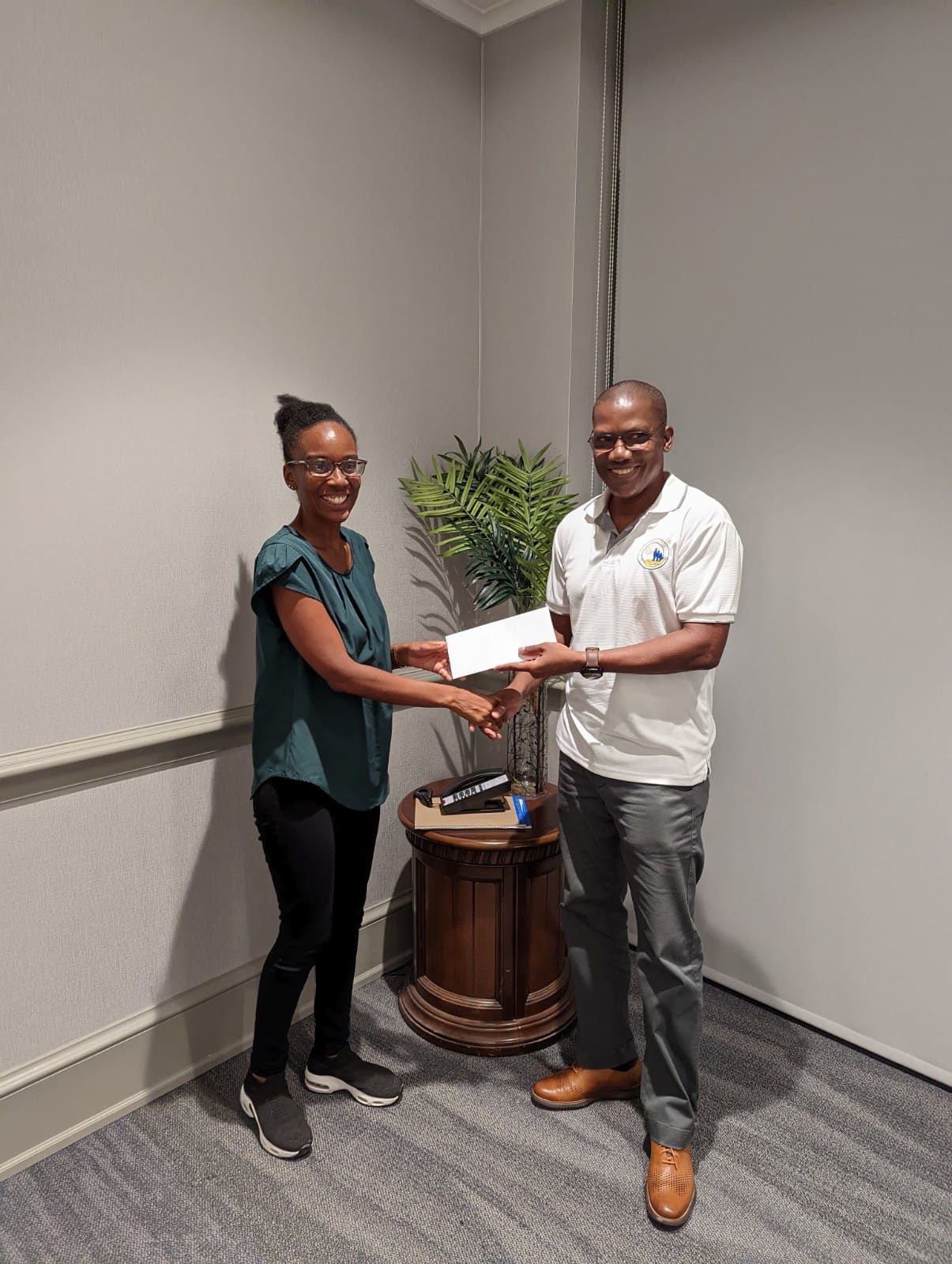
As part of our You’re Sweet Enough campaign, we hosted a virtual dance competition and last week, we had a great time presenting the winners of the competition with their prizes.

It was so rewarding to not only see the excitement of all the children as they received their prizes but to also hear them singing our jingle and remembering the core message of our campaign.

We are very grateful to Ross University School of Veterinary Medicine for their generous donation of laptops, tablets, projects and watercoolers as prizes. The kids loved them! Additionally, we would like to thank the Curriculum Development Unit at the Ministry of Education for partnering with us for this fun and engaging campaign activity.

Congratulations to all our winners. You did a great job!.

Alcohol
Diet

No Amount of Alcohol is Good For Us

Many of us grew up with the notion that a small amount of red wine is good for the heart and can decrease our risk of developing heart disease, but a new policy brief published by the World Heart Federation  (WHF) has corrected this myth.

In their brief, the WHF highlights the mounting evidence that has led to the fairly recent conclusion by global health researchers and the World Health Organisation that there is no safe level of alcohol consumption; any level of alcohol consumption affects our health.  

In recent years, researchers have shown that alcohol consumption is linked to an increased risk of developing non-communicable diseases such as cancer, cardiovascular disease, digestive diseases, and intentional and unintentional injuries and some communicable diseases. Additionally, consuming even small amounts of alcohol can increase our risk of stroke, heart failure, coronary disease and other cardiovascular diseases.

If alcohol is so harmful to our health, then how did many of us come to believe that alcohol is beneficial to the health of our heart? The WHF’s policy brief explains that over the past thirty years some researchers, the alcohol industry and the media have been aggressively promoting the misleading message that alcohol can prolong life by reducing our risk of cardiovascular disease, with them pushing that red wine, in particular, is a heart-healthy beverage because of its resveratrol content and other alcoholic beverages are heart-healthy because of their high-density lipoprotein ( HDL) content. The WHF policy brief explains that these claims have now been refuted with high-quality research that shows the many negative health outcomes of consuming any amount of alcohol.

As part of their policy brief the WHF is calling for stricter alcohol restrictions and are specifically recommending the following with regards to advocating for change:

  • Advocate for the adoption of WHO’s SAFER Guidelines
  • Call for strict regulation of alcohol products
  • Advocate for minimum pricing of alcohol products
  • Build capacity internally and among peers to promote cessation of alcohol use and abstinence from alcohol
  • Promote community, national, and global best practices and materials, such as the PAHO “Live better, drink less” campaign, and advocate for their uptake
  • Communicate evidence on the harms of alcohol use, including the clear messages that no level of alcohol is safe and alcohol consumption increases the risk of CVD
  • Prioritise alcohol control in national agendas for health and support policy coherence between health and other sectors
  • Facilitate screening for the use of alcohol and other substances as a part of risk mitigation during the health assessment of individuals visiting a health care centre
  • Set the example of non-collaboration with the alcohol industry and/or its public relations groups.

We applaud the WHF on publishing this policy brief and dispelling a very pervasive and harmful myth about alcohol. We hope that everyone – policymakers and the public- acts on this information and works towards eliminating the consumption of alcohol.  From our point of view, we encourage  healthy drinking and recommend that everyone select water as their drink of choice and both reduce their sugar-sweetened beverage consumption and abstain from alcohol.

For more information, you can read the WHF policy brief here  and you can find out about our healthy drinking campaign, You’re Sweet Enough here.

.