Contacts

Bird Rock, St Kitts, St Kitts and Nevis, West Indies

info@lakehealthandwellbeing.com

+1 869 765 8702

Tag: NCDs

World Health Day 2019: Universal Health Coverage
NewsNon-communicable diseasesObesity

World Health Day 2019: Universal Health Coverage

Today, Sunday 7th April 2019, is World Health Day. This year, the World Health Organisation is focusing on the topic of Universal Health Coverage (UHC) with the theme being ‘Health for All – Everyone, Everywhere.’

WHO states that “Universal Health Coverage means that all people have access to the quality health
services they need, when and where they need them, without financial hardship.”  They explain that  Universal Health Coverage includes the full spectrum of health services which encompass prevention, diagnosis, treatment, rehabilitation and palliative care.

Providing UHC is one of the Sustainable Development Goals and countries throughout the world, including St Kitts and Nevis are exploring how UHC can be achieved.

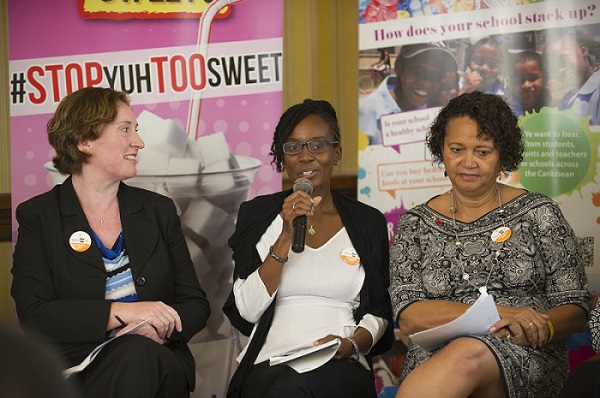
In recognition of the World Health Day theme we thought it would be useful to share this excellent interview from January 2019 with Chairperson of the St. Kitts and Nevis National Commission for Universal Health Coverage , Azilla Clarke.

In this informative interview we hear about the government’s plans for UHC. The discussion includes an overview of the major health challenges in the Federation, including non-communicable disease (NCDs), how we can address these and how UHC can contribute to tackling NCDs.

You can watch this interview below and happy World Health Day!


Photo Credit: SKNIS

Discussions on Managing Conflict of Interest in NCD Prevention and Control in the Caribbean: Part 1
BlogNon-Communicable Diseases (NCDs)

Discussions on Managing Conflict of Interest in NCD Prevention and Control in the Caribbean: Part 1

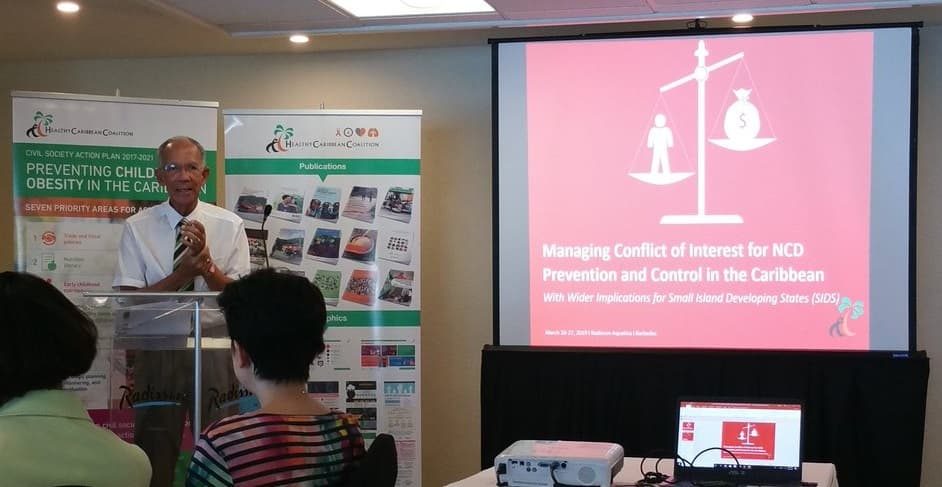
On 26th and 27th March 2019, we joined representatives from across the Caribbean in attending the Healthy Caribbean Coalition’s workshop on conflict of interest (CoI). This event had a special focus on conflict of interest in non-communicable disease (NCD) prevention and control in the Caribbean.

This is going to be a two-part blog and in today’s piece we’re going to provide some background to conflict of interest and in part two we’ll provide some highlights from the HCC’s CoI meeting.

What is Conflict of Interest?

The World Health Organisation describes conflict of interest as:

“…circumstances where there is potential for a secondary interest to unduly influence, or where it may be reasonably perceived to unduly influence, either the independence or objectivity of professional judgement or actions regarding a primary interest.”

They also explain that:

“The existence of conflict of interest in all its forms does not as such mean that improper action has occurred, but rather the risk of such improper action occurring. Conflicts of interest are not only financial but can take other forms as well.”

Another definition of CoI comes from Public Health and Food and Beverage Industry Engagement: A Tool to Guide Partnership Opportunities and Challenges. They define CoI as:

“… where one engages in any private, personal or business undertaking or other activity in which one’s private or personal interest conflicts with one’s duties or responsibilities…”

For further clarity around the concept of CoI further explanations have been offered which categorise CoI into perceived, potential and actual and these are defined as follows:

  • An actual conflict of interest occurs when there is a direct conflict between a person’s professional duties within an organisation and a competing interest or obligation, whether personal or involving a third-party.
  • A potential conflict of interest arises where a person has an interest or obligation, whether personal or involving a third-party, that could conflict with their professional duties and responsibilities in the future.
  • A perceived conflict of interest occurs where it could reasonably be perceived, or give the appearance, that a competing interest could improperly influence a person’s professional duties.

Additionally, CoI may be seen at the individual, institutional and structural levels.

By understanding and reflecting on these definitions we can recognise if we, or our organisation, may be conflicted. This will allow us to take steps to address this to ensure we are serving our primary interest – this is the one we committed to serve at the outset of our professional journey (in our case, improving the public’s health).

Conflict of Interest, the Caribbean and NCDs

Small Island Developing States (SIDS) like the Caribbean are presented with a unique set of circumstances which make the area of conflict of interest particularly challenging. The circumstances in question relate to the very small populations creating an unavoidable, overlapping, intertwined social and business environment. This means that individuals and organisations may have multiple competing interests.  Therefore, staff working in organisations aiming to prevent and control NCDs may, at some point, find themselves in a number of difficult situations when it comes to CoI. This may include:

  • Having a family member, friend or close associate working in an industry that produces products that are risk factors for NCDs
  • Being offered funding, sponsorship or resources from companies that produce unhealthy products in a landscape where there are very limited funding and sponsorship opportunities
  • Exploring a partnership with a company that produces both healthy and unhealthy products
  • Being invited to take part in health campaigns by companies who produce products that are risk factors for NCDs (with there being no other companies to partner with to reach such a large audience)
  • Developing NCD prevention and control policies with individuals and entities who have competing interests

In larger countries there are multiple options when there is a need to partner with individuals and organisations to  implement projects to prevent and control NCDs so many of the above situations can be avoided. Therefore, their approach to conflict of interest centres on prevention.

In Small Island Developing States, many of these conflicting situations cannot be avoided so not-for-profit entities (as well as government departments) have to start to re-think their approach to conflict of interest, focusing on strategies to effectively manage conflict of interest.

The HCC’s Conflict of Interest Meeting

Historically, conflict of interest, in many cases, has been addressed with a global blanket approach that doesn’t delve into the complex, overlapping business and personal relationships as well as the challenging funding environment that exists in the Caribbean. A more bespoke approach is needed for the Caribbean and hence the HCC’s conflict of interest meeting brought organisations together for in-depth discussions on this issue. Time was also set aside to explore solutions through the review and testing of a new conflict of interest tool being developed by WHO/PAHO as well as the review of a conflict of interest policy and guide being developed by the HCC. This meeting was very informative and we were delighted to have attended.

Coming Up Next Time

In part two of this blog we’ll summarise the highlights from the meeting, but in the meantime, for further information on conflict of interest you can explore the documents in our reference list below. We also encourage anyone working in public health in a Small Island Developing State to develop an approach to managing CoI to ensure the  credibility and integrity of their organisation remains intact.

References

  1. The Healthy People and Communities Steering Committee’s Multi-Sectoral Partnerships Task Group, 2014. Public Health and Food and Beverage Industry Engagement A Tool to Guide Partnership Opportunities and Challenges, Ontario, Canada: The Healthy People and Communities Steering Committee’s Multi-Sectoral Partnerships Task Group, May 2014.
  2. University of Southern Queensland. Conflicts of Interest. [Online]. Available at <https://www.usq.edu.au/hr/empcond/conflicts> [Accessed on 3rd April 2019]
  3. WHO, 2016. Framework of Engagement With Non-State Actors. [Meeting Proceedings] 28th May 2016. Sixty-Ninth World Health Assembly.
  4. WHO, 2015. Addressing and managing conflicts of interest in the planning and delivery of nutrition programmes at country level. Report of a technical consultation convened in Geneva, Switzerland, on 8–9 October 2015.
Why We’re Focusing on Women’s Health in St Kitts and Nevis
BlogWomen's Health

Why We’re Focusing on Women’s Health in St Kitts and Nevis

Being a new organisation in St Kitts and Nevis and keen to make a positive contribution to improving the health and wellbeing of our community, over the past year we have been exploring the public health landscape in our Federation and started developing a strategy around the pressing issue of non-communicable diseases (NCDs) with a focus on childhood obesity and women’s health.

In today’s blog, we’ll be discussing our decision to tackle women’s health and in a future blog, we’ll explore childhood obesity.

Our decision to focus on women’s health was an evidence-based decision. Data from the Ministry of Health has demonstrated that women living in the Federation face a number of health challenges.  In St Kitts and Nevis, women are disproportionately affected by some NCDs. For example, 71% of diabetics in St Kitts and Nevis are women and 65% of cancer patients are women.

Non-communicable diseases are a significant issue for St Kitts and Nevis with 83% of deaths being due to these conditions. Driving the rise of non-communicable diseases is the high rate of overweight and obesity. In women, the rates are extremely high. Data has shown that 74% of females in St Kitts and Nevis are either overweight or obese.

We need to tackle these issues in order to improve the health and quality of life of women and prevent them from dying prematurely from diseases that are mostly preventable. Therefore, we are working towards developing a women’s health programme that will initially focus on awareness and education.

Our Plan

Over the next year, our plan is to host a series of women’s health events entitled ‘Girl Talk: Informative, Informal and Empowering Discussions About Women’s Health.’

These events will aim to inform and empower women enabling them to take control of their health and therefore not only improve their own health and wellbeing, but the health and wellbeing of their families, and by extension build a stronger, healthier nation.

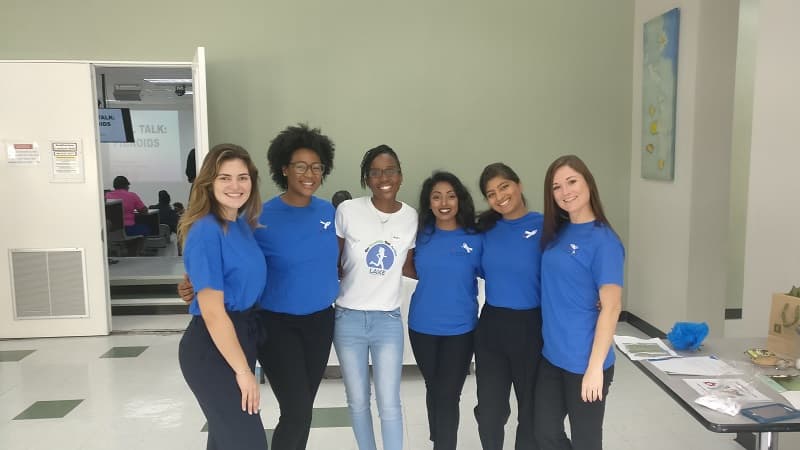
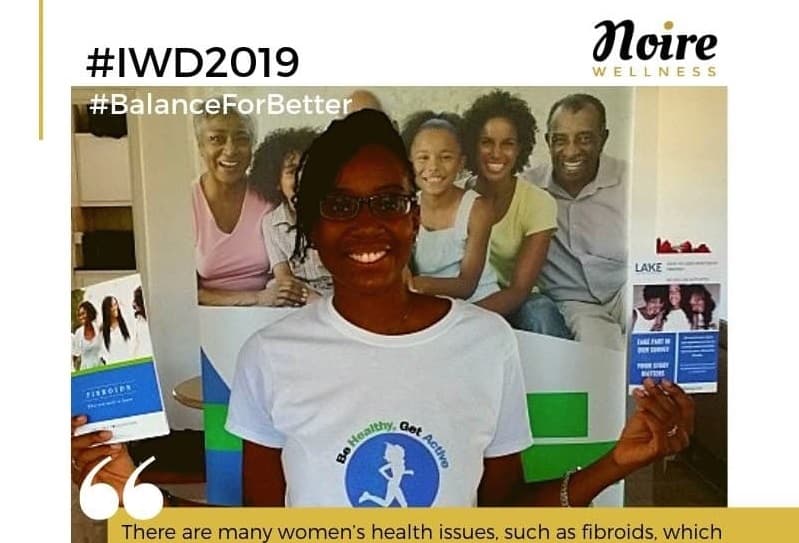
The series began on 30th March 2019 with Girl Talk: Fibroids and following this there will be regular events covering a range of women’s health issues.

Healthcare professionals, particularly female healthcare professionals, will be invited to give engaging presentations on health topics, and women affected by conditions will be invited to share their experience and what they have learnt from it.

Additionally, we will invite health and wellbeing brands (particularly those owned by women) to showcase their services at each event so that women can have easy access to relevant services. We will also invite female medical students to take part in this event giving them relevant real-world experience of women’s health. We are pleased to have formed a partnership with Because We Care at the University of Medicine and Health Sciences to achieve this.

As well as covering the most common NCDs, we need to focus on providing support and information for women in St Kitts who are affected by women’s health issues that tend to be overlooked such as fibroids, endometriosis and PCOS.

Additionally, childhood obesity is another significant challenge with 1 in 3 children in the Caribbean being overweight or obese. In St Kitts, the statistics are more alarming with 46.9% of secondary school children being overweight or obese. Studies have shown that children who are overweight and obese tend to become adults who are overweight or obese, and this puts them at risk of developing NCDs like diabetes, cancer, heart disease and more.  We believe that women can play an instrumental role in tackling childhood obesity by creating a healthy environment for their children, our lecture series will educate mothers on easy, practical ways to do this.

The key objectives of our women’s health event series will be:

  1. To raise awareness of and create an understanding of women’s health issues to facilitate early detection and prevention
  2. To provide a safe, informal platform where women can come together, receive expert advice and have an honest open discussion about important health issues and therefore reduce isolation, stigma and create a support network for women.
  3. To empower women with the information to create a healthy lifestyle for themselves and their families to improve their general health and wellbeing

As mentioned previously our first Girl Talk event was on 30th March 2019 and we were so pleased with how it went. Look out for a future blog post summarising this event.

We are really excited about our strategy for the next couple of years and hope you’ll follow us on our journey.


References

  1. UNICEF, Situation Analysis of Children in the Federation of St Kitts and Nevis, UNICEF Office for the Eastern Caribbean Area and the Government of St Kitts and Nevis, Christ Church, Barbados, 2017
  2. PAHO, Health in the Americas, 2012: St Kitts and Nevis, PAHO, 2012
  3.  WHO, Diabetes Country Profile: St Kitts and Nevis, WHO, 2016

We Become a Member of the SKNBS Technical Committee for Labelling
Childhood Obesity NewsFront-of-Pack Labelling NewsNews

We Become a Member of the SKNBS Technical Committee for Labelling

We are absolutely delighted to have been invited to become a member of the St Kitts and Nevis Bureau of Standards Technical Committee for Labelling.

The St Kitts and Nevis Bureau of Standards has the responsibility of protecting the environment, health and safety of consumers. They focus on preparing, promoting and adopting standards on a national, regional and international basis with respect to the structures, commodities, materials, articles and other products and services offered to the public commercially. Through their work they promote standardization and quality assurance in industry and commerce.

One of the areas that the Bureau focuses on is ensuring the proper labelling of pre-packaged food items. Currently, the CARICOM Regional Organisation for Standards and Quality is updating the regional standard for the labelling of pre-packaged foods. The updated standard includes the introduction of front-of-pack labelling .

Front-of-pack (FOP) labels are just one of several strategies being used worldwide to tackle obesity and non-communicable diseases (NCDs). This type of labelling aims to provide the public with a quick way to assess the health of the foods they purchase and consume, making it easier to identify which foods are high in salt, saturated fat and sugar. It is also hoped that manufacturers will take notice of the labelling of their products and be encouraged to reformulate their products and reduce the amount of salt, sugar and saturated fat in them.

As part of our role in the SKNBS Technical Committee for Labelling we will be providing input on the need for FOP labels as a useful tool for the public to make healthier choices and for the government to tackle NCDs, a significant challenge in St Kitts and Nevis causing 83% of the islands’ deaths.

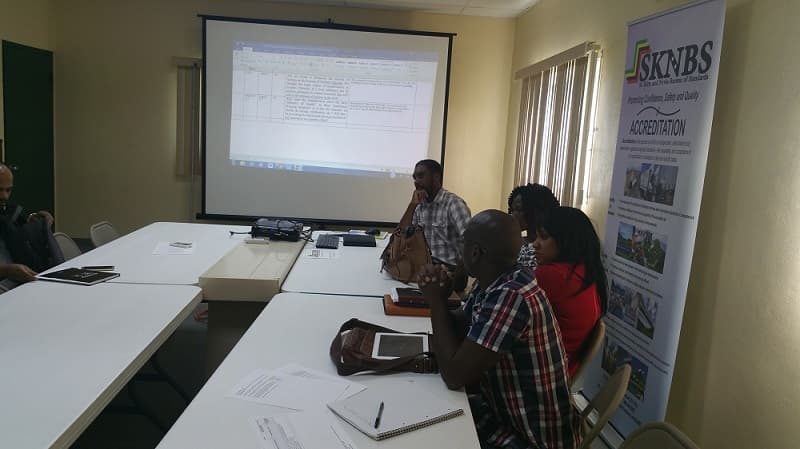
Last month we attended our first meeting of this committee and were delighted to have had the opportunity to have a productive discussion on FOP labels.

We’d like to thank the committee for inviting us to be a member of this group and are very much looking forward to making a positive contribution going forward.

WCRF Publishes a Report on Front-of-Pack Nutrition Labelling
Front-of-Pack Labelling NewsNews

WCRF Publishes a Report on Front-of-Pack Nutrition Labelling

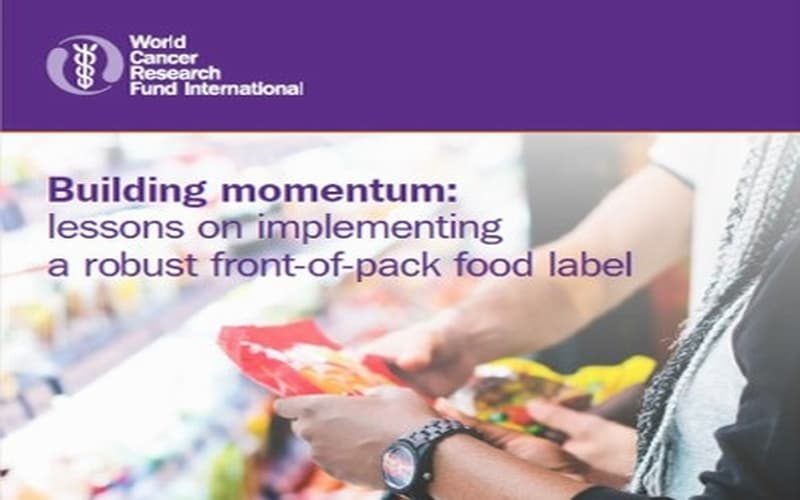
The World Cancer Research Fund recently published a very informative and useful report on the lessons learnt globally from implementing front-of-pack (FOP) labels.

This report is the second report in their Building Momentum series and aims to provide policymakers with evidence-based advice on the design and implementation of FOP labelling.

FOP nutrition labelling is just one of several strategies being used worldwide to tackle obesity and non-communicable diseases (NCDs). This type of labelling aims to provide the public with a quick way to assess the health of the foods they purchase and consume, making it easier to identify which foods are high in salt, saturated fat and sugar. It is also hoped that manufacturers will take notice of the labelling of their products and be encouraged to reformulate their products and reduce the amount of salt, sugar and saturated fat in them.

Currently many countries are exploring the introduction of FOP labels so the WCRF’s report is very timely. It covers the following areas:

  • Why FOP labels are important in tackling NCDs
  • A summary of the research on the effectiveness of FOP labels
  • The history of FOP labels and current status of FOP labels globally
  • The different types of front-of-pack labels
  • Developing a clear strategy for FOP labels that considers the following
    • The local context
    • Ensuring strategies are based on evidence
    • Having clear aims and objectives
    •  Carefully design of labels
    •  Good stakeholder engagement
    • Monitoring and evaluation are included at the early planning stage-
  • Defending FOP labelling

The report includes case studies from countries who have already implemented front-of-pack labelling providing very useful real-word examples of the challenges involved in introducing FOP labelling and how to overcome them.

With the Caribbean currently exploring the introduction of FOP labelling we believe this report is a must-read for policymakers throughout the region.

The report can be downloaded below and for more information on the WCRF please visit their website here

On World Cancer Day We Put the Focus on Childhood Obesity
BlogCancerChildhood Obesity

On World Cancer Day We Put the Focus on Childhood Obesity

World Cancer Day is on 4th February and it  gives the world the opportunity to come together to raise awareness and campaign on key issues to improve the care, support and treatment given to patients.

Organisers, the UICC,  announced that the theme for World Cancer Day is #IAmAndIWill and this theme highlights that fact that whoever you are, you have the power to reduce the impact of cancer for yourself, the people you love and for the world.

The campaign therefore encourages everyone to make a commitment by using the hashtag and sharing who you are and what you will commit to in order to tackle cancer.

Our #IamAndIWill Commitment for 2019-2021

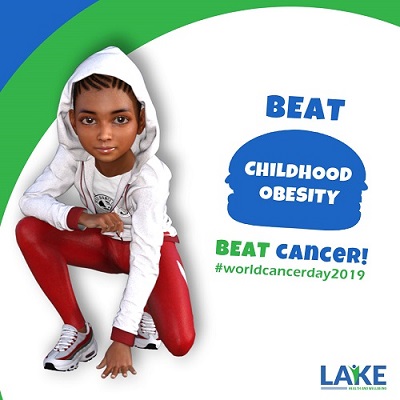
Our World Cancer Day commitment is to focus on children and raise awareness of the fact that overweight or obese children are more likely to become overweight or obese adults, and being overweight as an adult increases a person’s risk of developing cancer. In  fact, the World Cancer Research Fund has found that being overweight or obese throughout adulthood is linked to an increased risk of developing 12 types of cancer.

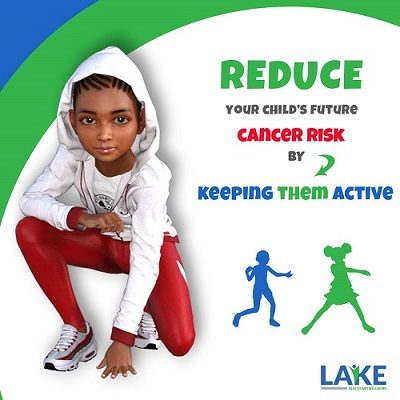
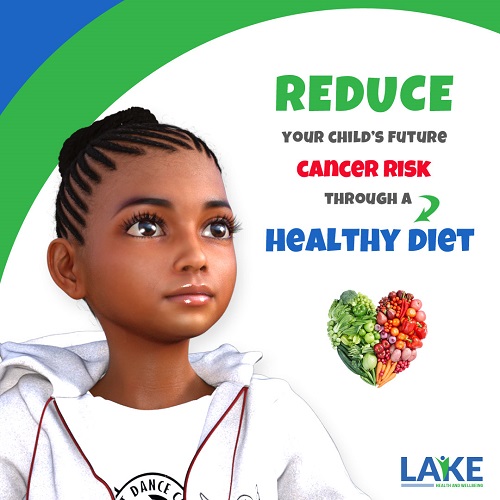
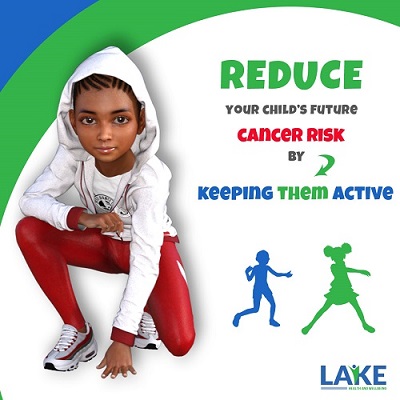
Our campaign appeals to parents to reduce their children’s future cancer risk by ensuring they’re a healthy weight now, and this can be achieved by ensuring that children:

  • Are physically active and take part in 60 minutes of physical activity every day
  • Eat a healthy diet

Childhood obesity is a significant challenge here in St Kitts and Nevis. A PAHO report revealed that 33% of secondary school children in the twin island state were overweight and 14% were obese. More recently, in 2017, a UNICEF report stated that 26% of children in St Kitts and Nevis are obese.  We have to tackle childhood obesity to improve the health of our children to ensure they become happy, healthy adults.

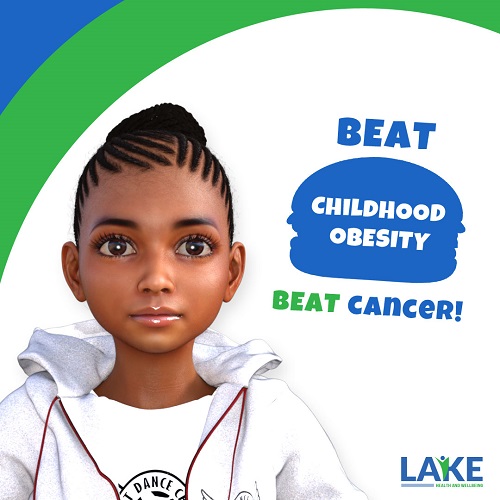
We believe that by beating childhood obesity we can also contribute to beating cancer, and other non-communicable diseases (NCDs).

“I am Lake Health and Wellbeing and I will make an impact by spreading the word

about childhood obesity increasing a child’s future cancer risk” – #IamAndIWill

What We’re Doing Beyond World Cancer Day

Our work doesn’t stop after World Cancer Day, we’re working to beat childhood obesity all year round through our new childhood obesity prevention project. 

We’re currently working on developing innovative resources to get children active so they can easily get to and maintain a healthy weight.

How You Can Get Involved

You can get involved by raising awareness on social media and sharing your thoughts on this issue. You can use any of the images below or the short video clips below.


Also, we’d love it if you could support us by making a donation, which will go towards our childhood obesity prevention project.

You can make a donation below:

[asp_product id=”5804″]

Thank you for any support you’re able to provide and we hope you’ll join us for World Cancer Day to #BeatChildhoodObesity and #BeatCancer

References

  1. UNICEF, Situation Analysis of Children in the Federation of St Kitts and Nevis, UNICEF Office for the Eastern Caribbean Area and the Government of St Kitts and Nevis, Christ Church, Barbados, 2017
  2. PAHO, Health in the Americas, 2012: St Kitts and Nevis, PAHO, 2012
  3.  World Cancer Research Fund, Diet, Nutrition, Physical Activity and Cancer: A Global Perspective,  World Cancer Research Fund International, London, UK, 2018.
TT Moves Campaign Launched
Caribbean MovesNewsNon-communicable diseases

TT Moves Campaign Launched

The Caribbean Moves campaign is growing with a third Caribbean country launching their version of this initiative. On 7th December 2018, Trinidad and Tobago joined the Caribbean Moves family with the launch of TT Moves at the Brian Lara Promenade, in Port of Spain, Trinidad.

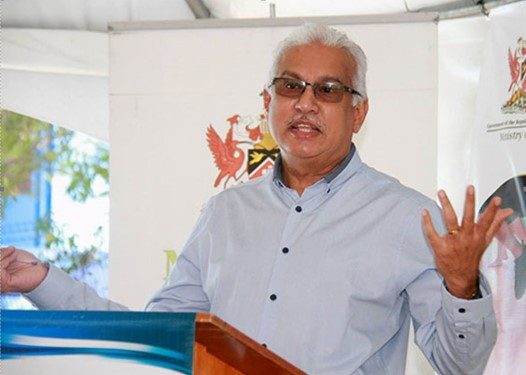
Trinidad and Tobago’s Health Minister Terrence Deyalsingh explained that this campaign is just one of their approaches to reduce the incidence of non-communicable diseases in their Caribbean nation. He stated that this campaign is a continuation of their plan to move the public from an unhealthy to a healthier lifestyle, explaining that:

“When I say a healthier lifestyle, I mean how we eat, how we exercise, controlling our stress levels, moving away from this, as social-media electronic toys which shackle us to a device and we sit down.

“We have to start to exercise some more. Simple walking, simple jogging. We have to bring into our diets healthier options like fruits. Today we are giving out fruits and fruit trees. We want people “to gradually change their lifestyles, not change today for tomorrow.”

The launch of TT Moves follows the launch of Barbados Moves in October 2018 with more Caribbean nations expected to join the movement in 2019.

Caribbean Moves is an initiative launched in 2018 that is based on the successful Jamaica Moves  campaign and focuses on physical activity, healthy eating and age appropriate health checks. They’re in the process of establishing a secretariat and their remit is to develop an implementation schedule, coordinate activities and strengthen existing work in the Caribbean Region.


Picture Credit: Anil Rampersad, pictured is  Terrence Deyalsingh,  the Minister of Health for Trinidad and Tobago 

We Were Featured on the NNC News!
F.I.T. ProjectNews

We Were Featured on the NNC News!

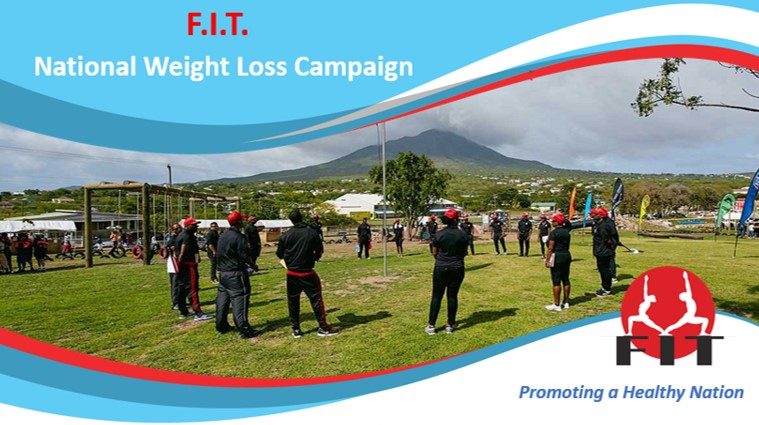
In October, we started a new consultancy project with our client being the FIT Wellness Centre in Nevis. This piece of work has involved us assisting the FIT Wellness Centre in developing their non-communicable disease (NCD) action plan and with the implementation of their National Weight Loss Campaign, a key part of their action plan.

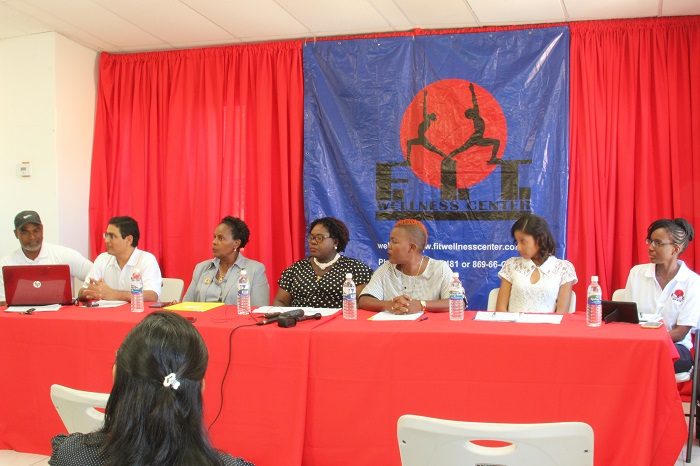
In November, we took part in a press conference to discuss FIT’s NCD Prevention Action Plan and the National Weight Loss Campaign and were delighted to be featured on the NNC News.

We’re really happy to share the news clip with you. You can check it out below.


If you’re based in Nevis and would like to take part in the National Weight Loss Campaign, please email us and if you’re creative and would like the chance to win $500EC, then you can enter the slogan competition for the campaign. You can find out more here.

Are You Good With Words? Take Part in the FIT Slogan Competition
F.I.T. ProjectNews

Are You Good With Words? Take Part in the FIT Slogan Competition

Are you good with words? Are you creative? Then we want to hear from you!

We’re inviting residents of Nevis to take part in our tagline/slogan competition for the National Weight Loss Campaign.

The competition is open to all residents of Nevis. Entries should be clear, concise, catchy and easy to understand. They must also appeal to a wide audience and follow the basic guidelines below:

  • Convey the sentiment of the public coming together, taking a stance and making a change to get healthy and lose weight.
  • The slogan must be seven words or less
  • The slogan must rhyme
  • The slogan must be submitted by 5pm on  21st December 2018

You can submit your entry in any of the following ways:

  • Via a video on social media tagging @fitgames_inc on Instagram or @fitwellnessnevis on Facebook
  • Emailing the slogan to info@lakehealthandwellbeing.com
  • Sending the slogan via a WhatsApp message to 667 0079

A winner will be selected, and this slogan will be used for the National Weight Loss Campaign.  Three runners up will also be selected, and these slogans will be used throughout the campaign on social media.

There will also be a cash prize of $500EC, sponsored by the FIT Wellness Centre, for the winner.

More Information

For further information please contact Abi Begho by calling 667 0079 or emailing info@lakehealthandwellbeing.com

About the National Weight Loss Campaign

The National Weight Loss Campaign starts in January 2019 and aims to help residents of Nevis lose weight through a fun six-month weight loss challenge that will support participants in getting active and eating a healthier diet. Participants will be guided through the six-month period with advice, tips, healthy recipes, fun events and one-to-one support. There will also be prizes for the person who loses the most weight in their category, recognition of those who have succeeded in losing their target weight and we’ll be following specific people on their weight loss journey.

Registration is Open for the National Weight Loss Campaign in Nevis
F.I.T. ProjectNews

Registration is Open for the National Weight Loss Campaign in Nevis

We are so happy to announce that registration for the F.I.T. National Weight Loss Campaign in Nevis is open!

The National Weight Loss Campaign starts in January 2019 and aims to help residents of Nevis lose weight through a fun six-month weight loss challenge that will support participants in getting active and eating a healthier diet. Participants will be guided through the six-month period with advice, tips, healthy recipes, fun events and one-to-one support. There will also be prizes for the person who loses the most weight in their category, recognition of those who have succeeded in losing their target weight and we’ll be following specific people on their weight loss journey.

Technology will play an important role in the campaign and we’ll be creating a web-based health portal where participants can come together, support each other, ask questions, share pictures and videos and receive tips and advice from experts in health and fitness. The health portal will consist of a forum and a chat facility, so we can keep in touch with all participants and provide them with support every step of the way.

How To Register for the National Weight Loss Campaign

The National Weight Loss Campaign is open to everyone in Nevis – old, young, male and female. If an individual would like to lose weight or would like some support in adopting a healthier lifestyle then they are welcome to take part.

The public can register for the campaign by emailing admin@fitwellnesscenter.com or calling (869)-662-8749

Businesses Can Get Involved Too

Businesses are strongly encouraged to take part in the National Weight Loss Campaign by either registering a team of their staff to get involved in the six-month weight loss challenge or they can play an instrumental role in improving the health and wellbeing of our community by becoming a corporate partner or sponsor.

For more information about this, businesses in Nevis can contact David Walwyn by email  or phone (869)-662-8749