
Contacts

Bird Rock, St Kitts, St Kitts and Nevis, West Indies

info@lakehealthandwellbeing.com

+1 869 765 8702

Tag: NCDs

NCDPanelDiscussion
Non-Communicable Diseases (NCDs)You're Sweet Enough

Our Panel Discussion on NCDs

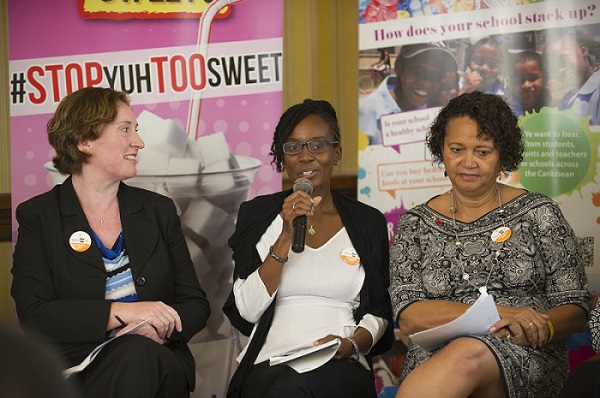
On 25th August 2021, as part of our You’re Sweet Enough week, we were delighted to host a panel discussion exploring an all-of-society approach to tackling non-communicable diseases (NCDs) and promoting healthy drinking and eating.

This event was part of a collaboration with the Ministry of Health and formed part of their seven-week SKN Moves campaign.  Now in its second year, SKN Moves falls under the Caribbean Moves program which seeks to tackle non-communicable diseases (NCDs) in the region by focusing on healthy eating, physical activity, and age-appropriate health checks.

NCDs in St Kitts and Nevis

NCDs are the major public health challenge in St Kitts and Nevis Specifically, 54% of adults have at least one chronic illness, and before the pandemic, the Nevis Island Administration reported that 85% of hospital admissions were NCD-related (PAHO 2012; Ministry of Health). Additionally, 83% of deaths in St Kitts and Nevis are due to NCDs (Ministry of Health). Furthermore, the prevalence of diabetes in St Kitts and Nevis is three times higher than the world average, and our hypertension prevalence is 9% higher than the global average.

With so many people in St Kitts and Nevis being affected by NCDs, it is important for us to focus on prevention and control strategies and our You’re Sweet Enough campaign has been focusing on one NCD risk factor, sugar-sweetened beverages (SSBs).  Our campaign aims to raise awareness of the harmful health effects of consuming sugar-sweetened beverages like sodas, fruit drinks, energy drinks and sports drinks, and to encourage everyone to drink water as the healthy alternative.

Due to the very high level of sugar in SSBs, their regular consumption has been linked to weight gain and obesity, and being overweight or obese increases a person’s risk of developing non-communicable diseases (NCDs) such as type 2 diabetes, heart disease and some types of cancer.

Research has shown that 45% of adults and 26% of children in St Kitts and Nevis are obese, and that this is contributing to the high rate of NCDs in the Federation.

By reducing SSB consumption, we can reduce a major source of sugar in our diets and this can lead to a reduction in NCD risk and related death and disability.

Our Panel Discussion

The panel discussion we hosted on 25th August, aimed to bring together representatives from a variety of sectors to explore how we can all work together to tackle risk factors like SSB consumption. This discussion was moderated by Isalean Phillip, our Advocacy and Research Officer and panelists included:

  • Dr Marissa Carty, NCD Coordinator, St Kitts and Nevis Ministry of Health
  • Dr Al Pierre, VP of the St Kitts and Nevis Medical and Dental Association
  • Andre Huie, Director of SKN Newsline
  • Jalanie Belle, a member of the St Kitts National Youth Parliament Association
  • Pastor Philip Webbe, a member of the St Kitts Evangelical Association

We had a very informative and insightful discussion on the prevention and control of NCDs. We touched on policies like SSB taxation, making healthy foods more affordable, public education and the marketing of healthy and unhealthy foods, and more. It was great to have youth representation on the panel from the St Kitts National Youth Parliament. They voiced their concern at the high rate of childhood obesity and called for action.

We would like to thank all the panelists for taking part in this discussion and Isalean for so ably moderating this important conversation. You can watch the recording of the event below and please feel free to leave any comments or questions that you may have in the comments section below, we would love to hear from you.
 

Op Ed WINN FM
Non-communicable diseasesYou're Sweet Enough

Op-Ed Featured on WINN

We were absolutely delighted that WINN Media featured our recent op-ed calling for Government action on non-communicable diseases (NCDs).

You can read this feature here

SKN Moves Anniversary
Caribbean MovesNewsNon-communicable diseases

SKN Moves Anniversary

On August 9th 2019, the Ministry of Health in St. Kitts and Nevis, in collaboration with the Office of the Prime Minister, officially launched St. Kitts & Nevis (SKN) Moves.

This initiative is part of the Caribbean Moves program which seeks to tackle non-communicable diseases (NCDs) by focusing on healthy eating, physical activity, and age-appropriate health checks.

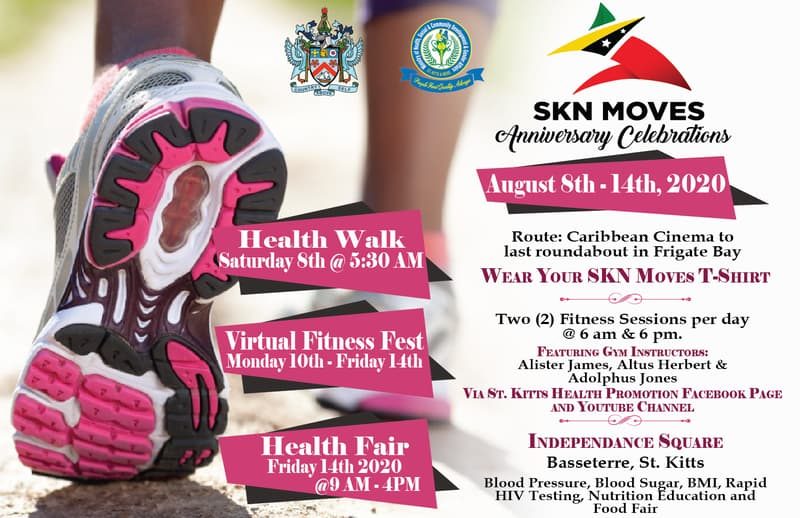
August 9th 2020, marks the first anniversary of the launch and the Ministry of Health’s Health Promotion Team is engaging in a week of activities from Saturday 8th to Friday 14th August 2020.

Events include:

  • SKN Moves Health Walk – Saturday, August 8th at 5:30 am – Caribbean Cinemas to Frigate Bay Lawn
  • SKN Moves Virtual Fitness Fest – Monday August 10th – Friday 14th at 6am & 6pm
  • SKN Moves Health Fair – Friday, August 14th from 9am – 4pm- Independence Square

Everyone is invited to take part in this celebration so please do come out, take part and get moving. We’ll see you there!

Final Chronic Disease Self-Management Course of the Year
BlogCDSM CourseUncategorized

Final Chronic Disease Self-Management Course of the Year

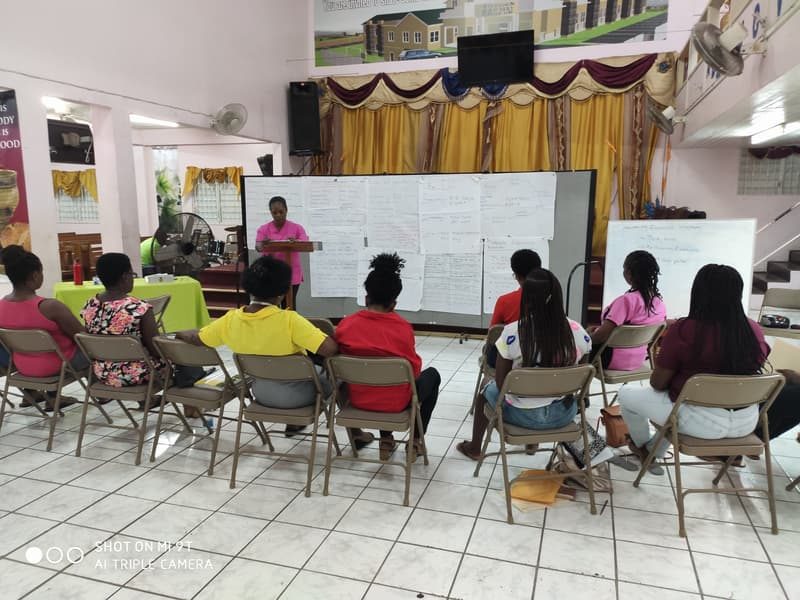
Signed, sealed, delivered and it’s a wrap! On Tuesday 26th November 2019, we completed the final session of our six-week chronic disease self-management course. This was our third and final workshop of the year. In April 2019, we held our first 6-week course, and this was followed by our second one in August 2019.

This final set of workshops began on 22nd October with a class of 13, all-female and whose ages ranged from 25 to 60.

We had a dynamic group of ladies who were keen to learn, very willing to participate and share their health stories and experiences and support each other; this created a great atmosphere for learning and built a strong sense of camaraderie.

Over the six weeks, we covered a number of self-management techniques such as action-planning, physical activity, problem-solving, decision making, healthy eating, medication management, communication skills and more.

Through group work, brainstorming sessions and homework, the course material came to life for participants and they were able to apply what was learnt each week to their own personal situation.

During our weekly feedback sessions, it was very rewarding to hear the impact the self-management techniques had made in just a short space of time and to hear of how each topic caused participants to reflect on their lifestyle and make a commitment to make healthier choices.

As usual, the section on food labels caused quite a stir when participants realized the quantities of sugar, salt and fat in many of the items they consume and this was a bit of a wake-up call with participants making small changes like switching to skimmed milk and reducing their portion sizes.

Once again, we found facilitating this course to have been a very rewarding experience and look forward to hosting more of these courses next year.

We’d like to say a big thank you to everyone who attended the course. We know it was a significant time commitment and we appreciate your dedication, time and your willingness to get involved.

St Kitts and Nevis Forum for Chronic Disease Prevention and Control
BlogNon-Communicable Diseases (NCDs)

St Kitts and Nevis Forum for Chronic Disease Prevention and Control

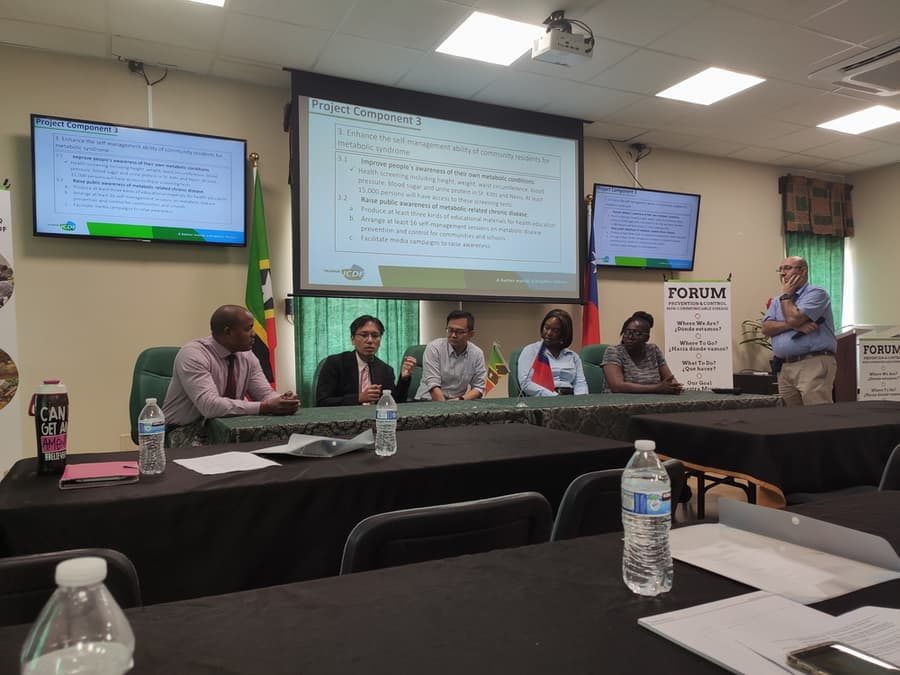
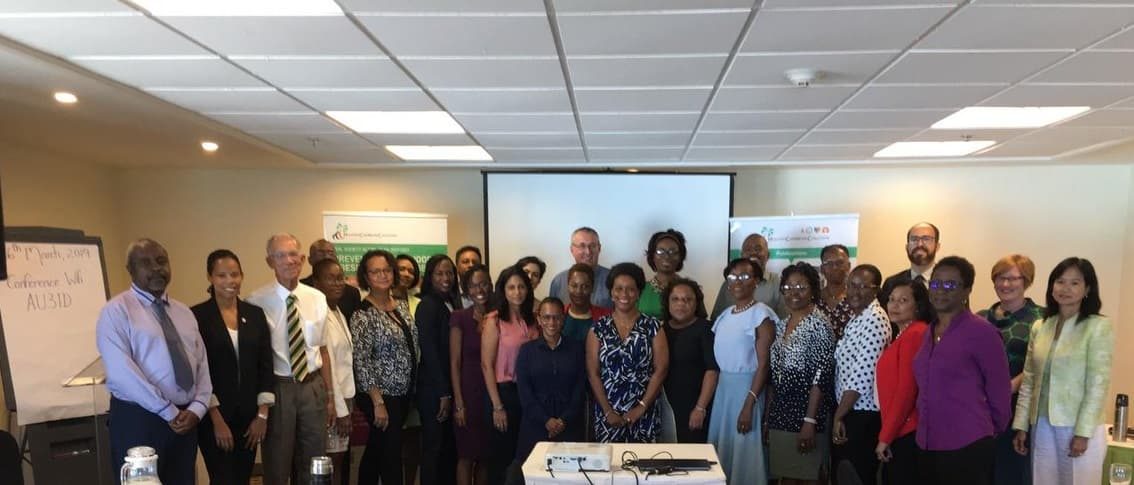
On 14th November 2019, we were delighted to have been able to attend the Forum for Chronic Disease Prevention and Control which was hosted by the Taiwan International Cooperation and Development Fund in partnership with the Ministry of Health in St Kitts and Nevis.

This event aimed to bring together both local and international organisations working in the field to share their experiences, present their work and thus provide a platform to learn, share best practices, promote regional collaboration and identify the best way forward in tackling chronic diseases in St Kitts and Nevis.

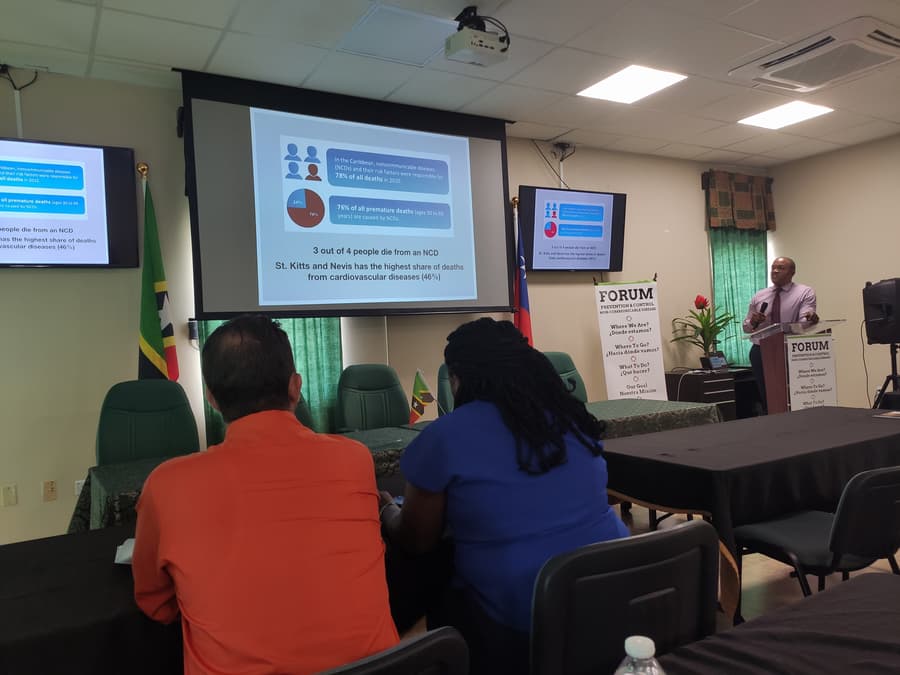
This was a very important event as chronic diseases are a major cause of death in St Kitts and Nevis – 83% of deaths in the Federation are due to chronic diseases. Therefore, the prevention and control of these conditions is a major priority for the Ministry of Health and the ICDF is working towards supporting the government to strengthen its non-communicable disease (NCD) strategy.

Over the three days of the forum, in attendance were representatives from CARPHA, the Ministries of Health of Belize, St Vincent and the Grenadines and St Kitts and Nevis; the JNF Hospital in St Kitts; the St Kitts Diabetes Association, Community Health Centres in St Kitts and Nevis and the Taipei Veterans General Hospital.

We attended on the second day of this event. The theme for the day was: ‘Chronic Disease Management – Where to Go?’ This was an excellent and informative day featuring presentations from:

  • Dr Bichara Sahely, Consultant Physician, Internal Medicine, JNF Hospital, St Kitts
  • Dr Aljay Pierre, Medical Officer, Internal Medicine, JNF Hospital, St Kitts
  • Dr Wei-Cheng Tseng, Taipei Veterans General Hospital
  • Dr Hazel Laws, Chief Medical Officer, Ministry of Health, St Kitts
  • Dr Marissa Carty, NCD Program Coordinator, Ministry of Health, St Kitts
  • Mr Feng-Ta Tsai, Project Manager, Taiwan, ICDF

NCD Forum Dr Pierre

Together, the speakers provided an overview of the position around NCDs and made recommendations for what is required going forward if we are to effectively reduce the burden caused by NCDs. The take-home message of the day was the need for a greater focus on NCD prevention as most countries in the Caribbean will not be able to address NCDs with medical care alone.

The event ended with a very lively Q&A and panel discussion, giving the audience the opportunity to engage with the speakers and collectively explore solutions to addressing NCDs.

We very much enjoyed attending this event and found the presentations from Dr Sahely and Dr Pierre, particularly insightful. They both provided a very interesting perspective from doctors working on the frontline at the JNF Hospital to diagnose, treat and support patients.  They highlighted that there is much work to be done in the Federation and this will involve improvements and changes to the system to facilitate prevention, early diagnosis, better management of patients with NCDs and an improvement in the quality of care delivered.

We look forward to playing our own very small part in tackling NCDs and would like to thank the ICDF and Ministry of Health for organising this event.

We Receive a Grant from Soca Girls Rock! To Support Our New Fibroids Research Project
BlogFibroidsWomen's Health

We Receive a Grant from Soca Girls Rock! To Support Our New Fibroids Research Project

We are absolutely delighted to announce that we recently received a grant from Soca Girls Rock! (SGR!) to support our new fibroids research project.

At the time of writing, we were just about to submit our application to the Ministry of Health’s Interim Ethics Review Committee for ethics approval and once that is granted our project will begin.

Our new project is a qualitative research study that will explore the experiences of women living in St Kitts and Nevis who have been affected by fibroids. This work aims to provide an in-depth exploration of women’s experiences and help us identify any psychosocial, personal, institutional and physical challenges that women with fibroids may experience that may impact their health and wellbeing. By exploring these issues, we can develop an understanding of how fibroids may affect a woman’s quality of life and this will enable us to begin to focus on strategies to support women who have been affected by fibroids.

To our knowledge, there has been no research conducted in St Kitts and Nevis to understand the experiences of women living with fibroids. Therefore, this study will make a significant contribution to filling an information gap in women’s health.

We would like to say a big thank you to Soca Girls Rock! for supporting this project and for continuing to support women-led, Caribbean-based initiatives.

When asked about the importance of providing funds to women-led organisations to support research projects like this, SGR! stated:

“The challenges of womanhood can and should be addressed by women.”

We are also grateful to SGR! for providing us with access to the technical expertise to conduct this research project by facilitating a collaboration with Dr Fanta Waterman (MPH, PhD), the Managing Director of Serrette Brown Research and Consulting.  We are very much looking forward to working with Dr Waterman and appreciate all the useful insight and advice that she has already provided.

About Soca Girls Rock!

Soca Girls Rock! aims to address the unique set of social and economic challenges that the Caribbean faces. These challenges include access to quality education and health care, high unemployment rates for youth and women, high poverty and crime rates, and income inequality. SGR! tackles these issues through its unique and innovative approach to leadership, activism, and civic engagement. They harness the collective time, talent, and treasure of self-identified Caribbean women, living in and outside of the Region, to provide technical and financial assistance to non-governmental organizations (NGOs) committed to social change.

 About Serrette Brown Research and Consulting

Serrette Brown Research and Consulting (SBRC) is a boutique research consulting practice specializing in epidemiology, population health research, program evaluation, evidence gap analyses, digital health and publications development strategy.

They partner with non-profits, non-government organizations (NGO), biopharmaceutical companies, health services research organizations and policy implementation agencies based in the United States, Europe and the Caribbean. SBRC staff have been the recipient of research awards and featured on national television.

More Information

If you have any questions about this project or would like any further information, please don’t hesitate to get in touch with us by email research@lakehealthandwellbeing.com

Our Next Chronic Disease Self-Management Workshops Will Start in July
CDSM CourseNews

Our Next Chronic Disease Self-Management Workshops Will Start in July

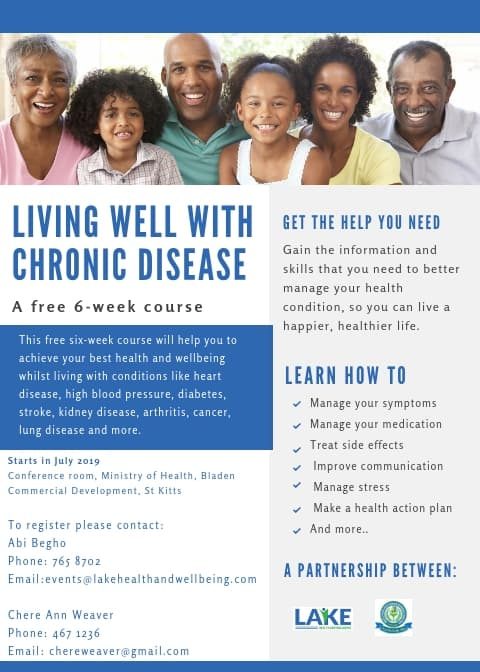
We’re delighted to announce that our next set of chronic disease self-management courses will start in July 2019.

Following the success of our first chronic disease self-management course which ran from 2nd April to 7th May 2019, we will be hosting two more sets of workshops. The first will start on Tuesday 2nd July and the second on Wednesday 3rd July. Both workshops will be held at the conference room at the Ministry of Health in St Kitts from 5pm to 7pm.

The course is aimed at anyone living in St Kitts who is either living with a chronic health condition (like diabetes, high blood pressure, asthma, fibroids, heart disease, arthritis, chronic back pain etc.), is caring for someone with a chronic illness, is at risk of developing a chronic health condition or who is interested in the topic and would like to learn more.

Participants will attend one session a week for 6 weeks and during this period they will be provided with the information, skills and knowledge to live well with their health condition. This will enable those affected by a chronic disease to take control of their health and wellbeing and not be hindered in any way by their condition.

Over the six weeks, attendees will be taken through key self-management techniques such as action planning, problem-solving, symptoms management, medication management, communication skills, pain management and more.  Additionally, attendees will have access to free health checks and relevant services to enable them to adopt a healthy lifestyle.

If you or anyone you know is living with a chronic disease or caring for someone with a chronic disease, then this workshop is just what you need.

You can register your interest by completing the registration form below and for more information or if you have a question about this course, please email us or call 765 8702.

No Fields Found.

Please note: The information you provide in the form above will only be used to contact you about our chronic disease self-management course. It will not be passed on to any third party and you won’t be added to our newsletter’s mailing list. To be added to our mailing list, please click here.

We Facilitate Our First Six-Week Chronic Disease Self-Management Course
BlogCDSM CourseNon-Communicable Diseases (NCDs)

We Facilitate Our First Six-Week Chronic Disease Self-Management Course

From 2nd April to 7th May 2019, we facilitated our first chronic disease self-management course in St Kitts giving us the opportunity to support members in our community who have been affected by non-communicable diseases (NCDs).

Data has demonstrated that NCDs are becoming an epidemic in St Kitts and Nevis with 83% of deaths in the Federation being due to these conditions. To prevent these premature deaths and ensure that those living with an NCD can live well and have a good quality of life, support, information and guidance are required.

Providing patients with self-management skills is an effective and empowering way to ensure that those affected by a chronic disease can take control and improve their health and wellbeing. The Chronic Disease Self-Management Course helps us achieve this outcome.

The course that we facilitated is part of the Stanford University Chronic Disease Self-Management Program (CDSMP). This is an evidence-based prevention and health promotion program that addresses common issues faced by people with chronic conditions. The program has been implemented in 19 countries showing several benefits including:

  • Improved wellbeing
  • Improved health of participants
  • Fewer hospitalisations
  • Fewer days spent in hospital

Last year, we took part in the CDSMP training program which was delivered by the Ministry of Health in St Kitts. We were honoured to have come through the process and are now certified CDSMP facilitators allowing us to implement a free program of support for members in our community with an NCD.

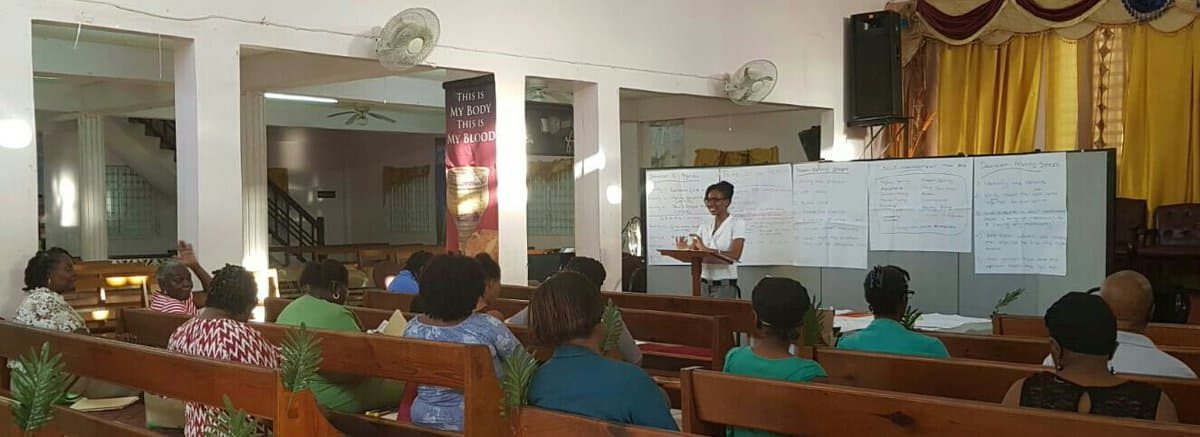
Over the six-week period from the 2nd April to 7th May, we were delighted to guide our 18 participants through key self-management techniques. These techniques included action planning, problem-solving, decision making, medication management, communication skills, pain management, healthy eating, physical activity and more.

What we like about the course is that it is very interactive. Participants had the opportunity to take part in various activities, share their experiences, learn from one another and support each other. There was also homework every week to ensure that participants could start practising their self-management techniques immediately in their day-to-day life. It was wonderful to see and celebrate their successes every week.

We had a very engaged group who were a pleasure to work with. They got involved, asked questions and were keen to make the necessary changes in their lives to improve their health.

Facilitating this course has been one of the most rewarding experiences we have had in a long time. It was so touching to hear participants share how their lives have been impacted by the course. We look forward to seeing them continue to make great progress in taking control and more effectively managing their health.

A big thank you to everyone who attended and if you live in St Kitts and have been affected by a chronic illness like diabetes or high blood pressure and would like to attend a chronic disease self-management course, please do get in touch with us by email or call 765 8702

Our next 6-week course is due to start in July, all are welcome to attend.

“Thank you for the life lessons you have shared. Anyone who attends this course will never be the same again. The teachings will always be on one’s mind and heart. We must make a change! Eating, exercising and managing our lives better and being in control, this is an awesome feeling” – CDSMP Course Attendee

A Touch of Sugar – A New Film About Type 2 Diabetes
DiabetesNews

A Touch of Sugar – A New Film About Type 2 Diabetes

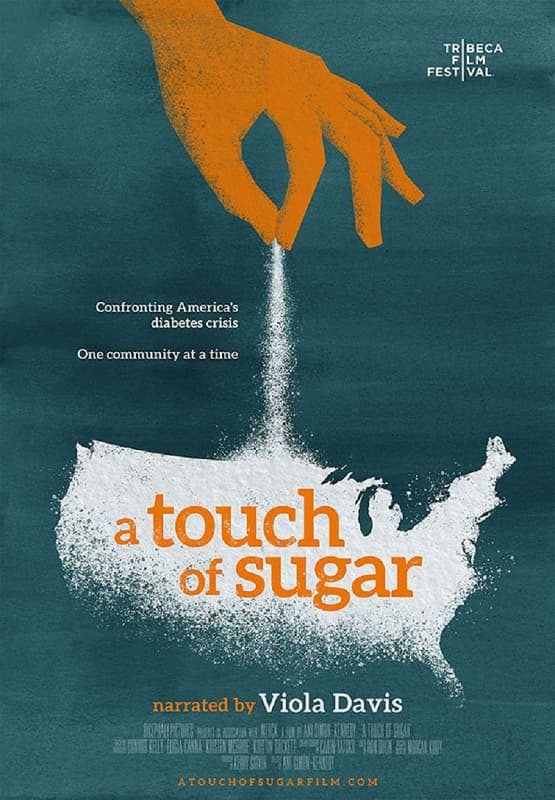
On 25th April,  the pharmaceutical company Merck launched their new documentary, A Touch of Sugar, at the Tribeca Film Festival.

The documentary is narrated by the award-winning actress Viola Davis who has a strong family history of type 2 diabetes and who herself is pre-diabetic.

The World Health Organisation has reported that in 2014, 422 million people worldwide were living with diabetes. The majority of these patients, about 90%,  are living with type 2 diabetes.

Type 2 diabetes is now considered by many to be an epidemic and the film, A Touch of Sugar, delves into this chronic condition by telling the story of the many people who have been affected. The film features interviews with patients, family members, doctors, advocates and thought leaders to raise awareness of diabetes, its impact on society and the importance of focusing on underserved communities.

You can watch the trailer for the documentary below:

A Touch of Sugar Trailer from A Touch of Sugar on Vimeo.

A Touch of Sugar is part of Merck’s program,  ‘America’s Diabetes Challenge: Get to Your Goals’ which encourages type 2 diabetics to work with their doctors to reach a number of health goals.

You can reduce your risk of developing type 2 diabetes by maintaining a healthy weight, eating a healthy diet and taking part in at least 150 minutes of physical activity every week. If you have diabetes, speak to your doctor about the lifestyle changes that you can make to ensure that you’re managing your condition effectively.

In St Kitts and Nevis, diabetes is also a major health challenge, you can read about this here

We have started facilitating regular chronic disease self-management courses. These courses have been developed by Stanford University and have been proven to help those living with chronic conditions such as diabetes live well despite their condition.

If you live in St Kitts and Nevis and would like to learn more about managing chronic diseases, you can register to attend our next chronic disease self-management course, by sending us an email.

Discussions on Managing Conflict of Interest in NCD Prevention and Control in the Caribbean: Part 2
BlogNon-Communicable Diseases (NCDs)

Discussions on Managing Conflict of Interest in NCD Prevention and Control in the Caribbean: Part 2

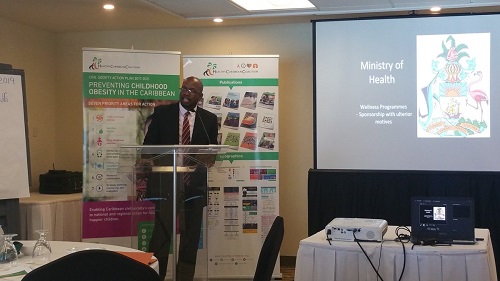
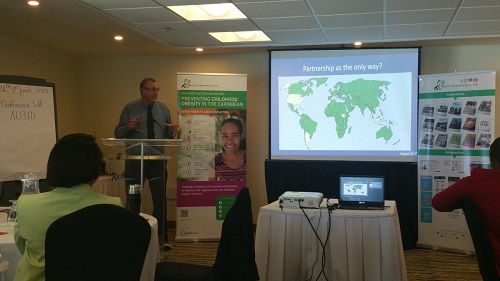
Welcome to part two of our ‘Discussions on Managing Conflict of Interest’ blog. In part one we provided some background to conflict of interest (CoI) and the challenges faced by those aiming to tackle NCDs in the Caribbean. Here, in part two, we’ll be providing highlights from the Health Caribbean Coalition’s (HCC) conflict of interest meeting which we attended a couple of weeks ago.

The HCC’s Meeting

The HCC’s CoI meeting was a two-day regional event held on 26th and 27th March 2019 that had a focus on conflict of interest in the prevention and control of non-communicable diseases (NCDs) in the Caribbean, and the overall aim of the meeting was to begin to build regional capacity to identify and manage conflict of interest.

Regional Experiences of Conflict of Interest

The meeting started with an interesting and insightful look at regional experiences of CoI from both civil society and the public sector. From civil society, we heard from the Heart Foundation of Jamaica, the HCC and the Trinidad and Tobago Heart Foundation, and from the public sector, we heard from representatives from the Ministries of Health in Antigua, the Bahamas and Jamaica.  Collectively they touched on industry interference and conflict of interest. Some interesting points that were raised included:

  • In the Caribbean, in most instances, we have to live with CoI and so approaching this area from the point of view of managing CoI is a more practical and realistic approach
  • The difficulty of dealing with the “smallness” of the Caribbean – everyone knows each other and in our professional lives, in tackling NCDs, we may have to fight against people we know and respect
  • Absolutes are unlikely to work except with the tobacco industry where globally the public health community does not partner with tobacco companies. For other industries, like the food and beverage industry, we must explore degrees of conflict of interest (low, medium and high) and degrees of partnership or engagement. Not every engagement will be detrimental to public health and we must understand how to manage conflict of interest whilst getting the most benefit out of any relationship or partnership
  • What happens after a conflict of interest has been identified? What is the process for review? Is it an actual, potential or perceived CoI? What is the process for recusal?
  • Should an organisation’s CoI policy be generic or specific?
  • Some good practice with respect to disclosure forms:
    • All CoI policies should have a supporting disclosure form
    • Disclosure forms are valid for a year
    • The obligation is on the person who is disclosing to report any changes within that year
    • Have a process for checking the accuracy of a completed disclosure form
  • Managing conflicts of interest – ensure that if you’re going into a partnership with industry that a lawyer reviews the MoU and any non-disclosure agreements to prevent any CoI issues; don’t be afraid to negotiate so you can minimise any risks or exposures.

WHO/PAHO Tool for Preventing and Managing CoI In Nutrition

A core part of the HCC’s meeting was to explore the tools and support that could be offered to organisations to identify and manage conflict of interest in order to build regional capacity. Therefore, during the meeting, attendees were introduced to WHO’s draft tool for preventing and managing CoI, including an abbreviated ‘scoping’ version of this tool developed by PAHO,  and a draft of the HCC’s CoI guide and policy.

The PAHO scoping tool provides a simple method to evaluate potential engagements and is divided into three areas that enable organisations to reflect on important issues before deciding on whether to enter into an engagement with an external entity.  These areas include:

  • Actor alignment
  • Engagement profile
  • Assessing the risk and benefits

Additionally,  this scoping tool complements the more comprehensive decision-making tree developed as part of the WHO draft tool. This is a 6-step process that takes the user through a structured process for analysing a potential engagement to identify and manage conflict of interest. The steps include:

  • Exploring the rationale for engagement
  • Profiling, due diligence and risk assessment of the external actor and the potential engagement
  • Balancing risks and benefits
  • Risk management
  • Monitoring, evaluation and accountability
  • Transparency and communication

Both resources provide users with an objective and comprehensive method of identifying and assessing conflict of interest, whether an engagement should be pursued and if so, what measures can be introduced to manage any conflicts of interest.

The HCC’s CoI Guide and Policy

Finally, the HCC presented their draft CoI guide and policy which is aimed at their staff, volunteers, board members, advisors, interns and consultants. Their policy and guide aims to prevent, identify, avoid and manage CoI. It also aims to serve as a general guide for civil society organisations and individuals as they develop their own CoI policies, the idea being that CSOs can simply adapt the HCC policy to suit local needs and situations.

Our Thoughts

We thought this was an excellent meeting which gave us a lot of food for thought.

Conflict of interest is an area that we considered on a simple level, but this meeting allowed us to explore this subject in depth and fully appreciate the risks of not properly analysing the relationships that we seek to enter.

The meeting was very timely as over the past few months we’ve started to explore organisations that we can approach to support some of our activities and during this process, we have found it challenging to determine whether we should pursue forming relationships with an organisation that promotes both healthy and unhealthy food and beverages. Attending this meeting has given us some clarity and by using the knowledge we have gained from this meeting and the PAHO tool we believe we can make a better decision.

Conclusion

We encourage Caribbean civil society organisations working in the NCD field to explore developing an approach to tackling conflict of interest to safeguard the credibility and integrity of their work, and for further information, please do reach out to the Healthy Caribbean Coalition