
Contacts

Bird Rock, St Kitts, St Kitts and Nevis, West Indies

info@lakehealthandwellbeing.com

+1 869 765 8702

Tag: diabetes

A Focus on Diabetes
BlogDiabetesNon-Communicable Diseases (NCDs)Volunteer Bloggers

A Focus on Diabetes

This week is Diabetes Awareness Week and our guest blogger, Stacey Mensah discusses a diabetes diet as well as our current Diabetes Community Champion project. 

Welcome back to the Lake Foundation’s blog! Today I’ll be talking about diabetes, but more specifically the idea of a diabetes diet. Now before I continue I have to say that there is no such thing. This is in in fact a myth. Different diets correspond to the different needs of those that have diabetes. In this post I would like to tell you about the two main types of diabetes and the diets that correspond with them. Before I go on however it’s important to note that you should seek medical advice before following any type of diet program. As I don’t want to misinform you all I’ll be mentioning the two most common types of diabetes – Type 1 and Type 2.

Type 1 Diabetes

Type 1 diabetes is the most common form of the disease that is found in children. Insulin dependent diabetes is a term that is also used to describe type 1 diabetes. This causes the loss of insulin production which means that you would be required to regularly administer levels by injection or by insulin pump. When you have this type of diabetes you need to consider how different foods are going to impact your blood glucose levels and how to balance the quantity of carbohydrate with the right amount of insulin.

Here at the Lake Foundation we are constantly promoting healthy eating but when you have type 1 diabetes this should really be stressed as it can play a part in helping to prevent the development of complications. This goes without saying but limiting the amount of processed foods you eat should be at the top of your agenda. Some may wish to adopt a reduced carbohydrate diet as they can be helpful for people who are struggling to keep control on a carb centred diet.

Type 2 Diabetes

The confusion between these two types of diabetes is quite common as they are both characterised by higher than normal blood sugar levels. The key difference is that type 2 diabetes can be prevented or delayed with a healthy lifestyle. There are also no episodes of hypoglycaemia, unless the person is taking insulin or certain diabetes medicines. It is also important to note that you may not have symptoms before the diagnosis. Usually types 2 diabetes is discovered in adulthood.

Having type 2 diabetes does not mean that you can’t have fun with your foods. Instead, it means that you just have to pay extra attention to choosing the right combination of foods that will keep your blood sugar level in your target range. On the whole it’s important to eat healthy regardless of your health situation.

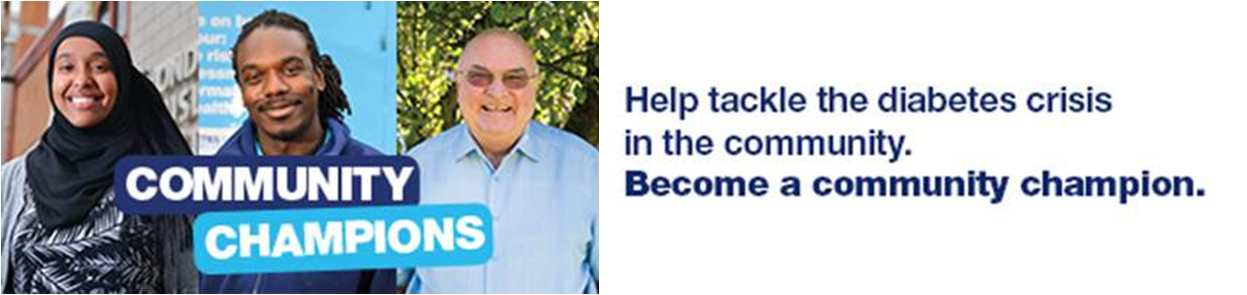
 Our Diabetes Community Champion Project

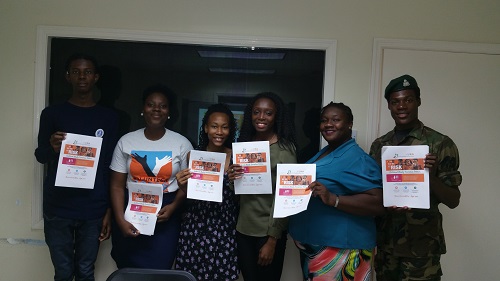
Type 2 diabetes is three times more common in the black community and as I mentioned above this type of diabetes can be prevented or delayed with a healthy lifestyle. With this in mind The Lake Foundation has teamed up with Diabetes UK with funding from Croydon Council to run a diabetes community champion project. The aim of this project is to empower the black community with the information that is needed to fully understand diabetes, its symptoms, risk factors and prevention so action can be taken.

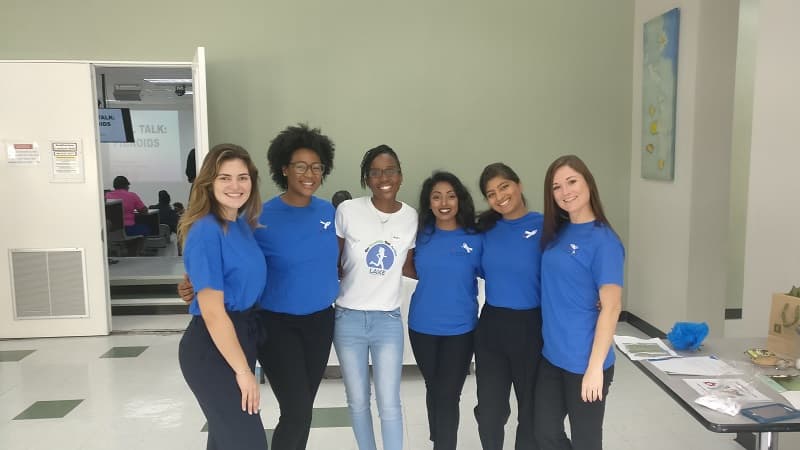
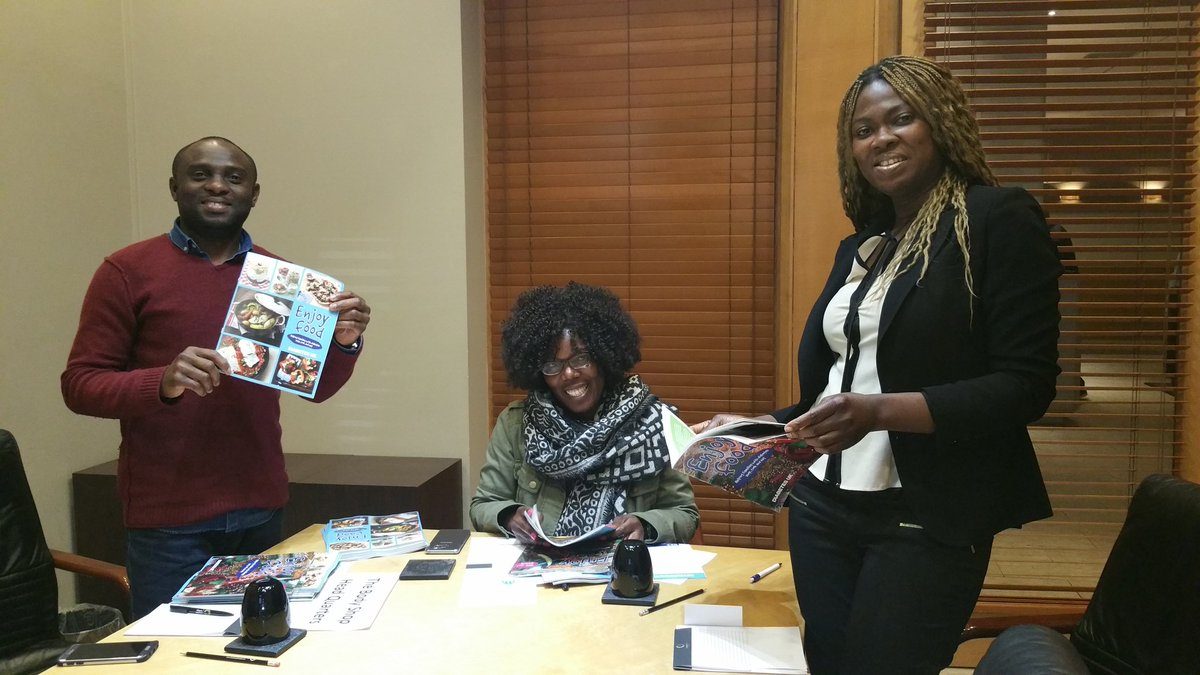
We’re delighted to have recruited 17 community champions who have received in-depth training from Diabetes UK. The training has equipped them to get out in the community and effectively raise awareness and encourage behaviour change. They will get out and about targeting black churches, businesses and other organisations to raise awareness and we hope that this will make a significant difference in reducing the negative impact of diabetes on the black community in Croydon. We’ll be getting across the message that we can all reduce our risk of developing diabetes by eating a healthier diet, doing more exercise and maintaining a healthy weight.

This week, on 14th June, our champions will be at Croydon College raising awareness amongst staff and students giving out leaflets and encouraging people to take Diabetes UK’s useful ‘know your risk’ test. If you’re in the area over lunch time why not drop by, pick up some information and speak to our champions.
Discussing Diabetes in Croydon
BlogDiabetesNon-Communicable Diseases (NCDs)

Discussing Diabetes in Croydon

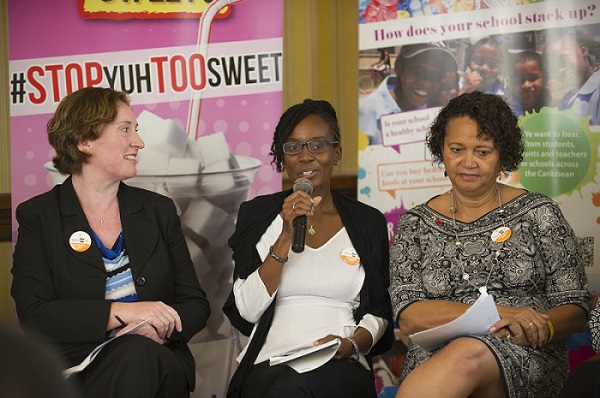
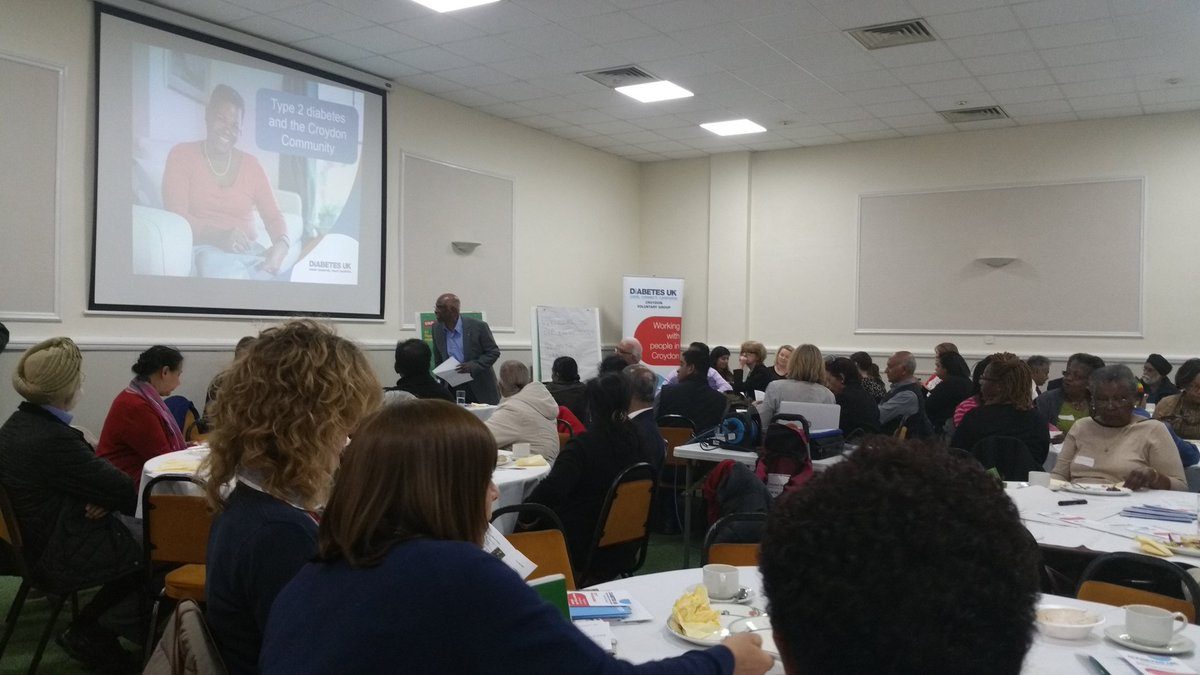
Yesterday, we had the pleasure of attending an event organised by Diabetes UK and Croydon Clinical Commissioning Group. This event was entitled ‘Type 2 Diabetes and the Croydon Community’ and it brought together patients, healthcare professionals, local charities and commissioners to discuss how   we can tackle diabetes in Croydon.

The event started with a welcome and introduction by Dr Rajan Namasivayam from the Diabetes UK Croydon Local Group and then we heard from the three main speakers: Rachael Glover, Manager at Diabetes UK; Charlotte Harris, Senior Researcher, Revealing Reality;  and Dipti Gandhi, Diabetes Clinical Lead at Croydon CCG.

Setting the Scene

Rachael Glover from Diabetes UK started the session with a good introduction to type 2 diabetes and its prevention and management.  From Rachael’s presentation, we learnt of the extent to which diabetes affects those living in the UK; currently, 4.5 million people in the UK have diabetes.  Rachael explained that diabetes occurs when our body isn’t able to control our blood glucose levels and glucose builds up in the blood leading to a number of health problems.  Diabetes is a result of problems with our insulin which is a hormone that helps our body use glucose preventing glucose levels from rising to dangerously high levels.

Rachael stated that there are two main types of diabetes:

Type 1 diabetes: this is where the body doesn’t make any insulin at all

Type 2 diabetes:  where the body doesn’t make enough insulin or the insulin isn’t working properly.

From Rachael’s presentation, it was noted that 90% of people with diabetes have type 2 diabetes hence why there is a need to focus on this type of diabetes, particularly because 3/5 cases of type 2 diabetes are preventable. This means there is a huge opportunity to successfully tackle diabetes.

Rachael explained that type 2 diabetes can be prevented by eating a healthier diet, being more active and maintaining a healthy weight.

Rachael stated that the national programme Healthier You: NHS Diabetes Prevention Programme was launched in 2016 to support people at high risk of developing diabetes to change their lifestyle to reduce their risk.

Rachael also discussed the best ways of ensuring that patients with diabetes are able to successfully manage their condition.  She stated that one of the most effective ways to do this is through patient education and there are several approaches:  one-to-one information and advice, informal flexible ongoing information, ongoing support and structured education.  These approaches are useful to patients with 90% of patients saying that they were better able to manage their condition following education, but sadly only 5% of diabetes patients attend an education event. With this in mind, Diabetes UK and Croydon CCG have pledged to reach 50% of diabetics through education.

Interesting Research

Next, we heard from Charlotte Harris, Senior Researcher from Revealing Reality. Charlotte summarised the findings from a very interesting research study that aimed to understand attitudes to diabetes amongst the South Asian communities of Thornton Heath in Croydon.

In their study they explored the needs, barriers and opportunities for innovation and they did this by finding out about diabetes as it is really lived in the community – they visited patients in their own environment.  From their work they identified  four key areas for innovation:

  • Food
  • Lifestyle and fitness
  • Medical and healthcare
  • Knowledge and advice

They also found that:

  1. When looking at the South Asian community, there was no one South Asian community or culture. There were many cultural differences (Indian, Bangladeshi etc..) and these differences are usually overlooked when health education and awareness projects are developed.
  1. Despite diabetes being talked about frequently, understanding of diabetes is low and for people where there was an understanding knowledge wasn’t applied practically.
  1. There was a sense in the South Asian community that diabetes is inevitable and there isn’t anything that can be done to prevent it, so there was a significant feeling of powerlessness.
  1. Many myths about diabetes exist such as climate and stress cause diabetes and that diabetes can be cured, this myth about there being a cure was a major problem as people would stop taking their medication once they started feeling better believing they were cured.
  1. There was a lack of knowledge of the serious complications that are associated with diabetes.

Tackling Diabetes in Croydon

Finally, we heard from Dipti Gandhi the diabetes clinical lead at Croydon CCG. Dipti explained that, in Croydon, diabetes is a  huge problem with about 10% of residents living with diabetes.  She then went on to explain some of the services in Croydon. These included:

  • A new prevention programme where pre-diabetics are identified and enrolled in a 15-month programme to reduce their risk of developing diabetes. This programme has started in Thornton Heath and will expand to other areas in Croydon.
  • Online support via Croydon Council’s Just Be Programme
  • Voluntary sector projects to raise awareness
  • Support with medications
  • Group consultations with GPs and exploring ways of patients accessing diabetes specialists
  • Self education through DESMOND Type 2 and DAFNE Type 1

Conclusion

This was a really informative and interesting event and one that was of great importance to the black community who are three times more likely to develop diabetes than their white counterparts. The Lake Foundation is currently making its own contribution to tackling diabetes in Croydon by teaming up with Diabetes UK and Croydon CCG with funding from Croydon Council to run a diabetes community champion project.  To find out more about this project or to volunteer to take part please email us

We’re Recruiting Volunteer Diabetes Community Champions
DiabetesNews

We’re Recruiting Volunteer Diabetes Community Champions

The Lake Foundation has teamed up with Diabetes UK to run a 12 month Diabetes Community Champion project in Croydon that is aimed at the African and African-Caribbean community.   Through this project we’re hoping to raise awareness of diabetes and how it can be prevented, and for those with diabetes, provide information on  how best to manage their condition and secure better health outcomes.

We’re currently looking for volunteers to take on the role of Diabetes Community Champions.

Diabetes Community Champions will raise awareness of diabetes and this may involve giving presentations, hosting information tables at events, distributing leaflets and information, taking part in local radio interviews, writing blogs and exploring creative ways of engaging with the black community.  In addition volunteers, if interested, can work with local GPs to identify pre-diabetics and work with them on a one-to-one basis to reduce their risk through a behaviour change programme.

Community Champions can dedicate as much time as they are able to this project, but ideally we’d like volunteers to commit to at least 1 – 2 days a month to ensure we can make the most impact possible.

Full training will be provided to all volunteers.

If you’re interested in being a Diabetes Community Champion, please complete an online registration form here or email info@thelakefoundation.com for more information.

The Lake Foundation Receives a Grant from Croydon Council
DiabetesNews

The Lake Foundation Receives a Grant from Croydon Council

The Lake Foundation is delighted to announce that we have received a grant from Croydon Council to work in collaboration with Diabetes UK to run a Diabetes Community Champion project in Croydon

This grant will support the cost of running this project for a year which aims to raise awareness of diabetes amongst the African and African-Caribbean community in Croydon who are three times more likely to develop the condition. The project’s focus will be on encouraging people to make lifestyle changes to reduce their risk of developing diabetes and this will involve raising awareness throughout Croydon and also working closely with pre-diabetics.

We’ll be recruiting Diabetes Community Champions who will be fully trained and will become the lifeblood of the project by getting out in the community to reach as many people as possible.

We are very grateful to Croydon Council for supporting us to tackle this very important health issue in the black community and we look forward to working with Diabetes UK.

If you’re interested in becoming a Diabetes Community Champion, please email info@thelakefoundation.com for more information.

Modern Lifestyle is Creating a Health Crisis in the Middle Aged
BlogDiabetesObesityPhysical Activity

Modern Lifestyle is Creating a Health Crisis in the Middle Aged

This week, a new analysis by Public Health England has revealed a troubling conclusion: 40 to 60 year olds in the UK are facing a health crisis. This health crisis has been attributed to modern lifestyles, particularly “the car, the desk job and the computer”, which means that people are not as physically active as 20 years ago.

“People are busy with work, with families, with the daily grind and sometimes their own health is the least of their priorities.” – Professor Kevin Fenton, Director of Health and Wellbeing, Public Health England

Public Health England’s analysis explored how the behaviour and health of people aged 40 to 60 has changed over the past 20 years. They found that 83% of 40-60 year olds either drink too much,  are inactive or are overweight or obese.

When we looked at their data on obesity, their report states that 77% of men and 63% of women within the 40 to 60 age group are overweight or obese compared to 67% of men and 55% of women 20 years ago. Public Health England also noted that many middle aged people couldn’t identify what a healthy body looks like and they suggest that it is possible that obesity is now becoming the new normal. This is worrying as many people may not realise they are at an unhealthy weight.

Another important area the analysis looked at was diabetes. They found that the diabetes rate in 40 to 60 year olds has doubled – 3% of middle aged people had diabetes 20 years ago and today that has increased to 7%.  Apart from diabetes they found that the rate of heart conditions in men has increased, rising from 8.5% to 11.4% and mental health conditions had trebled (2% to 6%.) Although, with regards to mental health, it was felt that the increase could be due to a better understanding and recognition of mental health conditions.

Solutions

In order to address this health crisis Public Health England’s One You campaign will be reaching out to 40 to 60 year olds to help people assess their lifestyle and then provides tools on how to adopt a healthy lifestyle. These tools include apps like Couch to 5K, Alcohol Checker and Easy Meals.

Other similar solutions include Croydon Council’s online health programme, JustBe, which aims to get local people to adopt a healthier lifestyle by offering a number of recommendations and pointing Croydon residents to local services. To get their messages across they use a variety of tools such as apps, podcasts, expert advice, videos, diet plans and exercise routes.

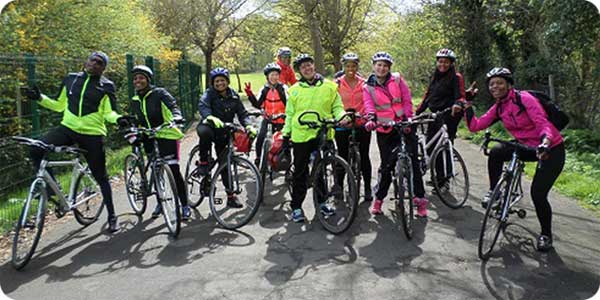
At the Lake Foundation, we’re aiming to get people active through our free cycling club which is open to everyone. A limited number of bikes and helmets are available. For more information email us

Conclusions

Public Health England’s analysis concluded that compared to 20 years ago:

“Men aged 40 to 60 are:

  • more likely to be obese
  • less likely to smoke and less likely to drink alcohol (although most do)
  • more likely to suffer from a heart condition
  • more likely to be diabetic
  • more likely to report suffering from a mental health disorder

Women aged 40 to 60 are:

  • more likely to be obese;
  • less likely to smoke and less likely to drink alcohol
  • more likely to be diabetic
  • more likely to report suffering from a mental health disorder”

Although the health of middle aged people seems to be declining, there is hope. We can turn things around if everyone makes simple changes to their lifestyle.

Taking a Short Walk After Eating May Be Good for Type 2 Diabetics
DiabetesNewsNon-communicable diseases

Taking a Short Walk After Eating May Be Good for Type 2 Diabetics

This week researchers from the University of Otago in New Zealand published the results from their study which showed that taking a short walk after a meal may be effective in controlling the blood glucose levels of type 2 diabetics.

The researchers conducted this study to expand on the current advice that regular physical activity is effective in diabetes management. They wanted to determine whether the timing of  physical activity in relation to meals enhances the benefit of physical activity.

How did the researchers explore this?

To explore this, researchers conducted a study with 41 adults with type 2 diabetes. Participants either took part in 30 minutes of physical activity every day or were advised to walk for 10 minutes after their main meal. Both of these scenarios met the t physical activity guidelines for people with type 2 diabetes.   The blood glucose level of participants was then  measured 3 hours after each main meal.

What did they find?

The researchers found that  blood glucose levels were 12% lower when participants had walked after their meals compared to if they had just carried out physical activity once a day.  They also determined that the improvement was enhanced after the evening meal (22%), as this is the meal where the most carbohydrate is eaten and when people are more inactive.

What were their conclusions?

The study concluded that

“The benefits relating to physical activity following meals suggests that current guidelines should be amended to specify post-meal activity, particularly when meals contain  a substantial amount of carbohydrate.”

The importance of this research

The black community is three times more likely to develop type 2 diabetes than their white counterparts and the African and Caribbean diet tends to be quite rich in carbohydrate so this research is helpful for black type 2 diabetics in understanding how they can manage their condition.

As well as following your doctor’s advice on the type of diet you should be consuming, as a type 2 diabetic, make sure you are engaging in enough physical activity and from the results of this research, taking a short walk after your main meal appears to be of benefit.

Reference

Reynolds, A.N., Mann, J.I., Williams, S. et al. Diabetologia (2016). doi:10.1007/s00125-016-4085-2

A Plant-Based Diet Reduces Risk of Type 2 Diabetes
DiabetesDietNews

A Plant-Based Diet Reduces Risk of Type 2 Diabetes

A study published yesterday by the Harvard T. H. Chan School of Public Health has found that a plant-based diet significantly reduces a person’s risk of developing type 2 diabetes, especially if that diet is rich in quality plant foods such as whole grains, fruits, vegetables, nuts and legumes.

The study found that just moderate changes in a person’s diet can lead to significant reduction in risk. They found that  people who maintained a plant-based diet that was low in animal foods were 20% less likely to develop type 2 diabetes and those that consumed a healthy version of a plant-based diet were 34% less likely to develop type 2 diabetes.

This study is very important to the black community as our community is at a higher risk of developing type 2 diabetes. The Lake Foundation encourages everyone to turn towards a more plant-based die to reduce their risk of this condition.

NHS England Announces Roll-out of their Diabetes Prevention Programme
DiabetesNews

NHS England Announces Roll-out of their Diabetes Prevention Programme

Yesterday, NHS England announced that up to 100,000 people in England will be offered places on their new diabetes prevention programme to stop them developing type 2 diabetes.

The programme will start this year in 27 locations offering 20,000 people the opportunity to enrol in the programme. The programme will be rolled out across England by 2020 giving up to 100,000 people access to this programme.

The NHS’s programme will give tailored, practical support to reduce a person’s risk of developing type two diabetes. This will include education on healthy eating and lifestyle, weight loss advice and tailored physical activity programmes.

The programme has been piloted in seven demonstrator sites over the past year. They  have been testing approaches to delivering  the programme and the results of this work has shaped the final programme to ensure the best results for patients.  The seven demonstrator sites are: Birmingham South and Central CCG, Bradford City CCG, Durham County Council, Herefordshire CCG/LA, Medway CCG/LA, Salford CCG/LA and Southwark Council and CCG.

We are delighted to hear of the rollout of this programme. The black community is at a higher risk of developing diabetes when compared to their white counterparts and this programme will be of huge benefit to our community. We strongly encourage the NHS to engage effectively with the black community and we strongly recommend that black people take part in this programme.

You can read more about NHS’s new Diabetes Prevention Programme here

The Number of People with Diabetes Increases by 60% in 10 Years
DiabetesNews

The Number of People with Diabetes Increases by 60% in 10 Years

Last week, Diabetes UK reported that the number of people living with diabetes has risen by a staggering 60% over the past 10 years.  They stated that 3.3 million people in the UK have some form of the condition which is up from 2.1 million in 2005.

About  90% of diabetes cases are type II which is strongly linked to lifestyle  (diet and obesity) therefore we can reverse this trend by encouraging the UK’s population to change their lifestyle and adopt a healthy lifestyle.

The black community is three times more likely to develop diabetes and hence it is important that we take note of these statistics and make a concerted effort to do something about this.

As a community we have to look at our diet, make changes and get more active in order to beat this condition.

Talking Black Health at the Right Now Jesus Centre
Blog

Talking Black Health at the Right Now Jesus Centre

On Sunday 14th June we had the pleasure of delivering a black health awareness workshop at the Right Now Jesus Centre in Catford.  It was wonderful to work with such an enthusiastic, friendly and energetic congregation; it was really a fun two hours, despite the serious topic.

During the workshop we covered type two diabetes, high blood pressure, stroke, heart disease, prostate cancer and fibroids. We talked about what these conditions are, their risk factors and why they are more common in the black community. We also asked the congregation to work in groups to discuss these issues and encouraged attendees to  adopt a healthy lifestyle by eating a healthy  diet and getting active. We went into detail on some of the specific changes that people can make to achieve a healthier lifestyle and finished off the workshop by asking attendees to think about three things that they will change as they work towards a adopting a healthy lifestyle.

This was  really good event and we thoroughly enjoyed spending time with such an engaged audience.

“This workshop was beautifully presented!”

“Excellent, I learnt a lot.”

“Very informative.”