Contacts

Bird Rock, St Kitts, St Kitts and Nevis, West Indies

info@lakehealthandwellbeing.com

+1 869 765 8702

This week is National Obesity Awareness Week
NewsObesity

This week is National Obesity Awareness Week

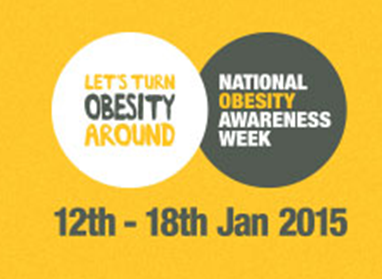
This week, from 12th – 18th January, is National Obesity Awareness Week in the UK. During NOAW campaigners are urging the public to join their National New Year’s Resolution to tackle obesity by making a commitment to make a small lifestyle change – such as going for a regular walk or run, or eating a healthier diet.

Research has shown that black African women in the UK have the highest prevalence of obesity? The same is true for African American women. Let’s turn this around.

During NOAW The Lake Foundation will be sharing a range of health tips on our social media platforms so that we can turn these statistics around. Join us on Facebook and Twitter.

Raising Awareness of Prostate Cancer at Trinity Baptist Church
BlogCancer

Raising Awareness of Prostate Cancer at Trinity Baptist Church

Today, we had a great time raising awareness of prostate cancer at our Understanding Prostate Cancer seminar at Trinity Baptist Church.

This event was a collaboration between The Lake Foundation, Trinity Baptist Church and Prostate Cancer UK and was organised as part of Prostate Cancer UK’s engagement and empowerment pilot which aims to understand the best methods of reaching the black community with the key messages about prostate cancer.

Understanding Prostate Cancer formed part of TBC’s Men’s Fellowship’s monthly breakfast meeting giving us the perfect forum to discuss prostate cancer and raise awareness.

After a lovely breakfast prepared by the Women’s Ministry (thank you!), the seminar began with a welcome and introduction by Abi Begho from The Lake Foundation. This was followed by an excellent presentation by Georgina Graham, a volunteer from Prostate Cancer UK.

From Georgina’s presentation, attendees learnt that prostate cancer is the most common cancer affecting men in the UK with 43,000 cases diagnosed every year and 1 in 8 men expected to develop prostate cancer. We also covered the three main prostate conditions that affect men – an enlarged prostate, prostatitis and prostate cancer. It was stressed that an enlarged prostate and prostatitis are not linked to prostate cancer and do not increase a person’s risk of developing prostate cancer. We then moved on to what symptoms men should look out for and these included:

  • Needing to pee more often, especially at night
  • Difficulty starting to pee
  • Straining or taking a long time to finish peeing
  • A weak flow
  • A feeling that your bladder has not emptied properly
  • Needing to rush to the toilet
  • Dribbling urine

It was stressed that these symptoms are associated with non-serious prostate conditions as well as prostate cancer so if men do experience any of these symptoms it could be due to a number of reasons. Furthermore, Georgina gave an overview of the risk factors for prostate cancer, which are:

  • Age (prostate cancer is more common in men over the age of 50),
  • Ethnicity (black men are twice as likely to develop prostate cancer than other men)
  • Family history (men with a father or a brother with prostate cancer are 2.5 times more likely to develop prostate cancer compared to men who don’t have a family history).

Georgina finished the presentation by informing attendees that they have the right to more information if they are concerned and they have the right to have a PSA test if they are 50 and over.

After a lively and interesting Q&A session our second speaker, Eunice Adu-Appiah, took the stage. Eunice gave a presentation on exercise and prostate cancer prevention where she started by explaining the difference between physical activity and exercise –physical activity is any activity that you would normally do (walking, gardening etc) that contracts your muscles and burns calories while exercise tends to be a more intense activity that is structured and has a particular goal  (losing weight or improving fitness).

Eunice Adu-AppiahEunice then took us through the research on prostate cancer prevention and exercise showing us that there is research that suggests that people who regularly exercise are at a lower risk of developing prostate cancer. She then went on to give suggestions on how often we should exercise (150 minutes a week) and what types of exercise we should do (cardio and muscle strengthening).

Eunice also dispelled some of the myths around exercise and touched on the common reasons why people don’t exercise, and finished her presentation by reminding the audience that exercise and diet go hand-in-hand and that ultimately we should be aiming to achieve a healthy lifestyle because this will not only reduce prostate cancer risk but the risk of developing a number of diseases.

After another lively Q&A session the seminar ended with a summary by Abi Begho, a thank you from Pastor Mark Akiwumi and a closing prayer by Pastor Amosah.

This was a really useful seminar, the audience was very receptive and engaged and we’d like to say a big thank you to TBC, Prostate Cancer UK, Georgina Graham and Eunice Adu-Appiah for their help in making this event a reality.

A plant-based diet will give you optimum health
BlogDiet

A plant-based diet will give you optimum health

Today’s blog post comes from Orvel Douglas a Nutrition and Diet specialist at Body Sculpt of New York. Mr Douglas is a Certified Nutrition and Diet Specialist and has worked as an independent nutrition consultant for various organisations and companies. He has provided nutrition counselling and workshops for the following organizations: Medgar Evers College Empowering Youth to Excel and Succeed Project (“EYES”); United Federation of Teachers; DC 37 and 1199 SEIU.  Mr. Douglas is currently providing nutrition workshops for the Office of Alcoholism and Substance Abuse Services(OASAS) for their Access to Recovery Program (ATR) in Brooklyn, New York and is also the Lead Nutritionist for Body Sculpt of New York’s Six Weeks to Fitness programs.


What I have noticed in the last 20 years is that we are getting sicker and sicker. Some of the diseases that are prevalent amongst the older generation are showing up in teenagers. One thing I can say is that we are eating way too much processed and junk food.

Many studies are showing that animal proteins are causing many preventable diseases. What I have found is that when a person removes all animal protein from their diet many ailments tend to disappear.

I have seen people’s type 2 diabetes, high blood pressure, high cholesterol and arthritis disappear, just to name a few.

One of the leading doctors in this field is Dr Colin Campbell. Dr Campbell is an American biochemist who specializes in the effect of nutrition on long-term health. He is the Jacob Gould Schurman Professor Emeritus of Nutritional Biochemistry at Cornell University.

Campbell has become known for his advocacy of low-fat, whole foods, vegan (plant-based) diet. He is the author of over 300 research papers on the subject, and two books, Whole (2013), and The China Study (2005), which became one of America’s best-selling books about nutrition.[1] Campbell featured in the 2011 American documentary, Forks Over Knives.

Campbell was one of the lead scientists in the 1980s of the China–Oxford–Cornell study on diet and disease, set up in 1983 by Cornell University, the University of Oxford, and the Chinese Academy of Preventive Medicine to explore the relationship between nutrition and cancer, heart and metabolic diseases. The study was described by The New York Times as “the Grand Prix of epidemiology.”[2]

There is a group of doctors in an organization called the Physicians Committee for Responsible Medicine and what they are doing is putting a new focus on health and compassion. The Physicians Committee combines the clout and expertise of more than 12,000 physicians with the dedicated actions of 150,000 members across the United States and around the world.

They are changing the way they treat diseases such as diabetes, obesity, high blood pressure, cancer and arthritis. They are putting prevention over pills.

We at Body Sculpt have been promoting a low fat, plant-based diet and what we have seen are some of our participants are no longer on medication through this small change.

My advice to anyone who is reading this and is suffering from ailments I would strongly suggest that you do some research and try a plant-based diet. The only thing you have to lose is your ailments.

*******************
The Lake Foundation would like to thank Orvel Douglas for his guest blog post. If you have any questions for Orvel please leave them in the comments section below and for more information about Body Sculpt’s Six Weeks to Fitness program click here

Happy New Year and Our Achievements for 2014
Blog

Happy New Year and Our Achievements for 2014

Happy New Year all! We wish you a happy, healthy and successful year ahead and thank you for all your support in 2014.

The Lake Foundation is still a fairly new charity having started in July 2013. Through all your support and encouragement we have been very productive and have made significant progress in working towards our mission of improving the health and wellbeing of the black community.

We are delighted to share our achievements for 2014 with you. Over the past year we have:

  • Developed our hereditary cancer booklet which aims to raise awareness of inherited cancers, the importance of knowing your family’s medical history, what to do if you have a strong family history of cancer and what preventative options are available for people at a high risk of developing cancer because it runs in their family.

  • Established our Fibroids Ask the Expert to provide women with questions or concerns about fibroids with access to experts in the field that can provide them with accurate reliable information
  • Started our cycling group which reconvenes in April/May of this year
  • Consulted with Breast Cancer Care on their new PROWESS service

  “I can honestly say that having your input into PROWESS has been great and a massive benefit to me and the project, so I’m looking forward to working with you again in the New Year.”

  • Secured office space
  • Launched our weekly blog enabling us to discuss health issues of concern to the black community

We had a really enjoyable and productive year and look forward to 2015.

Diet and Fibroids Prevention
BlogDietFibroidsWomen's Health

Diet and Fibroids Prevention

We get a lot of questions from women about what they can do to prevent fibroids. This week’s blog post follows our recent post on exercise and fibroids prevention. Today, we’ll look at diet.

Fibroids are non-cancerous tumours that develop in or around a woman’s womb. They can cause a number of symptoms including pelvic (tummy) pain, infertility, heavy and/or painful periods, back pain, anaemia, constipation, frequent urination and pain during sexual intercourse.

The exact cause of fibroids is unknown but research does suggest that they are caused by a combination of genetic, lifestyle and hormonal factors.  Those most at risk of developing fibroids are black women, those who are overweight, women of childbearing age (particularly women who are 25-45 years old), those with a family history and women who haven’t given birth.

Diet and Risk Reduction

When trying to understand what we can do to reduce our risk of developing fibroids diet is an interesting and important factor.  As obesity is a major risk factor then logically if we adopt a healthy lifestyle and lose weight then we can reduce our risk of developing this condition. But, are there particular foods that contribute to fibroids development and are there foods that are protective? Let’s take a look at what the research tells us about this.

Red Meat 

When it comes to foods that increase a woman’s risk of developing fibroids, research suggests that red meat plays a major role. One research study has shown that frequent consumption of beef and other red meat increases a woman’s risk of developing fibroids by 70%. This finding is similar to a study conducted in India which found that women who consume red meat are three times more likely to develop fibroids compared to vegetarian women or women who are mostly fish eaters.  This is in stark contrast to a recent study that found no association between meat consumption and fibroids, although in this study researchers looked at all meat and didn’t look specifically at red meat.

Fruit and Vegetables 

The Black Women’s Health Study conducted in the US explored the impact of fruits and vegetables on a woman’s risk of developing fibroids. In this study, 22,583 black women were monitored from 1997 to 2009 and their food intake monitored.

This study found that overall fruit and vegetable intake was associated with a reduction in risk and the strongest reduction in risk was associated with a high intake of citrus fruit.  Additionally, they found that vitamin A from animal products (liver and dairy) was linked to a reduction in risk too.

These findings were similar to that of a small Chinese study which explored the association of fibroids with diet, physical activity and stress.   This study took place between 2009 and 2011 and researchers found that fruits and vegetables significantly reduced risk of developing fibroids with women consuming the most fruits and vegetables (eating fruit and vegetables more than three days a week) being 60% less likely to develop fibroids.

Finally, a study conducted in 2009 found that a high intake of green vegetables reduced the risk of developing fibroids by 50%  and fruit consumption reduced risk by 20%.

Vitamin D 

In 2013, one of the first studies looking at whether vitamin D is linked to fibroids was conducted and this study found that women with sufficient levels of vitamin D were 32% less likely to develop fibroids than women who are vitamin D deficient. Furthermore, another study published in 2013 found that women with fibroids had significantly lower levels of vitamin D compared to women not affected.  These studies suggest that vitamin D is protective.

Conclusions

It is clear that diet is very important in the development of fibroids. By adopting a healthy diet we can reduce our risk and women should pay attention to their fruit and vegetable consumption, reducing their red meat intake and making sure they have enough vitamin D.

It’s important to note that surveys conducted in the US have found that African Americans consume fewer fruits and vegetables than their white counterparts, it is important that we change our lifestyles and work on increasing our fruit and vegetable intake, our health depends on it.

We’re Holding Another Understanding Prostate Cancer Event
CancerNews

We’re Holding Another Understanding Prostate Cancer Event

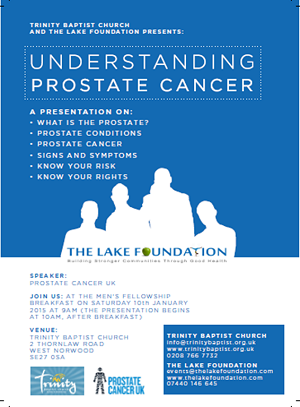
If you missed our ‘Understanding Prostate Cancer’ event on 20th December, have no fear, we will be holding another event on Saturday 10th January 2015 at Trinity Baptist Church in West Norwood.

This event is a collaboration between The Lake Foundation, Trinity Baptist Church and Prostate Cancer UK and is part of an engagement and empowerment pilot which aims to determine the best methods of reaching black men with the key messages about this disease.

The event will cover: what is the prostate, prostate conditions, signs & symptoms and risk factors ensuring that men have the information they need to take quick action should they notice any of the symptoms.

For more information about this event please email us: events@thelakefoundation.com

The Lake Foundation is Featured on the Six Weeks to Fitness Podcast
Blog

The Lake Foundation is Featured on the Six Weeks to Fitness Podcast

We were delighted to be featured in this week’s Six Weeks to Fitness podcast where we were interviewed by the Vincent Ferguson, the president of Body Sculpt of New York, a not-for-profit health and fitness organisation.

In this 30 minute podcast, we discuss the work of  The Lake Foundation and our plans for the future.

You can listen to our interview below.

The NHS’s 100,000 Genomes Project
News

The NHS’s 100,000 Genomes Project

NHS England has announced the start of their new project, the 100,000 Genomes Project, in early 2015. The project aims to sequence 100,000 genomes within three years to determine the genetic mutations that lead to various cancers and rare diseases. This will enable targeted treatments to be developed for a wide range of conditions.

Doctors will be able to refer patients with relevant diseases, who are interested in taking part, to one of 11 Genomic Medicine Centres for inclusion in the project. Samples will be collected, genetic sequencing carried out and the data analysed.

NHS England are hoping to recruit 75,000 patients and The Lake Foundation is encouraging members of the African Caribbean community to take part to ensure that minorities are well represented and any ethnic genetic differences are identified.

The Results of Our Fibroids Survey
BlogFibroidsWomen's Health

The Results of Our Fibroids Survey

Fibroids are benign tumours that develop from the smooth muscle cells of the womb. They are the most common tumour amongst women with an estimated 30 – 40% of women between the ages of 25-45 expected to develop them.

Research has shown that fibroids are more common in black women with an estimated 55-80% of black women affected. In addition, black women are known to develop fibroids at a younger age, are more likely to develop larger and multiple fibroids, and tend to develop more severe symptoms.  The reason for this is unknown but it is thought to be a combination of genetic, environmental and lifestyle factors.

Through our interactions with black women, we have anecdotally found that whilst fibroids are very common there seems to be a lack of information and support for women who are affected.  To explore this issue further we conducted a survey that aimed to explore the needs of women with fibroids, determine if there is a need to develop information and support and if so,  the survey aimed to inform our development of a fibroids information and support programme.

The survey explored four areas:

  • The level of knowledge of fibroids prior to diagnosis
  • Treatment and diagnosis
  • The effect of fibroids and its treatment on quality of life
  • The availability of support and information

The key findings from  our survey were:

Awareness of fibroids prior to diagnosis

  • There was a general low level of awareness of fibroids amongst participants prior to their diagnosis
  • There was a good level of awareness of some of the main symptoms of fibroids but a low level of awareness of other symptoms
  • Participants were aware that ethnicity was a risk factor for fibroids but less aware of other risk factors

Pathway to Diagnosis

  • The majority of participants delayed seeing their GP for six months or more after first noticing symptoms
  • After visiting their GP, most women received a confirmed diagnosis within 4 weeks but over a quarter stated it took 12 months or more to receive a confirmed diagnosis

Treatment

  • Despite 79% of participants having a discussion with their GP about treatment, 63% stated they didn’t feel they had enough information to make an informed decision about their treatment
  • The majority of participants (42%) had surgery to treat their fibroids
  • A quarter of respondents were very happy with their follow-up and aftercare whilst 33% stated that they were not at all satisfied.

The Effect of Fibroids and its Treatment on Quality of Life

  • Participants reported that fibroids and its treatment significantly affected their quality of life, affecting them not just physically, but emotionally
  • Many participants did not feel they had enough support  to assist them in managing or overcoming the  emotional, physical  and medical impact of fibroids

The Availability of Information and Support

  • The biggest gaps in the availability of support were in information and peer support with a small gap in emotional support

Conclusions from the Survey and Next Steps

The survey suggests that a significant number of women with fibroids do not have access to the support and information that they require. The Lake Foundation will focus its efforts on addressing the gaps in the availability of information and support by developing a relevant support system for women, particularly black women, with fibroids.

We have started this process with the launch of our ‘Fibroids Ask the Expert’ in October. This resource provides women with the opportunity to obtain accurate reliable information from experts in the field. In 2015 we will begin to develop a range of publications and explore a support programme for women with fibroids.

The Barbados Diabetes Reversal Study
DiabetesNews

The Barbados Diabetes Reversal Study

In January 2015 the Barbados Diabetes Reversal Study, a pilot study aimed at reversing type two diabetes, will begin. It will explore whether type two diabetes can be reversed by patients adopting a low calorie diet and maintaining a healthy weight.

Participants will be given a low calorie liquid diet for eight weeks with non-starchy vegetables making sure that they receive all the necessary vitamins and minerals. This will then be followed by a 6 month period where participants will resume a normal healthy diet.

The study will be funded by Virgin Unite and builds on research conducted in the UK by Prof Roy Taylor.

If you’re from Barbados and would like to take part in this study you’ll need to have been diagnosed with the condition within the past 6 years.  For more information and to register please contact reversediabetes246@gmail.com or 1 246 266 5673