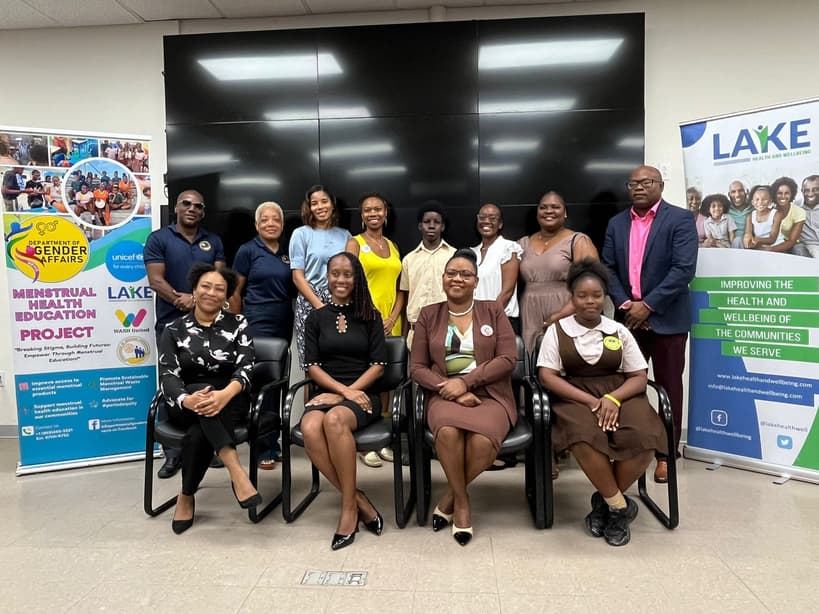
2025 was a year of growth, learning, and impact for our menstrual health education programme. With the continued support of our funder, the ACF and new funder UNICEF Eastern Caribbean, our partners WASH United, Nevis Department of Gender Affairs and the Nevis Health Promotion Unit, and our menstrual health educators, we were able to deepen our reach, strengthen local capacity, and create more inclusive conversations around menstrual health across St. Kitts and Nevis.
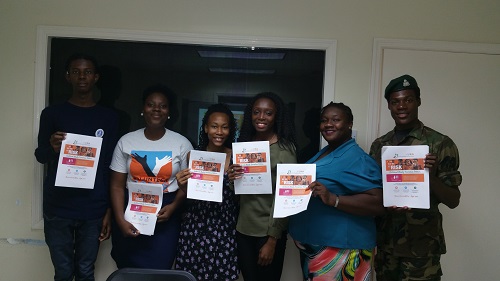
One of our key milestones was the launch of Phase 2 of the project in both St. Kitts and Nevis, allowing us to build on the foundations laid in earlier phases and respond more intentionally to the needs of girls, families, educators, and communities. Central to this phase was capacity building. We trained guidance counsellors, health educators, and gender officers across both islands, equipping frontline professionals with the knowledge and confidence to support young people with accurate, compassionate, and stigma-free menstrual health education.
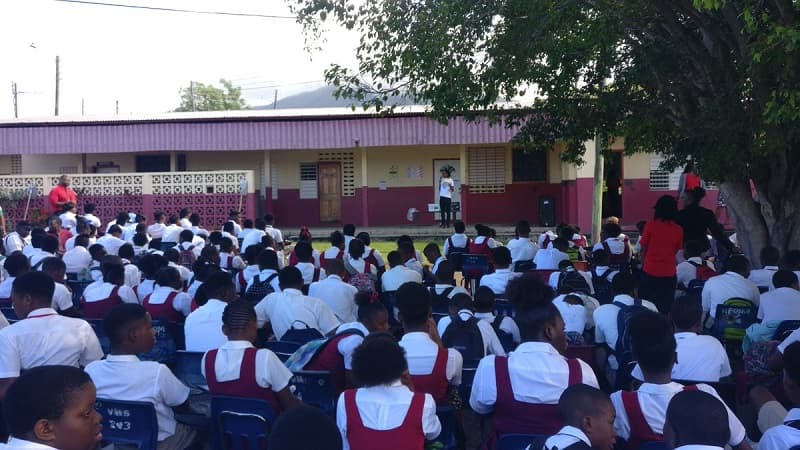
We also expanded the spaces where menstrual health is discussed. In Nevis, we hosted a menstruation and sport session with Sports Officers, recognising the important connection between physical activity, confidence, and menstrual wellbeing, but also exploring how we can ensure that menstruation is not a barrier to success in sports. Alongside this, we continued to deliver menstrual health education sessions in schools and communities, ensuring young people received practical information and reassurance in safe and supportive environments.
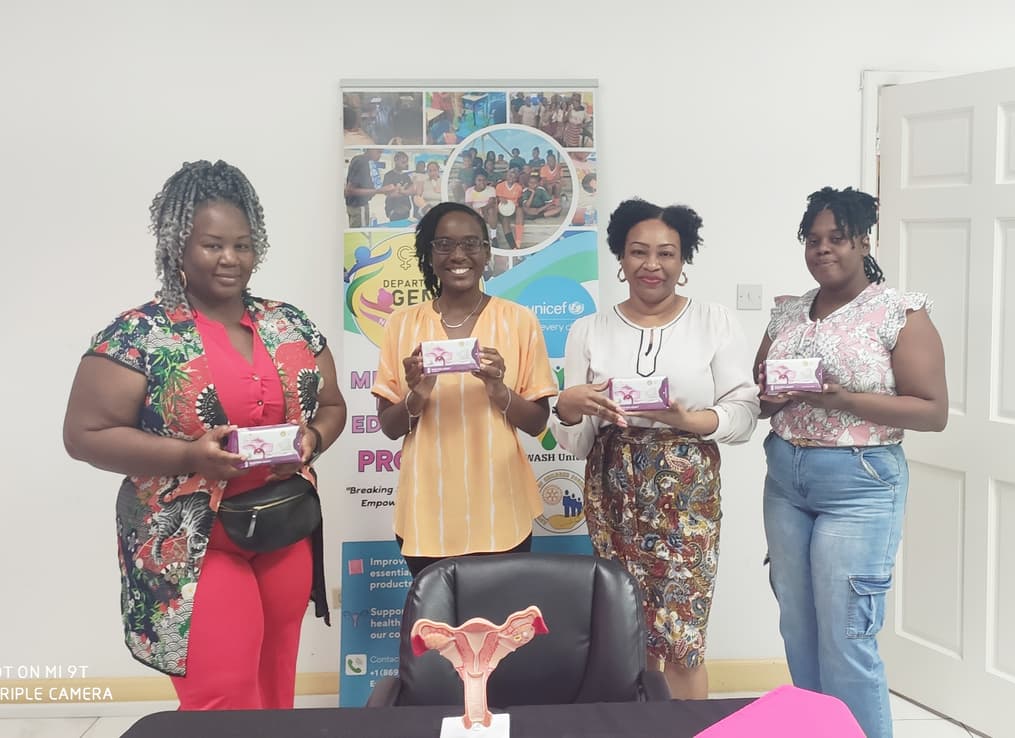
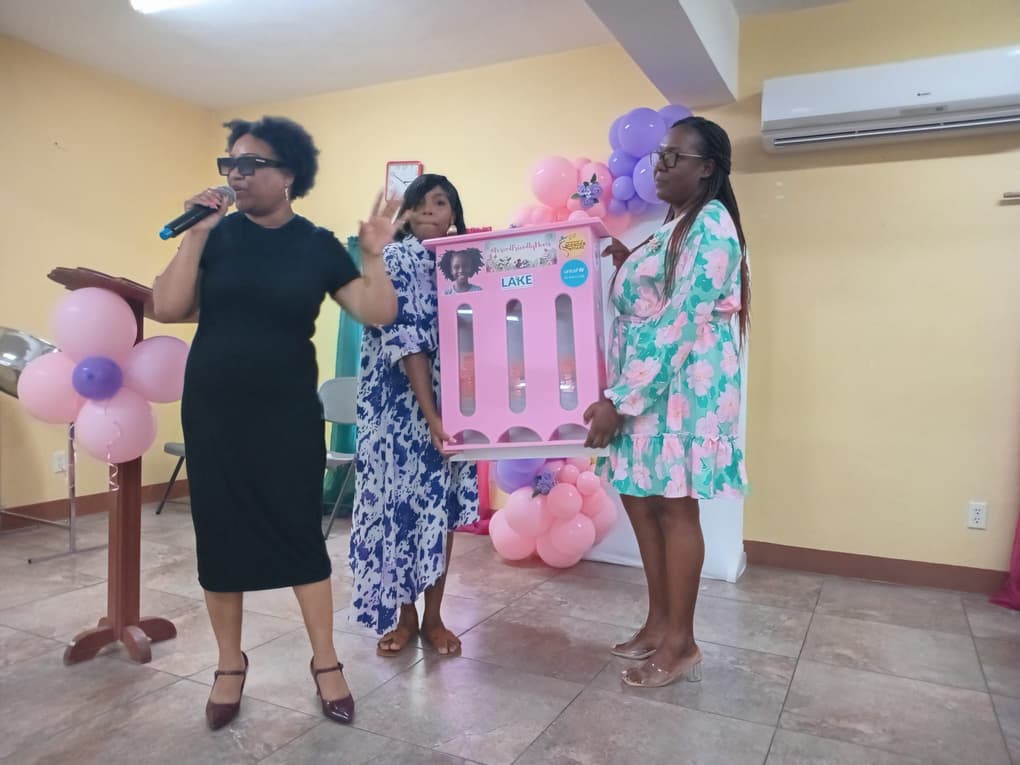
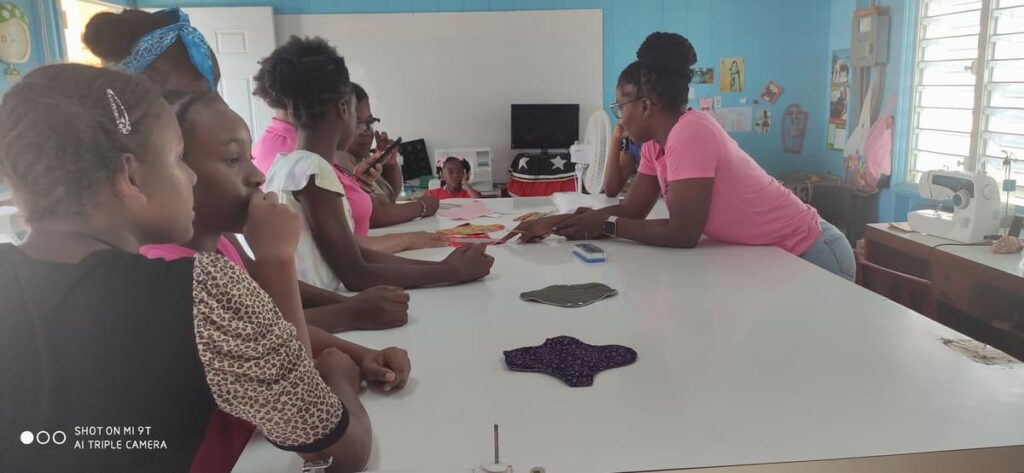
Access to menstrual products remained a priority throughout the year. We were proud to provide Women’s Haven organic pads to schools in St Kitts and Nevis, helping to ensure that girls have access to high-quality products during the school day. In Nevis, Director of the Department of Gender Affairs and Menstrual Health Educator, Saros Hendrickson, took this a step further by hosting a pad-making workshop series, empowering participants with practical skills and a deeper understanding of menstrual products. Ms Hendrickson also worked with a local carpenter to produce menstrual product dispensers for schools in Nevis, a meaningful step towards sustainability and community ownership.
Our Project Team Receiving Women's Haven's Organic Pads
Saros Hendrickson, Director of the Nevis Department of Gender Affairs and a Menstrual Health Educator, presented a locally made menstrual product dispenser to Mrs Tameshia Stanley, Guidance Counsellor at Jocelyn Liburd Primary School.
Pad-making workshop in Nevis
Beyond in-person engagement, we broadened our reach by hosting two episodes of a menstrual health podcast, creating space for education, lived experiences, and open conversation. We also began an exciting new research project exploring the dynamics between fathers and daughters in relation to menstrual health, recognising the vital role families play in shaping attitudes, support, and understanding.
As we look back on 2025, we are proud of what was achieved through such meaningful partnerships. Each activity, conversation, and collaboration brought us closer to our goal of ensuring that menstrual health is understood, supported, and valued for girls, women, and communities across St Kitts and Nevis. Thank you for being part of this journey with us.