
This article is the second in a series written by one of our practicum students, Alyn Wakefield from St George’s University, as part of her practicum project. In this piece, Alyn explores how a sugar-sweetened beverage (SSB) tax could support the goals of the Sustainable Island State Agenda (SISA) while improving health outcomes in St. Kitts and Nevis.
SSB Taxation and the Sustainable Island State Agenda
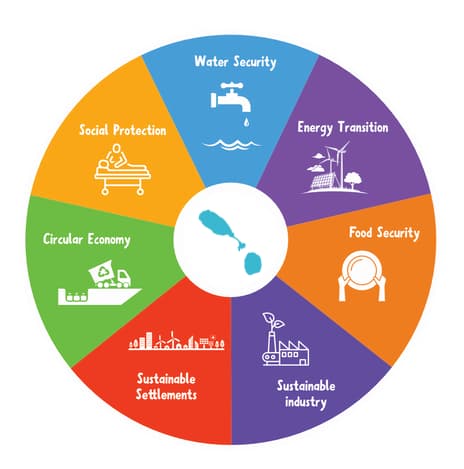
St. Kitts and Nevis is implementing the Sustainable Island State Agenda (SISA), which aims to improve the country’s economy, enhance the health of its citizens, and protect the environment. However, non-communicable diseases like obesity, diabetes, and heart disease continue to rise, and sugar-sweetened beverages are a contributing factor.
In 2018, the Ministry of Health in St. Kitts and Nevis proposed a tax on sugar-sweetened beverages (SSBs) (1). Unfortunately, this tax proposal did not move forward and is still awaiting approval.
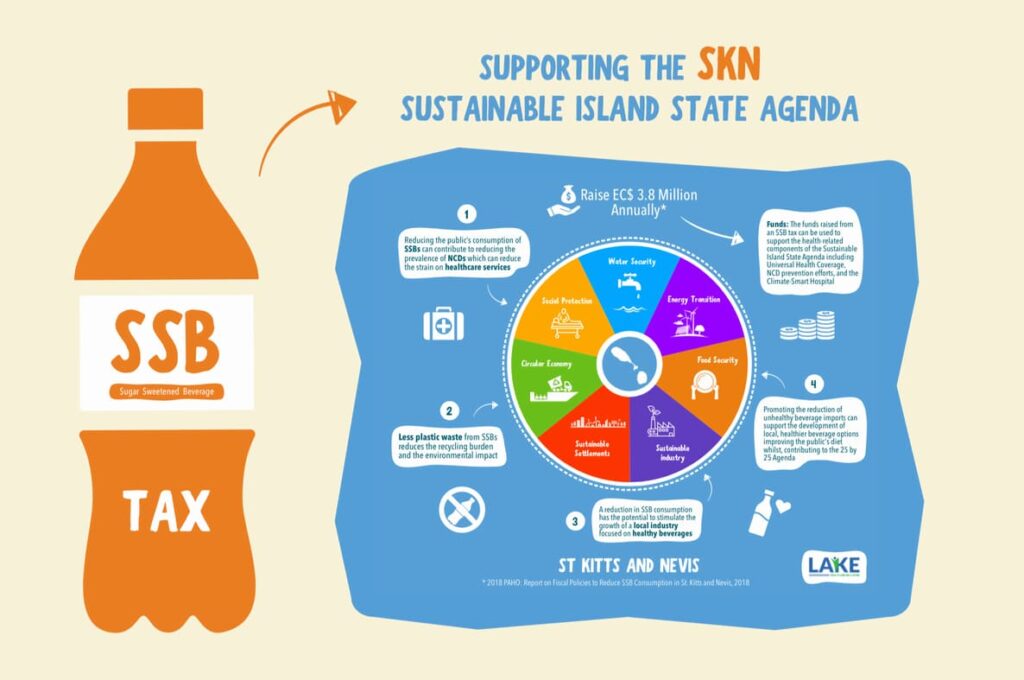
SSB taxation is one of the necessary healthy food policies required in St. Kitts and Nevis to enhance health outcomes, and it has the added benefit of generating revenue to fund programmes that support the goals of SISA’s pillars.
Promoting Healthier Food Choices
The first way that SSB taxation supports SISA is by promoting healthier food choices. The third pillar of SISA focuses on improving nutritional health. SSB taxation can encourage the substitution of SSBs with healthier alternatives, such as fresh fruit juice with no added sugar, infused water, and unsweetened carbonated drink options, as these would become more affordable alternatives.
The revenue generated from SSB taxation can also be used to support the St. Kitts School Feeding Programme, which continues to provide children with healthier school meals (2).
Reducing Plastic Waste and Protecting the Environment
The second way SSB taxation contributes to SISA is by reducing the use of single-use plastics. The sixth pillar aims to reduce plastic waste, as pollution is damaging to the island’s ecosystem. Protecting the ecosystem is vital, as tourism is a significant source of income for SKN (6).
Most SSBs are packaged in single-use plastic bottles, and if not properly disposed of or recycled, they can lead to pollution. Reduced sales of SSBs can lead to a decrease in the use of plastic bottles, resulting in a corresponding reduction in plastic waste. The revenue generated can be used for the planned expansion of the Solid Waste Management Corporation’s recycling plant in 2026 (4).
Supporting Better Health Outcomes
Lastly, SSB taxation would complement the seventh pillar, which focuses on improving the health of St. Kitts and Nevis. Promoting the benefits of reducing SSB consumption by implementing an SSB tax and highlighting the taxed products will raise awareness of products containing added sugars and provide opportunities to purchase healthier beverage alternatives or to drink water instead.
An improved diet with less sugar will help decrease the risk of obesity and the development of diabetes and other NCDs. The revenue generated can be allocated towards programmes that promote exercise, like the SKN Moves Initiative, which encourages healthy eating habits and increased physical activity (5).
Learning from Barbados
Barbados was the first Caribbean country to implement an SSB tax. Barbados was experiencing a rise in NCDs, similar to SKN. To address this, Barbados introduced a 10% tax on SSBs in 2015 (5).
The implementation of the tax led to a decline in SSB sales, accompanied by a 5.2% increase in non-SSB sales and a 7.5% increase in bottled water sales (7). Barbados continues to strengthen its SSB taxation policy and increased the tax to 20% in 2022. The definition of what constitutes an SSB has also been expanded to include mauby syrup and other flavoured syrups, in line with the World Health Organization’s recommendations for SSB taxation (6).
The decrease in SSB sales suggests that taxation has encouraged people to opt for healthier alternatives, which in the long term will reduce the risk of NCDs.
A Path Forward for St. Kitts and Nevis
St. Kitts and Nevis should adopt a similar approach to Barbados because SSB taxation aligns with the goals of SISA. The tax rate should start at 32%, which was a recommendation by the Ministry of Health following work conducted by the University of Illinois Chicago and PAHO in 2018.
Revenue generated by taxation should be allocated towards programmes that support the pillars of SISA, such as the St. Kitts School Feeding Programme, the Central School Farm, the SKN Moves Initiative, and Let’s Recycle SKN. These programmes will enhance nutrition in schools, promote physical activity in the community, and encourage recycling to protect the environment.
The tax should be clearly communicated to the citizens and residents of St. Kitts and Nevis. Town hall meetings, newspaper articles, and advertisements across the Federation should be implemented to raise awareness of what will be taxed and the benefits of taxation.
Overall, the implementation of a sugar-sweetened beverage tax in St. Kitts and Nevis would strengthen several pillars of SISA, and the funds generated could be used to promote a healthier and more sustainable SKN
Sources
- https://lakehealthandwellbeing.com/we-attended-st-kitts-national-consultation-on-sugar-sweetened-beverages/
- https://www.education.gov.kn/st-kitts-school-feeding-programme/
- https://iris.who.int/server/api/core/bitstreams/317ba614-5295-4f6f-baba-56f281f228f9/content Page 68
- https://www.taiwanembassy.org/kn_en/post/7841.html
- https://www.sknmoves.kn/
- https://ciu.gov.kn/press-st-kitts-and-nevis-economy-and-key-industries-with-cbi-invesment-opportunities/#:~:text=Tourism%20is%20the%20main%20industry,foreign%20investment%2C%20including%20CBI%20contributions.
- https://pubmed.ncbi.nlm.nih.gov/30700311/