




Contacts

Bird Rock, St Kitts, St Kitts and Nevis, West Indies

info@lakehealthandwellbeing.com

+1 869 765 8702

Tag: mental health

Bring Depression into the Light
BlogMental HealthVolunteer Bloggers

Bring Depression into the Light

In today’s blog post our guest blogger, Stacey Mensah, discusses depression and very powerfully shares her personal experience with us. Get involved in the discussion and please do leave a comment below for Stacey.

Today’s blog post comes in somewhat of a sombre note. The topic we’ll be discussing is mental health, but more specifically depression. Many see this as simply a word, unable to comprehend the intensity of such a thing. Some, ​however, have experienced the feelings of hopelessness and darkness that come with this condition. Depression, whatever that may look like is real, you may not be able to understand it but it’s there lurking in the background. Coming from an African family but also a Christian one, my perception of mental health has always been an interesting one; and when I had depression as a child my mother was not quite convinced. In this blog post, I’ll be sharing with you, my experience of depression and my mother’s perception of it and what we have both learned from the experience.

The World Health Organization defines mental health ‘as a state of well-being; of complete physical, mental and social well-being and not merely the absence of disease or infirmity.’ Going on from this, depression can be understood as a persistent feeling of sadness and loss of interest. This typically affects how you think, feel and behave. This could lead to a variety of emotional and physical problems. This topic has always been of great importance to me not only because I’ve experienced this, but as a society, I feel like it’s so easy to focus on the outward appearance. If you’re smiling, then everything must be ok – surely. If you ask someone how they’re doing and they reply with, ‘I’m fine’, then all must be well. I have found that in the past this has not been the case at all. Anyone who has been around me for an extended period of time will know that I have a tendency to frequently ask the questions – How are you feeling? What are you thinking? How do you feel about that? And no, this is not because I’m a maniac who wants to get inside your head. It’s because I know it’s far too easy to hide your negative emotions and to some, in the end, this does become destructive.

I experienced depression from the age of 11 until the age of 20. I know I don’t have the condition anymore as I don’t have that persistent feeling of sadness. Although I do realise that depression does not have an expiry date, everyone does experience it differently. This post is not about telling you how we all experience the condition but rather encouraging you all to not be so eager when it comes to labelling or formulating certain medical conditions. One size does not fit all. During this period, I experienced intense feelings of loneliness, rejection and just overall darkness. The interesting thing however is that though I have always had my family around me, but that didn’t matter at the time. I was mostly inwardly focused, focusing on my own feelings – exaggerating my feelings of negativity and isolating and marginalising my positive emotions. They did not matter. I would always focus on the negative. This would be accompanied by 3 am phone calls to family members about how everything I did in my life was so wrong. The more than occasional bursts of tears would follow and just general misery. Although I was deep in the pits of depression I never did seek professional help. I didn’t want to be labelled as damaged or different. This was, of course, to do with the stigma of depression in society. I can talk about it now because I can look back at that time and think wow. I’m glad I went through that because it made me a stronger person and I’m able to empathise with people with mental health issues. It also brought my mother and me​ together. Here is what she had to say:

‘When you had depression, honestly, I felt helpless. I didn’t know what to do. I was always worried about what you were going to do as you were quite unpredictable. The only thing I could do was pray for you and answer those 3 am phone calls. Although you do mean everything to me, I had to understand that there was only so much I could for you. At the beginning, it was incredibly difficult as I just thought you were being dramatic and didn’t want to be put into certain social situations. After a while, though I learned to listen to you and from there we just had to work through it together.’

To describe depression as being a rough journey would be an understatement. It’s not easy. Some people have to seek medical help for it whereas others do not. Everyone is different. Families and cultures deal with it differently. The key thing that helped me during this time was having a strong support network – made of family and friends. What are your views on mental health? Comment down below or on our Facebook page and let’s open up the discussion.

See you soon x

***********************

The Lake Foundation would like to say a big thank you to Stacey for sharing her experience with depression, we hope that through her experience you have gained some insight into this condition.

For more information about depression you can visit Mind, Rethink Mental Illness and Croydon Drop In  

Our cycling trip to the Bethlem Museum of the Mind
BlogCyclingMental Health

Our cycling trip to the Bethlem Museum of the Mind

Last Saturday, our cycling club decided to do something a bit different – combine cycling with another activity.  We opted for a visit to the Bethlem Museum of the Mind in Beckenham.

We started our session with a 30 minute ride from our starting point in Elmer’s End and took a very picturesque route to Monks Orchard Road in Beckenham, where the museum is located.

Upon arrival we were welcomed by very friendly staff who gave us a quick overview of the museum, the current exhibitions (The human influencing machine and the Art of Louis Wain), upcoming events and their collection of work, and we then proceeded upstairs to visit the main collection.

During our visit we learnt that the museum was formally opened in 2015. It explores the history of mental healthcare and treatment, looks at the use of art as therapy and provides insight into the former patients at the Bethlem Royal Hospital.

The Bethlem Royal Hospital first opened its doors in 1247 and is the UK’s first psychiatric institution. The museum takes visitors on a journey that explores the hospital’s history and the history of mental health in general. The museum covers how mental health is labelled, diagnosis, patient narratives, physical restraints, medical treatment and more. There is also an interesting collection of artwork from patients which, during their stay in hospital, would have provided them with the opportunity to address their battle with mental ill-health and express how they feel. This collection of artwork gave us an informative and touching look at how mental health conditions affect patients.

One set of artwork that stood out for us were the two pieces created by William Kurelek .  His first painting, ‘The Maze’, which he painted whilst in hospital, conveys how he felt in the lead-up to and during his battle with clinical depression and other emotional problems.  Whilst his second painting  reveals his state of mind after recovery (the paintings are shown below).

Bethlem

The Maze by William Kurelek

bethlem3

Out of The Maze by William Kurelek

We found the museum to be very engaging with good use of a range of media to powerfully take us through the world of mental health. There were audio recordings of patient stories, paintings, hospital record books, samples from a padded room and a short film that allowed us to reflect on where we should draw the line between freedom and restraint.

Another interesting feature was the Human Influencing Machine exhibit. This was based on the paranoid delusions of James Tilly Matthews, a former patient of Bethlem Royal Hospital who believed that influencing machines were being used by those in power and that one of these machines had been placed in or near the hospital with bad intentions against him.

We thoroughly enjoyed our visit to the Bethlem Museum which ended with a nice stop at their cafe for a warm drink to prepare us for our ride back to Croydon. We highly recommended visiting the museum and will definitely be returning as they do organise a number of interesting events.

New Mental Health Organisation, OpenMinds, Hosts a Launch Event in Croydon
Mental HealthNews

New Mental Health Organisation, OpenMinds, Hosts a Launch Event in Croydon

OpenMinds is a new not-for-profit, specialist mental health organisation based in Croydon which makes recovering from a mental health difficulty the main focus of their work. Their core values are recovering, advocacy and changing mindset.

OpenMinds will be hosting their launch event on Tuesday 22nd November at the Croydon Voluntary Action Resource Centre, 82 London Road, CR0 2TB from 5pm to 8pm.

The purpose of this event is to promote the work of OpenMinds’ floating support service, but more importantly, to stimulate conversations that will challenge and facilitate change in mindsets, with the goal of reducing stigma and discrimination in mental health service and provision.

All are welcome to attend and for more information please contact: info@openmindssocialcare.co.uk or you can find out more about OpenMinds by downloading their brochure below.

Shrink TV, raising awareness of mental health problems
BlogMental Health

Shrink TV, raising awareness of mental health problems

Recently we came across a web series called Shrink which is set in London and explores both the mental and physical symptoms of depression. It tackles the fact that depression affects people of all walks of life and highlights that people are affected differently.

The main character in this really interesting web series is cognitive behaviour therapist Natasha Charlton who, as well as having to support her patients, has to deal with her own secret mental health issue.

Episodes are 8-17 minutes long and in each episode we’re introduced to a new patient of Natasha’s.  Through their stories we learn how experiences like childhood abuse,  university life, parent expectations, unemployment, workplace bullying, work stress and body image  can all have a significant impact on our mental health.  Shrink also tackles the stigma associated with mental ill-health, the lengths that people will go to to hide their condition, the destructive ways that people may deal with mental health issues and the discrimination that exists.

So far there has been one series of Shrink and season two will be starting soon with the creators stating that they will be touching on topical issues like Brexit and the Black Lives Matter movement.

In the UK, 1 in 4 people will experience a mental health problem each year and despite the fact that mental health issues are very common those affected still feel very isolated with there being an unease to discuss mental health.

When we look at the black community, statistics suggest that the African-Caribbean community are more likely to be diagnosed with severe mental illness and are 3-5 times more likely to be diagnosed with schizophrenia. Looking specifically at depression, a condition that features highly in Shrink, we know that 2.6% of the UK’s population are affected by depression.

Depression is described as a mood disorder where those affected feel persistently sad and lose interest in day-to-day activities and hobbies. It’s not the kind of sadness that people can just “get over” but needs some form of strategy to overcome. There are different types of depression such as major depression, bipolar disorder, persistent depressive disorder, seasonal defective disorder and postnatal depression, just to name a few. If you or anyone you know may be experiencing depression, please to reach out to your GP or a charity like Mind for some support, do not suffer in silence.

We applaud the makers of Shrink for using drama to raise awareness of depression and other mental health issues. Drama is a powerful way to highlight health issues and another organisation, Know My Mind, has used drama, with their play ‘So You Think I am Crazy’, to tackle the challenges black people face in the UK mental health system.

We found Shrink to be very interesting and look forward to watching the second series.  You can watch the first season of Shrink here

World Mental Health Day 2016
BlogMental Health

World Mental Health Day 2016

Today is World Mental Health Day and this year’s theme is psychological first aid and the support people can provide to those in distress.

Watch our video clips below to learn what you can do support someone with a mental health challenge.

Abi Begho, Founder of The Lake Foundation

Abi Begho- from Aniku Ltd on Vimeo.


Baffour Ababio, Psychoanalytic Psychotherapist

About Me: Baffour Ababio

Baffour WMHD-_2 from Aniku Ltd on Vimeo.


Know What Support Services Are Available

Baffour WMHD- from Aniku Ltd on Vimeo.


Reach Out and Be Inclusive

Baffour WMHD-_1 from Aniku Ltd on Vimeo.


Olivia Haltman, Accredited Integrative Humanistic Counsellor and EMDR Therapist

About Me: Olivia Haltman

Olivia WHMD Intro from Aniku Ltd on Vimeo.


Be Informed

Olivia WHMD_1 from Aniku Ltd on Vimeo.


Don’t Give Up

Olivia WHMD_2 from Aniku Ltd on Vimeo.


Ask if They’re OK

Olivia WHMD_3 from Aniku Ltd on Vimeo.


Janet McNish,  Counsellor and Trainer

About Me: Janet McNish

Janet #wmhd Intro from Aniku Ltd on Vimeo.


Take Care of Yourself

Janet WMHD from Aniku Ltd on Vimeo.


Remember the Good Times

Janet WMHD_1 from Aniku Ltd on Vimeo.


In Conclusion: Validate their experience and provide a listening ear

JanetOliviaBaffour WMHD from Aniku Ltd on Vimeo.

National Study of Health and Wellbeing
Mental HealthNews

National Study of Health and Wellbeing

Last week, NHS Digital, NatCen Social Research and the Department of Health Sciences at the University of Leicester published the latest results of the National Study of Health and Wellbeing (sometimes referred to as the Adult Psychiatric Morbidity Survey).

The National Study of Health and Wellbeing Survey  is carried out every seven years and has been running since 1993. It aims to determine how everyday stresses, strains and joys affect the health of people living in the England.  It focuses on common mental disorders which are disorders that cause emotional distress, interfere with daily function but do not usually affect insight or cognition. Common mental disorders include types of depression and anxiety. Depression occurs when a person experiences low moods and a loss of interest in everyday things and experiences. Anxiety disorders include panic disorder, phobias and obsessive compulsive disorder.

The current survey focuses on data collected in 2014 and is based on interviews with 7,500 adults over the age of 16. It explored a range of areas including wellbeing, disability, physical health, pain, lifestyle behaviours, work and stress and life events. The results of the survey can be used by those working in the health field to get a clearer picture of the public’s health and wellbeing so they can plan their services accordingly.

What does the study tell us?

The study revealed that one in six  (17%) adults have a common mental disorder and more women were affected by mental illness than men with one in five (20.7%) women having a common mental disorder compared to one in eight men (13.2%).

Other disorders were also explored and it was found that one in a hundred adults were affected by psychotic disorder and autism each.  Also, one in fifty people experienced bipolar disorder and one in thirty people were drug dependent and a similar proportion of people were found to be alcohol dependent.

The study found that young women were particularly at risk of developing a mental disorder having high rates of common mental disorders (28.2%)0, self-harm, post-traumatic stress disorder and bipolar disorder.

The survey also found that common mental disorders were more common in Black women, adults under the age of 60 living alone, women living in large households, adults who were not in employment or were in receipt of benefits and in those who smoked cigarettes.

When the researchers looked at ethnicity they found that in men common mental disorders affected all ethnic groups similarly but when they looked at women there was a difference. In women, common mental disorders were more common in Black and Black British women (29.3%) compared to non-British White women (15.6%) and British White women (20.9%).

The survey suggested that depression was more prevalent among Black women and panic disorder appeared to be more prevalent in Black, Asian and mixed ethnic groups.

Conclusion

Common mental disorders are a significant issue in England and the survey reveals that these are more common in Black women and there is a need to understand why this is and provide Black women with the appropriate support to address this. As a charity we will do what we can to address this issue.

You can download the National Study of Health and Wellbeing below.

‘So You Think I’m Crazy?’ – Using the arts to raise awareness of mental health
Mental HealthNews

‘So You Think I’m Crazy?’ – Using the arts to raise awareness of mental health

‘So You Think I’m Crazy?’ is an emotive drama that explores the UK’s mental health system, told through the eyes of a young black man. It uses music, poetry, rap and dance to take audiences from the streets of London to the secure wing of a psychiatric hospital. The play highlights the issues surrounding mental ill-health in the black community and questions whether the mental health system in the UK is effective. The exploration of the issues raised in the play continues after each performance with a panel discussion made up of mental health professionals.

‘So You Think I’m Crazy?’ is written and directed by Ekanem Hines, the co-founder of Know My Mind which is a Croydon-based community group which aims to highlight mental health issues from the perspective of service users and carers.

The play was launched in 2014 and has featured in theatres and events across the UK and has been endorsed by the Mayor of Croydon, Mind and Royal College of Psychiatrists, and has also received excellent reviews.

Know My Mind started in 2013 when the co-founders decided to capture the stories of users for a report on the UK’s mental health system. This report entitled ‘Tell it like it is Mental Health in the Community: Opening Pandora’s Box?’ was published in 2014 and aimed to address the fact that the voice of service users tends to be lost in academic and professional jargon. Therefore the reality of the experience of mental health patients is not fully understood. The report addressed this by challenging the system and putting forward a set of recommendations to improve the system. Following the publication of this report Know My Mind put together the script for ‘So You Think I’m Crazy’ with assistance from consultants.

If you haven’t had the opportunity to see ‘So You Think I’m Crazy’, there will be performances on Saturday 8th October at 2:30pm and 8pm at  The Broadway Theatre in Catford, tickets are £10.

The London Assembly Launches their Healthy Minds, Healthy Londoners Report
Mental HealthNews

The London Assembly Launches their Healthy Minds, Healthy Londoners Report

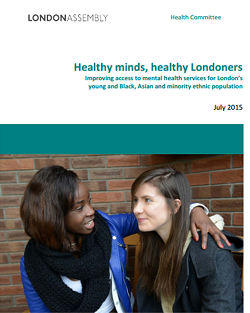
The London Assembly’s health committee recently published their report ‘Healthy minds, healthy Londoners: Improving access to mental health services for London’s Black, Asian and minority ethnic population’. This report summarises the committee’s review on mental wellbeing across London and the aims of their review were to:

  • Examine the challenges facing people in accessing mental health services in London with a specific focus on young and Black, Asian and Minority Ethnic (BAME) individuals
  • Explore and make recommendations on how the Mayor might support improved access to mental health services, particularly for young people and the BAME population in London

They found that over a million Londoners suffer from a mental illness at any one time and this affected their mood, physical health and their ability to work, study and develop and maintain relationships.  They stated that there is evidence to suggest that mental ill-health is more common in London than elsewhere in the UK. Additionally, they reported that mental health is a particular challenge in young people and the BAME community.

They highlighted that a major challenge is access to mental services with there being cultural and practical reasons why both young people and BAME individuals are reluctant to access mental health services in London. The health committee suggest that an effective way of increasing uptake of mental health services, particularly for young people, is for these services to become more integrated.  They state that many services are provided by multiple agencies and this is confusing for young people to navigate.

The health committee also stressed the need for mental health problems to be identified  and addressed as early as possible with a strategy and funding allocated to prevention and early intervention.

Seven recommendations were put forward to address the challenges that exist.

  1. The Department of Health should commission a national mental health survey of children and young people at the earliest opportunity to update the 2004 survey. The Department, in response to this report, should set out its timetable for such a survey, and explain how it will address the needs of policy makers and commissioners in London – specifically around young people and Black, Asian and minority ethnic groups.
  2. London boroughs and Clinical Commissioning Groups, supported by NHS England London and the Department of Health, should develop a more integrated approach to providing mental health services and support that will enable a shift in focus to early intervention and prevention provision, whilst greater pan-London strategic leadership should seek to facilitate greater cooperation across complex existing structures.
  3. London boroughs, working with Clinical Commissioning Groups, should consider giving greater priority to children and young people’s mental health in local Health and Well Being Strategies when they are next refreshed.
  4. Local Transformation Plans for Children and Young People’s Mental Health and Wellbeing – being drawn up by Clinical Commissioning Groups and others – must include ways to support the voluntary sector as a provider of mental health services for children and young people.
  5. The NHS England Mental Health Task Force must examine ways to develop a sustainable model of community-based advocacy, as a means of improving access to mental health services and support for BME groups, in which the voluntary sector is an essential partner.
  6. In response to this report, the London Health Board should set out an express commitment to a continued emphasis on mental health, in the confirmed areas of focus, to be agreed later this year.
  7. In response to this report, the Mayor should set out what additional steps he (or a future Mayor) could take to promote good mental health in London, particularly with reference to London’s young people and Black, Asian and minority ethnic groups.

The Lake Foundation welcomes this report and its recommendations as there is an urgent need to address the mental health challenges the black community face.

You can download the full report below.

Public Health England Launches a New Framework to Build Mental Health Skills
Mental HealthNews

Public Health England Launches a New Framework to Build Mental Health Skills

The Lake Foundation is happy to hear that Public Health England has published its new framework to build mental health skills in a range of professions working with children and adults in all areas of life including work settings.

With mental health conditions being a particular challenge for the black community we hope that this framework will go some way towards addressing some of the inequalities that exist in the mental health field where the black community are more likely to be diagnosed with a mental health condition and less likely to report being satisfied with the care that they receive.

Public Health England’s framework aims to promote good mental health, prevent mental illness and suicide and improve the quality of life of people living with mental illness.

We look forward to the framework’s implementation and hope that this will truly make a difference in our community.

For more information you can download a copy of the executive summary of the framework below or visit Public Health England’swebsite