Contacts

Bird Rock, St Kitts, St Kitts and Nevis, West Indies

info@lakehealthandwellbeing.com

+1 869 765 8702

Tag: mental health

Improving our Health and Wellbeing Through Gardening: Growing Tomatoes
BlogGardening

Improving our Health and Wellbeing Through Gardening: Growing Tomatoes

Welcome back to our gardening and health blog series where we’ve been taking you on a personal journey as we explore the health and wellbeing benefits of gardening for ourselves.

Today, Abi Begho is back and this time she’s sharing her experience of growing tomatoes. She discusses the ups and downs, the need for patience and the joy of harvesting your first fruits.

We absolutely love tomatoes in my house. We eat them almost every day – in salads, we make Nigerian stew with them, we use them in omelettes, stir fries, sandwiches and much more. You name the dish and we’ll put a tomato in it!

When it came to deciding what to grow in our vegetable garden, tomatoes were first on our list and the first thing we tried.

When I started looking into tomatoes, I must be honest, I soon realised I really didn’t know a thing about them even though I eat them every day.

I was shocked at the variety of tomatoes out there, I was just aware of cherry, plum and what I call “normal” tomatoes, but this is just the tip of the ice berg. I was shocked to learn that there are over 700 varieties of tomatoes, they come in quite a few colours, not just red – yellow, orange, pink,  purple and black, and they have some very interesting names  – Beefsteak, Big Boy, Pink Brandywine, Pink Girl, Lemon Boy, Golden Jubliee and  Better Boy.

Deciding what variety to grow

When it came to deciding which tomato variety to grow, because there were so many to choose from, I decided the best thing to do would be to extract the seeds from a local variety that we buy in our super market all the time. This means that I have no idea what variety it is (as it’s not listed on the package), but I knew it tasted nice and as it’s grown locally then that suggested to me that it would grow well in our garden (I hoped!).

Although this is how I selected which tomato variety to grow, the advice from experts is to base your decision on more scientific factors – how disease resistant a variety is, how it grows (is it determinate or indeterminate) and the time it takes to mature.

From Seed to Fruit

Once I had decided on what tomatoes to grow, then it was planting time.

My seedlings about a week after planting the tomato seeds

In my last blog I explained that I simply sliced up a tomato making sure each of the slices had seeds in them, buried the slices in soil and watered them and in less than a week my seeds had germinated and I had about ten seedlings growing happily in my container. I was so excited and just couldn’t wait to see the seedlings develop.

I kept an eye on the seedlings and watered them regularly and one week later their true leaves (second set of leaves) had developed, a sign that the seedlings were developing well. At this point I pretty much left them alone, under a tree that got a lot of sunlight (but protected them from the intense afternoon sun here in St Kitts) and watered them regularly.

Tomato Flower

Tomato Flower

When they had outgrown the container, I put some of the young tomato plants in a large pot and the others I planted into my newly created vegetable bed. Then came the test of patience.  One thing gardening teaches you is patience.  Every morning I would go out into the garden and will them to grow, I was so excited every time I saw them develop just a little bit more, it was fascinating.

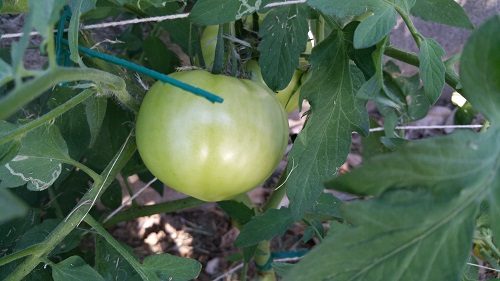
Two months after planting my tomato seeds I noticed flower buds developing (the very first sign that tomatoes are coming soon) and a few days after that a lovely yellow tomato flower had developed. I thought: ‘yes!  I’ll have tomatoes in a couple of weeks.’ What did I say about patience?  There was more waiting. It took another 6 weeks to get my first ripe tomato and as I type I have 51 green tomatoes growing nicely and waiting to ripen ( ah-mazing!)

Check out the video below to see me picking my second ripe tomato.

Another important thing to mention is that I had to create a support system for my tomato plants. Due to the weight of tomatoes most plants need some form of support to prevent the fruit from weighing them down. There are many options out there and I chose to create a tomato trellis (see picture on the right), I created this using stakes and string. As the plants grew I would tie the main stem loosely to the trellis and weave the leaves horizontally along the string. This, so far (it is still early days), has given the plants some support and training them to grow along the trellis, as well as pruning the plants, has kept them neat and contained.

Challenges

The four main challenges I have encountered thus far are:

Insects Living in the Caribbean means there are a lot of bugs and insects to contend with and they all seem to love tomatoes as much as I do!  To date, they haven’t caused any major problems, but I did lose two tomatoes to caterpillars who ate them for lunch one day.  I was so sad, it felt like all my hard work had gone to waste, at least it was only two tomatoes . I’ve been keeping an eye out for tomato-eating insects and have flicked a few caterpillars off the plants before they made a meal of the tomatoes.

This is what blossom end rot looks like

Blossom End RotI woke up one morning shocked to see two of my tomatoes with dark patches on their bottoms, like they were rotting. I promptly discarded them hoping that they wouldn’t affect the tomatoes next to them.  Then, a few days later, the same thing happened to two more tomatoes on the same plant but in a different location. I was dejected, first insects now some horrible looking disease. After a Google search I learnt that is was blossom end rot and not as bad as it looked.

Blossom end rot occurs due to a calcium deficiency where the plant, for various reasons, is unable to absorb enough calcium for its development. The advice from Gardening Know How is not to worry, it usually clears up on its own, just pick off the affected tomatoes and discard them and make sure the plants get adequate water (not too much though). So, for the moment I am going to just wait it out and see what happens. I’ll keep you posted.

Blossom drop – Last week I noticed that my new tomato flowers weren’t looking healthy at all. They seem drier than the previous set which really thrived and developed into 51 healthy tomatoes. These new tomato flowers are shrivelling up and some have already fallen off the plant without developing into fruit (Nooooo!). I couldn’t believe it. I had so many new flowers which I had hoped would form tomatoes, but alas, it was not meant to be. I hope the next set do better.

After doing some research, I found that blossom drop is common and looking at all the possible causes I have narrowed it down to two which I think could be the culprit:

  • Lack of water – we’ve had some short sharp showers and so I haven’t been watering the plants as regularly as I used to. Reflecting on this I don’t think the showers were providing enough water for my plants as the soil has been pretty dry so I am going to start watering every other day as before
  • Too many blossoms and fruit  – up until now my plants have been developing really well and I do currently have 51 tomatoes spread across 9 plants and a lot of flowers developing (and dying!). According to The Spruce having all these fruit and flowers developing at the same time requires a lot of energy and they will all be competing for a limited amount of energy and food, and only the strong will survive. They state that once the majority of tomatoes have been harvested the problem will resolve, so again, I just have to wait it out.

Playing the waiting game – In this blog, I have mentioned patience and waiting several times and that has been one of my biggest challenges: waiting for something significant to happen. In the whole scheme of things it hasn’t been that long (3 months) to get my first ripe tomato, but at times it has felt like a life-time. Each step does take a while – it took two months from seed to the first sign of a blossom, then from flower to pea-sized tomato took a week, that got me excited, but then it took over a month for that pea-sized tomato to develop into a fully ripened red tomato, but it was so worth the wait – it was delicious!

Why grow tomatoes?

Tomatoes are a great fruit to grow because they are packed with nutrients. They are known for their fairly high lycopene content which has been linked to a reduction in our risk of developing heart disease and cancer. Tomatoes are also rich in vitamin C, folate, vitamin K and fibre, and they contain iron, potassium, vitamin A and vitamin E.

All these nutrients and minerals are excellent for your overall health and by growing tomatoes in your garden you’ll get an ample supply so you’ll get a good dose of nutrients.

Happy gardening!

Well….that was a fairly long blog post (sorry!), but I hope that it gave you an idea of what it’s like to grow tomatoes and some of the challenges you may encounter along the way. Despite the challenges, it has been a lot of fun and very rewarding. I am looking forwarding to harvesting more tomatoes, so far I have only harvested two so there are many more to come. I’ll keep you all updated.

In my next blog I will move on to my okras – the stars of the show!

See you next time and happy gardening!

Some references and more information

  1. Identifying Tomatoes with Blossom End Rot
  2. How to prevent blossom end rot
  3. What kind of tomatoes should I grow
  4. Controlling Blossom Drop 

If you missed our previous blogs you can read them using the links below

  1. Improving Our Health and Wellbeing Through Gardening: An Introduction
  2. Improving Our Health and Wellbeing Through Gardening: How I Got Started

Improving our Health and Wellbeing Through Gardening: An Introduction
BlogGardeningUncategorized

Improving our Health and Wellbeing Through Gardening: An Introduction

Welcome to this blog series on gardening and our health and well-being. Over the next couple of months, we’ll be taking you on a personal journey as we explore the health and well-being benefits of gardening for ourselves. We’ll tell you how we started, show you our garden, what we’re growing and share some of what we’ve learnt along the way. Today we start off with a quick introduction. Enjoy!

When many of us think of gardening, we think of it as hard manual labour and a chore. We wonder why anyone would spend a weekend in the garden when they could be doing something else. Well, research (and personal experience) has shown that gardening is not only fun but can play an important role in improving our physical and mental health. The benefits are so effective that a whole industry of therapeutic horticulture exists and has been in existence, in some form or another, since the early 19th century.

Thrive, a charity that was founded 35 years ago, uses gardening to bring about positive changes in the lives of people with a disability, who are experiencing ill-health, are isolated, disadvantaged or vulnerable. They describe the health benefits of gardening as:

  • Better physical health through exercise and muscle strengthening
  • Improved mental health through a sense of purpose,  achieving a sense of peace and tranquillity, restoring attention and stress alleviation
  • The development of life skills

Gardening and Physical Health

Gardening is no joke! It can be really hard work. Mowing the lawn, digging, weeding and raking can leave you feeling physically exhausted. This is a really good thing as it means you’re getting some serious exercise.

 A research study published in 2014 showed that digging and raking equated to high-intensity exercise whilst other activities such as weeding, sowing seeds, harvesting, watering and planting transplants were found to be equivalent to moderate-intensity exercise. This means that spending time working on your garden every day could enable you to achieve the government’s recommended amount of physical activity (150 minutes a week), and because of the variety of tasks performed in the garden you’ll be getting both a cardiovascular and muscle strengthening workout.

Regular gardening has an impact on our physical health as the exercise we achieve from it can improve the health of our heart, help with weight loss and reduce our risk of developing heart disease, diabetes, stroke, cancer, fibroids and a number of other health conditions.

The Mental Health Benefits

Gardening makes you feel good.  The excitement of seeing your seeds sprout, the peace and tranquillity of having some quiet time in your garden, the accomplishment you feel when you harvest your first-fruits and gaining a new-found appreciation for nature all contribute to improving your emotions and state of mind. This is backed up by research too.

In 2013, researchers published a review of ten high-quality studies on garden-based mental health interventions. These studies all explored the benefits of gardening on people with mental health difficulties. All of them showed an improvement in the symptoms of depression and anxiety as well as a range of benefits including emotional, social, vocational, physical and spiritual.

Gardening and a Healthy Diet

Many people who delve into the world of gardening explore growing their own fruits and vegetables.  Growing your own produce is a fun and rewarding way of introducing more fruits and vegetables into your diet;  it can be a way to introduce a lot of these into your diet as one, say, tomato plant can provide an abundance of tomatoes, meaning your diet can be more plant-based. This type of diet has a number of health benefits including reducing the risk of cancer, diabetes and heart disease.

In addition to this, as you’ll be growing these yourselves you can avoid some of the harmful pesticides that are commonly used in commercially grown fruits and vegetables, avoid genetically modified products and you’ll get very fresh fruit and veg which many have said are tastier than store-bought products.

The Development of Life Skills

To grow anything requires you to develop and utilise a number of skills. These include problem-solving (coming up with solutions when your plants don’t look right), patience, discipline, time-management, research (understanding the plant you’re growing), perseverance and a basic understanding of plant biology. Gaining these skills improves confidence and there is the added benefit that some of these skills are transferable to other areas of your life. Being empowered with these skills improves a person’s overall well-being, improving their outlook on life and leading to significant personal development.

Conclusion

Whilst at first glance gardening may not seem that inspiring when you explore it further you can see the huge benefits it can have on your well-being. So… if you’re looking for a  fun, yet practical way to get fit, active and healthy why not try a bit of gardening. We’re trying it and we love it!

See you next time and happy gardening!

Let us know your thoughts on gardening for health benefits in the comments section below.

OH Services – Improving the mental wellbeing of our community
BlogMental HealthOH Services

OH Services – Improving the mental wellbeing of our community

With 1 in 4 people in the UK suffering from a mental health issue, there is a need to find experienced counsellors who provide an effective and high quality service, OH Services does just that.

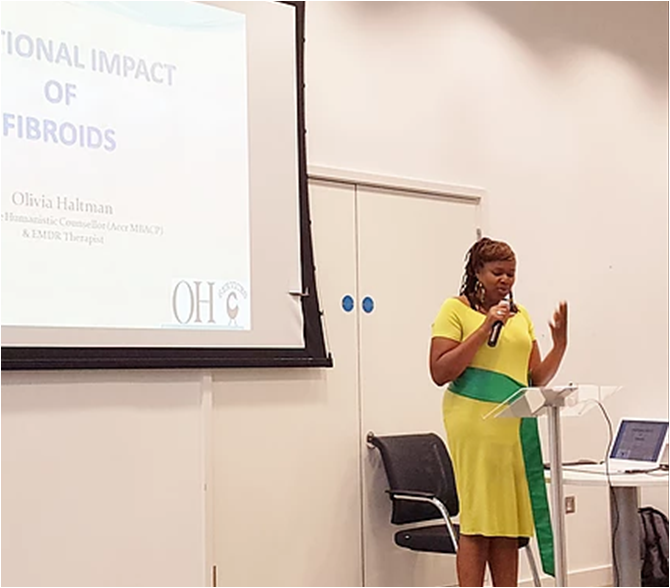
Founded in 2010 by counsellor Olivia Haltman, OH Services aims to support people through the difficult periods of their life. They are committed to providing a safe, confidential and non-judgemental environment where people can open up and get the support they need.

They provide one-to-one counselling, EMDR therapy, group therapy, workshops and seminars for adults and young people from all walks of life. They understand that people have different needs and deal with traumatic experiences in different ways, and therefore provide a tailored programme of support that ensures the right approach for each individual.

Founder, Olivia Haltman, is an accredited Integrative Humanistic Counsellor and an Eye Movement Desensitization Reprocessing (EMDR) Therapist.  She is also a member of British Association for Counselling and Psychotherapy (BACP), EMDR UK & Ireland and BAATN (Black and Asian Therapist Network). Ms Haltman has over 10 years experience working in the mental health sector having worked for organisations like Mind and established her organisation to support people who want to develop their lives on a personal level and reach their best potential. Of her approach to tackling mental health issues she says:

“I believe everyone is different, with unique needs and aspirations so I use an integrative approach to apply and integrate the most suitable solutions for my clients. Within my practice, I also apply (where necessary) a holistic approach to help clients enjoy the essential benefits of wellbeing and healing processes.”

OH Services works with a range of clients and issues, and if you’re experiencing some form of anxiety or trauma, or just need someone to talk you through an issue then please contact OH services. You can find their contact details here and for more information visit their website.

The Montevideo Roadmap on NCDs as a Sustainable Development Priority
BlogNon-Communicable Diseases (NCDs)

The Montevideo Roadmap on NCDs as a Sustainable Development Priority

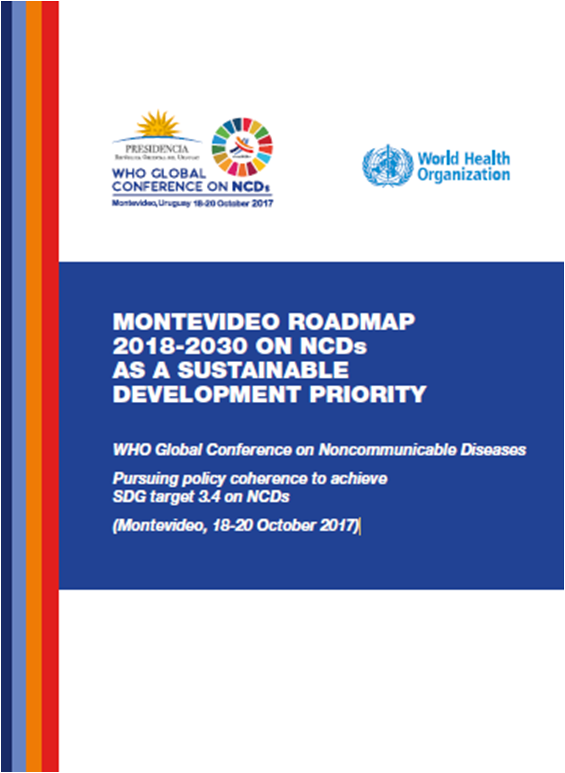
A couple of weeks ago government representatives from across  the world met in Montevideo, Uruguay for the World Health Organisation’s Global Conference on NCDs (Non-communicable diseases, e.g: cancer, diabetes,  cardiovascular disease etc).  The objectives of the conference were: to guide countries on how to reach sustainable development goal target 3.4 by 2030; to launch a new set of global initiatives to help countries accelerate progress in tackling NCDs; to share and exchange experiences; and to discuss how the health sector can be a key example of the benefit of enhancing policy coherence to achieve the sustainable development goals.

Making A Commitment to Tackle NCDs

At this conference governments endorsed the Montevideo Roadmap 2018-2030 on NCDs as a Sustainable Development Priority. By endorsing this roadmap they have made a commitment to take significant steps towards reducing the premature deaths due to NCDs by a third. They recognised that NCDs are one of the major challenges of the 21st century and that progress to tackle them has been uneven and insufficient. The roadmap states that 15 million 30 to 69 year olds per year die from a NCD and 80% of these premature deaths occur in developing countries.  There are a number of challenges associated with tackling NCDs and with this is mind they committed to the following actions:

  • Reinvigorate political action
  • Enable health systems to respond more effectively to NCDs
  • Increase significantly the financing of national NCD responses and international cooperation
  • Increase efforts to engage sectors beyond health
  • Reinforce the role of non-State actors
  • Seeks measures to address the negative impact of products and environmental factors harmful for health and strengthen the contribution and accountability of the private sector and other non-State actors
  • Continue relying on WHO’s leadership and key role in the global response to NCDs
  • Act in unity

Our Thoughts

We were delighted to see world leaders come together and make this commitment and look forward to seeing these actions being taken forward.

We’re particularly happy to see that efforts will be made to engage with a variety of stakeholders. As a small organisation that is passionate about improving the health and well-being of our community we do get frustrated at the lack of engagement with grassroots organisations. We have many times reached out to local and national governments with our enthusiasm and ideas, ready to play a role but have received lukewarm responses or no responses at all. We hope that governments will see the value of working with small organisations and we have been grateful for the funding provided by Croydon Council, Sports England, Macmillan and Eli Lilly for some of the work we’ve conducted on NCDs. We look forward to continuing to work in this area and making our own small contribution.


You can read the complete Montevideo Roadmap below.

How healthy are your financial habits?
BlogVolunteer Bloggers

How healthy are your financial habits?

In this week’s blog, our guest blogger, Stacey Mensah explores the health of our finances and gives us all a few  points to consider if we’re aiming to improve our financial health

Welcome back to The Lake Foundation! On this platform you can expect a plethora of articles relating to your physical health and mental health. This week we’re going to do things a bit differently and look at financial health but more specifically, habits concerning your finances. Now for those of you that are still not sold as to why your financial habits are important let me tell you this: according to the Mental Health Foundation being in debt can trigger anxiety or depression, which can open the door to a whole host of other mental and physical illnesses.

In my own experience crafting healthy habits when it comes to finances is about more than having the right systems in place – you need to have will power! And that was not something I had much of. I remember a time when I had saved enough money to clear a credit card. After speaking to my mother, who had managed to clear all her debts off early on in life, I knew that I had to cancel this card. So I called my bank ready to cancel this card, ready to break free, but of course after a 45-minute phone call instead of cancelling the card as my mother instructed, I ended up upgrading the credit account and in a few days I received a shiny new piece of plastic. Suffice to say that some people find it easier to break free from debt but I’m certainly not one of them.

For those of you that are certain that you’re above such behaviour here are a few habits from Sarah Coles, a personal finance analyst, that might have become so ingrained in the way that you handle your finances that you can’t even see past them.

Casually dipping into debt

The odd few times of dipping into your overdraft doesn’t seem bad at first but it does make it easier for you to keep on going back. Sarah notes that the key to this habit is drawing up a household budget and identifying the regular costs that you can cut. This may mean being far more selective when it comes to shopping for groceries, expensive media packages and gym memberships. And for all of the students out there just know that when you’re done with your degree that ‘student’ over draft will be even harder to get rid of because employers unfortunately, won’t be lining up to pay you a six figure salary!

Only paying the minimum amount back on your borrowing

Surviving by just paying the minimum amount each month is how so many of us are lulled into a false sense of security. By paying off the debt at such a slow pace we are indeed just racking up more interest. If you have a significant balance it may be worth switching in in order to cut interest rated for the time being. However, if you choose to do this it’s important that you realise that the switch was simply a mechanism for debt repayment.

 Forgetting about your savings

Forgetting about your savings is an expensive habit to form as rates on such accounts are likely to become less competitive. The best way to avoid such a mistake is to regularly check what you are earning on your savings and if the rate is no longer competitive then it’s times for you to make a switch.

 Putting plans off

 When dealing with your finances it’s so easy to think that your debts are a problem for the future and not for the present. The ugly truth is that soon enough the future you had once envisioned will one day soon become your present, and as you never put a physical plan in place for paying off your debts, they will continue to follow you around like an unsightly rash.

Do you have healthy financial habits? Or, do you think you need help in that area?

Comment down below, we would love to hear from you!


Stacey Mensah is not a financial advisor nor does she claim to be. Before changing the way, you handle your finances it’s important to seek the help of a professional.

Getting through the storm with your mental well-being intact
BlogMental Health

Getting through the storm with your mental well-being intact

We recently moved to St Kitts (more about this later!) and were warmly welcomed to the Caribbean by two very intense hurricanes, Hurricane Irma and Hurricane Maria.  In the lead up to the hurricanes the media headlines were, as you would expect, attention grabbing ( “super storm”, “the beast”, “deadly” , “catastrophic”)  creating a lot of anxiety for those of us about to be faced with two of the strongest hurricanes of the season.  As I reflect on my experience of these hurricanes it got me thinking: ‘how can we get through not just physical weather-based storms, but the storms of life with our mental well-being intact?’

What my experience of being faced with “the beast” (Hurricane Irma) and “another deadly storm” (Hurricane Maria) has taught me is that whilst the world around you may feed your fear, create confusion and leave you mentally exhausted, you are not powerless, you can take certain steps to ensure you get through the storm without being mentally battered so that you can effectively deal with the run-up, the storm itself and then its aftermath.

 What the hurricanes taught me can be summarised with four p’s:

  •           Planning and Preparation
  •           Perspectives
  •           Perseverance
  •           Perfecting

Planning and Preparation

Atlantic hurricanes are interesting, we see the storms coming. Like many other storms, they don’t just appear out of nowhere. They  start weeks in advance on the west coast of Africa as tiny little weather systems that seem insignificant, but if we take a closer look we see the tell-tale signs that something  is brewing.  When we look at the storms of life, many of them do appear out of nowhere but a significant number are like hurricanes, they don’t just materialise out of nowhere, if we look at the signs we can tell something is wrong.

This means we can plan and prepare for many storms. We can take some time to understand what is approaching us. We can go deep, go beyond the headlines of “deadly” and “the beast” and come up with a prediction of what this hurricane is going to do, where is it likely to go and then plan and prepare – am I going to evacuate and avoid the situation or am I going to ride it out and confront it head on?

Evacuation is, at times, the best option. The storm is so deadly that really there is nothing else you can do but carry out a risk assessment and say: ‘Well, I need to get out of the way.’ You avoid getting hurt personally, but those nearest and dearest may get caught in the storm and its aftermath and you’ll have to help them pick up the pieces.

Riding it out and confronting the storm head on is a hard one as you have to make a judgement as to which storms to confront, but this option gives you the best opportunity for personal growth and strengthening your character. For success with this option you can’t just hope for the best, you have to plan and this starts with deep understanding. Do you understand the storm and how it got here? Do you know all the possible paths the storm could take and all the possible outcomes? What might the aftermath look like? Who will get hit by the storm? Who are the vulnerable people?  Once you have an understanding then the planning and preparation starts. With hurricanes, there are clear preparation procedures to help the public get through the storm, for example: stock up on enough  drinking water and non-perishable foods to last 1-2 weeks;  have enough additional water for personal hygiene matters; if you’re on medication have enough medication for about a month; make sure your house has good hurricane protection features (hurricane shutters) etc.

We too have to come up with a plan for whatever problem we face, this involves putting our emotions aside and being very logical, asking some key questions and coming up with the right plan to deal with our personal storm.

The benefit of planning is that it takes away the fear and anxiety of the unknown. We’re not swayed by what everyone says, we’ve done our analysis and we know what needs to be done. We have some peace of mind.

Perspectives

Another lesson that Hurricanes Irma and Maria taught me was the power of speaking to people who have been through a few storms of their own and come through victoriously.  Sometimes we forget that we are not the first to weather the storm and we certainly won’t be the last. What’s their secret? How do they navigate storms so well? – planning and preparation.

As we tried to prepare for the hurricanes, it was the little tips from those who had been there before that really helped:

The neighbour who said: “fill up the bath with water, this way you have lots of water to flush the toilet, brush your teeth, wash up dishes and have a wash – the water company may have to turn off the water for days .” – very practical tip

The real estate agent who said: “don’t panic, these storms are not as bad as they say, you’ll be fine” – very reassuring

The insurance broker: “fill up the car with gas, fill up the washing machine with water (you can never have enough water) and pray, God will take you through” – very practical and a reminder that God is in control.

The family friend: “make sure all your devices are charged and your phone is topped up with enough money so you can make contact should you need help” – another practical tip

When we’re faced with a storm, getting different perspectives from trusted people who have been through a few storms is invaluable.

Perseverance

Hurricanes are long! It feels like they’ll never end. From the time the weather starts to deteriorate to the end of the storm takes about 24 hours. It feels like a lifetime! Imagine 24 hours of extremely strong winds and rain. It’s scary and it’s tough mentally.

How do you get through the actual storm? You have to persevere.  Persevering through a hurricane means: taking care of yourself (you have to eat, sleep and relax); keeping occupied so the storm doesn’t consume you, taking stock (Is our plan working? Do we have everything we need? Is everyone in my household ok?); making good use of the calm periods and appreciating the moment (strange as it may seem, some parts of the storm can be enjoyable or can provide time for personal reflection)

Perfecting

After the hurricane, there is plenty of time to evaluate what worked well and what didn’t and you can use this information to perfect your approach to the next storm.  Don’t ride the storm in vain; let it be a learning experience so that it makes you stronger next time.

Hurricane Lee is just around the corner and we pray that it by-passes the Caribbean, but if it doesn’t we now feel equipped to ride it out, although it’ll be very draining after two hurricanes in two weeks!


Message from The Lake Foundation:

The Lake Foundation recognises that St Kitts was spared the full force of Hurricanes Irma and Maria whilst other islands were directly hit. Our thoughts and prayers are with those islands who have sadly lost so much and we have donated supplies to the Salvation Army to help with the relief effort. This article doesn’t aim to trivialise the experience of Hurricane Irma and Hurricane Maria but aims to encourage reflection on life’s emotional storms.

We encourage everyone to make a donation to the Hurricane Irma and Hurricane Maria relief efforts particularly to efforts being made to rebuild the British Virgin Islands, Barbuda, Dominica and St Martin who were hit directly by the hurricanes and sustained significant damage.

A New Tool to Support the Wellbeing of Children and Adults
BlogMental Health

A New Tool to Support the Wellbeing of Children and Adults

In this blog we hear from the creators of a new tool to improve the wellbeing of children and adults.

Being ‘switched on’ 24/7 to all kinds of connected technology and social media such as Snapchat and Instagram, is now the norm especially for young adults and many children. It seems almost as vital as breathing. But with the increasing publicity showing the huge rise in anxiety and stress levels in these same groups, maybe it’s time to look at some alternative ways of connecting well, that can help to reduce some of this excess stress and anxiety.

More and more studies are showing that getting into the habit of taking ‘down time’ for yourself each day can lead to some unexpected ‘connections’ especially when combined with a few simple effective daily practices, among them: daily gratitude and random acts of kindness. These have been found to:

• nurture positive qualities,
• improve your emotional intelligence which can improve relationships,
• improve performance,
• reduce excess stress and so help to
• support emotional well-being.

These daily practices are used by thousands of people worldwide every day from top sports personalities, business professionals, senior citizens to children.

‘My Time to S.U.R.B.* A Journal to Nurture Balance’ is a guided daily journal created to introduce older children and young adults, to these same simple, effective practices to make connections in unexpected ways not only with others but with themselves too. It combines these practices with inspirational quotes and also captures the benefits that studies have found come from daily journal writing – memory improvement, self- discipline, learning to focus on goals and some aspects of mindfulness.

“My Time to S.U.R.B” has been piloted by children and adults over the last couple of months and the feedback has been very positive:

“My daughter took part in the pilot of this journal and having read through it I decided to follow along as well. We found that it helped us to connect with each other more also when my daughter chose to share some of her thoughts from her pages, I understood much better the pressures she has been feeling from the need to perform well in school exams, sports and at home”– Di, South London.

“I think the booklet would be a very useful tool for adolescents and older children in primary schools. It would help them focus on something positive and recognise strengths and qualities that they can nurture while being more inclusive and respectful of others (and let’s face it this society needs a bit of that at the moment).” – Luisa, Lead School Counsellor, North London.

“It has helped me to try to listen more to my mum and sometimes think what I can do to help someone else” – Kai, London.

“After using the journal for just the first couple of weeks I find myself giving more thought to the kind of person I want to become and how I can help myself to become that person. I also love the feature of quotes throughout the journal” – Katy, Essex

We hope the journal will encourage older children and young people to help create balance in their lives through using simple, effective practices.

For further information please contact Nina at: johnsm2643@gmail.com or telephone: 07900 215 914. Alternatively you can visit their website here


Sources: The Observe (Guardian) ; University of Toronto; Harvard Health Publications

New London Underground Map for People with Claustrophobia
Mental HealthNews

New London Underground Map for People with Claustrophobia

In the UK, it is estimated that 10% of people suffer from claustrophobia (including our founder) which is a type of anxiety disorder where a person has a fear of confined spaces – such as lifts, tunnels, underground trains, small rooms etc. It tends to develop as a result of a one-off trauma and causes people  a great deal of anxiety when they are confronted with confined spaces, or even the thought of a confined space.

This type of phobia, like many phobias, seems to go largely unnoticed, but this week London Underground recognised the plight of many claustrophobia  sufferers by creating a new London Underground Map for passengers with this condition.

The new map highlights the locations where the underground trains are in a tunnel and pinpoints routes that can be taken to avoid long stretches of tunnels. Although the London Underground train system is called “The Underground,”  55% of this transport system is tunnel-free and not underground. This means that claustrophobia sufferers who have avoided the Underground completely can now use the new map to plan a route that is tunnel free.

The UK charity, Anxiety UK, welcomed this move by London Underground saying:

“For those with anxiety conditions such as panic attacks and claustrophobia, we know that travel by the underground can be problematic and challenging. This new map is an excellent resource for those wishing to avoid journeys where there are tunnels; serving as a great pre-journey planning aid and increasing access to public transport. I sincerely hope that the map will encourage those with claustrophobia and/or panic attacks who have previously avoided this form of public transport out of fear, to re-consider their use of the Tube.”  

You can download this new map here: https://tfl.gov.uk/tubetunnelmap and if you have claustrophobia or any other anxiety disorder visit Anxiety UK’s website for more information and support.

Introducing Chateez
BlogMental Health

Introducing Chateez

In today’s blog we hear from Natasha Rego, the founder of Chateez who discusses the inspiration behind her organisation and what they hope to achieve.

Before I discuss Chateez in detail, I’d like to explain the inspiration behind it and the problem it hopes to solve.

The problem

Social media sites like Facebook, Snapchat and WhatsApp tend to dominate the way a lot of us communicate these days – and these sites are particularly popular among teenagers.

Now, social media can have several benefits. For instance, research shows that younger people are more at ease talking to their peers on their smart phones via social media than they are in a face-to-face setting, and it can help build stronger relationships, too.

However, social media can also pose a major problem: it is a further barrier to the way we communicate, especially among younger people.

The solution?

As a youth worker, I couldn’t fail to notice the growing trend for young people to be practically glued to their phones checking their social media accounts, which made communicating with them effectively a real challenge.

It became apparent to me that I needed to find a fresh way to spark conversation and engage with the young people I worked with. And It occurred to me that there’s one language teenagers are familiar with from their extensive use of social media: the emoji. With plenty of input of the young people I worked with, the concept of Chateez cards was born

What is Chateez?

Chateez cards are a modern twist on the flashcard. Every card features an emoji, which is designed to spark conversation and to encourage people to open up about their feelings. They have been designed to be visually appealing, and they are also versatile and flexible, which gives them a broad range of uses.

Best of all, Chateez cards achieve what I intended: they make talking so much easier, and they’ve certainly proved to be a conversation starter among many of those who have used them.

As I’ve previously explained, young people were the primary inspiration behind the cards, but they are just as suitable for use with children and adults. And I’ve received awesome feedback from a diverse range of users, including child psychologists, mental health charities, parents and fellow youth workers.

The key benefits of Chateez cards

  • They spark conversation, providing young people with the opportunity to talk about how they are really feeling.
  • They break down barriers, while using a common ‘language’ that is well-known to most of us – emojis.
  • They can be used to diffuse conflict/situations peacefully by encouraging conversation.
  • They are engaging and help to create a comfortable setting, which makes talking easier.

Thanks for reading my blog if you’d like to find out more about us please visit our website  or link up with us on Social Media (Twitter and Facebook)

Black Women’s Conference
BlogWomen's Health

Black Women’s Conference

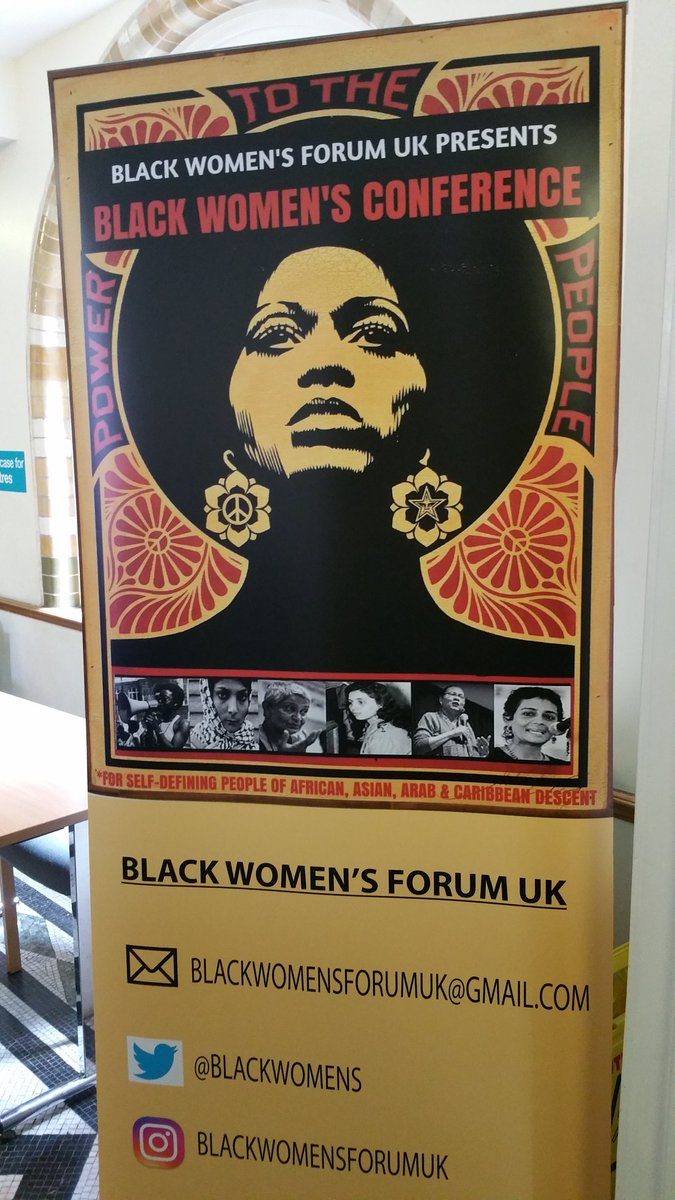
Last weekend, we attended the Black Women’s Conference. This is an annual event organised by The Black Women’s Forum that  aims to provide a safe space to share, empower and engage with women of African,  Asian, Arab and Caribbean descent living in the UK. It provides a forum for open, honest discussion on issues affecting black women.

This year’s conference was the fifth anniversary of the event and the theme of the conference was ‘Celebrating the Achievements of Women of Colour.’ The  program included panel discussions in the morning followed by workshops in the afternoon.

The panel discussions consisted of speakers from a variety of fields with the first panel focusing on black women in the creative and education industry and the second panel focused on black women in sports and business.  You can find out about all the speakers here

We were really inspired by all the speakers who took part in the panel discussions  and it was interesting to note that the message of the importance of our health and wellbeing was a theme that recurred in almost every presentation.

Black women in the business world face a lot of barriers and challenges which were clearly illustrated by the speakers as they shared their stories of racism and sexism. This core barrier of racism has led to loss of opportunity, difficulties in securing investment, daily battles with “the system”, lack of career progression and so much more.  Fighting these inequalities every single day is tough, affects our wellbeing and can thus impact both our physical and mental health.

We applaud the honesty of Imriel Morgan, the Chief Executive of the Shout Out Network and co-host of Melanin Millennials who spoke with passion about the pioneering work that she’s doing in the podcasting world and the challenges she has faced. This has included difficulties getting her podcast onto well-known platforms which lack diversity and seem not to embrace black podcasts and organising the first ever black podcasting festival. Imriel spoke of the frustrations of not being able to access investment despite being an award-winning podcast and then very movingly tried to fight back tears as she told us that being a black female Chief Executive is really tough. Imriel opened up and was very honest about her experience with depression saying “the struggle is real” and spoke about being on anti-depressants.

We have to do something about this. We have to make sure that black business women have all the support that they need to fight these battles and get through them with their physical and mental health intact. One solution that was discussed throughout the day was the need for black women to come together to form supportive networks so that women have a support system and don’t feel alone in the corporate world.

We feel there is much to do in this area and will explore what we can do as a charity to support black business women.