Contacts

Bird Rock, St Kitts, St Kitts and Nevis, West Indies

info@lakehealthandwellbeing.com

+1 869 765 8702

Tag: mental health

Six Principles to Nurture Balance and Peace in Your Life
Blog

Six Principles to Nurture Balance and Peace in Your Life

The COVID-19 pandemic has left many of us feeling anxious and uncertain about the future and with this in mind, we are delighted to share some tips from NJC Therapy Practice to help you find some inner peace during this difficult time.

Six Principles to Nurture Balance and Peace in Your Life

  1. Find your calm before you start anything (e.g. deep, slow breaths; visualization; whatever works for you)
  2. Know you control your thoughts (limitless possibilities)
  3. Know you control your actions (pause and decide how you’re going to act)
  4. Everything is neutral (until you give it meaning i.e. how you look at it e.g. cup half full or empty)
  5. Each day, find the joy in simple things (do what makes you laugh out loud/grin)
  6. Begin and end your day with gratitude (appreciate someone or something)

About NJC Therapy Practice

NJC Therapy Practice aims to help their clients use their unique inner strengths and passion to take control of their lives. They offer a variety of life-enhancing and holistic programmes that are tailored to your individual needs incorporating the following approaches:

  • Life coaching
  • Hypnotherapy
  • Educational Performance Programme
  • Self Help Publications and Audio Recordings
  • Hypnosis Meets Sports
  • Specialisms: Stress management, weight control and performance management

To find out more about NJC Therapy Practice, you can visit their website, follow them on Twitter or send them an email

Photo Credit

Ian Kiragu

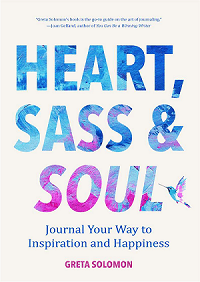
Greta Solomon introduces her new book Heart, Sass & Soul, all about the life-changing power of freewriting and journaling
Mental Health

Greta Solomon introduces her new book Heart, Sass & Soul, all about the life-changing power of freewriting and journaling

In today’s blog, we’re delighted to have spoken to author and writing coach, Greta Solomon.

Greta talked to us about the health benefits of journaling and how she’s helping women tap into this empowering and therapeutic pastime through her new book Heart, Sass & Soul

Tell us about your new book

Heart, Sass & Soul is a warm, honest, deeply supportive guide to journaling your way to a life that not only looks good – but feels good. One where you’re not trying to be an all-round girl boss / vixen / superwoman who rises at dawn to slay like Beyoncé. Instead, you’re aiming to be more and more YOURSELF, because that’s where your true power lies.

There has never been a better time to be your own guru. Freewriting and journaling in the ways laid out in this book can be life-changing – for all the right reasons. They put you in charge of what YOU think and feel, which is a welcome relief in this hyper connected world. And while there are lots of beautiful journals on the market, there are very few comprehensive guides on how to USE them to create magic and meaning in your life.

Why did you write this book?

I wanted to show people exactly HOW to journal. Not in a 1-2-3 step kind of way. But how to access the deeper parts of you, and how to clear the creative blocks that may stop you from journaling in the first place.

Writing has unlocked so many doors for me (and not just because I became a journalist who got paid to interview celebrities, go to events and drink champagne at parties)! Through my life and work I realised that through writing I ask for things that I wouldn’t dare speak out loud. Better still, I could write things into existence. Things that were never there before, except for wishes or dreams in my head. And when there were very dark, difficult times, writing has been a helpful friend. My mother committed suicide 11 years ago and writing helped me to heal and chart a new path.

From a professional point of view, I began writing this book in 2016 at a time when I needed a break from my business. I had spent four years pitching, developing, creating and delivering business writing workshops (alongside being pregnant and then a new mum).  And I needed to get back in touch with myself. I cleared my schedule with the aim of doing nothing in particular. And that’s when the yearnings, inklings and frantic writing began. After years of writing to order, I finally wrote what I wanted to write. At first it was like clearing the phlegm from my writing throat. But soon, the channel was open, and the essence of this book flowed. As did a workshop in writing for creative self-expression which sold out within hours. I knew I was onto something and I began to realise the true power of writing for creative self-expression.

We didn’t realise that writing and journaling could be so empowering. What are the other health benefits of journaling?

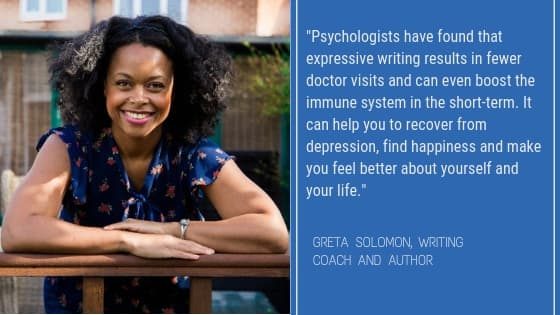
 Psychologists have found that expressive writing (where you write about thoughts and feelings) results in fewer doctor visits and can even boost the immune system in the short-term. It can help you to recover from depression, find happiness and make you feel better about yourself and your life. In Heart, Sass & Soul, I show readers exactly how to journal in order to overcome self-doubt and develop a new creative identity; transform dark times into something beautiful; find moments for healing themselves without judgement and to become empowered with uninhibited self-expression. I also love the fact that all you need to journal is a notebook and a pen. Journaling is cheap and can pretty much be done anytime and anywhere. It literally puts the power of self-care and wellbeing into your own hands.

What is your link with St Kitts and Nevis?

 My dad and his family are originally from St Kitts and my dad grew up in Nevis. We actually lived in Nevis for a year when I was five before returning back to the UK, to London. So these island have always been an integral part of my life.

Is there anything else you’d like to tell our readers?

 My mission is to build a thriving community of empowered, self-expressed women, who know exactly what they think and feel, who can face uncomfortable emotions head on, access their higher wisdom and tap into the creative current of life.  Meaning is made from walking through loss and grief, not from dancing around it. And a joy-filled life is not only possible, but inevitable when you are creatively free. When you are ready to answer the call, I’d be honoured to be your guide.

Where can our readers order a copy of Heart, Sass & Soul?

Heart, Sass & Soul by Greta Solomon is published on 15 April 2019, and is available to pre-order now on Amazon.


Special Offer!

We’re delighted to say that Greta is offering a free writing masterclass worth £77 for everyone who pre-orders Heart, Sass & Soul before 15 April. To claim that gift please visit https://www.gretasolomon.com/preorder-gift-with-heart-sass-soul

About Greta Solomon 

Greta Solomon is a British journalist turned writing coach and the author of Heart, Sass & Soul: Journal Your Way to Inspiration and Happiness. In 2006, she discovered a talent for helping people overcome the blocks, fears and shame that stops them from fully expressing themselves. Through talks, workshops and online programs, she teaches real-world writing techniques and inspires others to live rich, full lives. Her work has been featured in Forbes.com, The Numinous and The Huffington Post. She is a published poet and songwriter, a psychology graduate, certified life coach, trained lifelong learning teacher and holds a specialist certificate in lyric writing from Berklee College of Music. She lives in London with her husband and their daughter.

And, you can find Greta on Instagram and on twitter

Women in Black by IC Blackman
Blog

Women in Black by IC Blackman

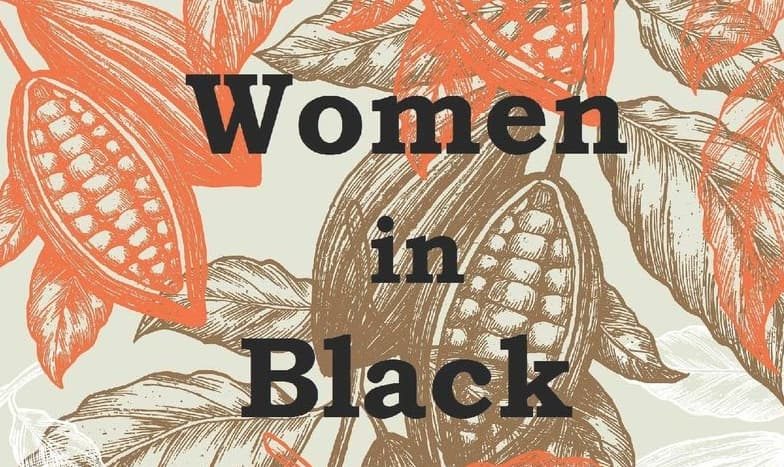
We had the pleasure of reading Women in Black, a new book by IC Blackman. This book was an insightful, emotional and thought-provoking journey of the intergenerational trauma caused by slavery.

An Overview of Women in Black

Women in Black consists of a collection of short stories connected by family (the Nesbitts and the Tibbins), a much-loved brand of chocolate (Nesbitt’s Chocolate), delicious sweet potato pone and an old colonial home (Halycon’s Crest). This connection was a nice surprise, one we weren’t expecting at all, but really liked as it brought some intrigue to the stories. So much so that once we noticed these links, we stopped and re-read a few chapters to make sure we understood the various different connections that explored the experience of several generations of a family.

The book starts with ‘The Baying of the Bloodhounds’ which is set in Trinidad in the late 1700s and follows the story of Ezra Tibbins, a runaway slave making her way to freedom while being pursued by her owner’s bloodhounds. As Ezra tries to make her way to freedom we’re swept along her emotional journey of strength, hard decisions and her commitment to finding freedom on her own terms.

From there we move on to ‘Bridal Shop’ which takes us forward in time to Trinidad in the 1950s/60s. Here we are met with Chief Bridal Shop Assistant Pamela Tibbins and read about her humble beginnings, hunger for the good life, grand ambitions and explore how she navigates her life. Will she break free or succumb to the challenges of her lot in life?

In ‘Bitter Dark Chocolate’ we’re transported to Trinidad in the 1990s and join widowed, retired nurse Selma Nesbitt-Payne who makes her regular visits to Ward 504 to visit its patients. This story isn’t what is seems and is best described by the author herself:

“This story takes us into the world of a retired psychiatry Sister who once worked on Ward 504. It uses surrealism to explore the unappreciated outcomes of unchecked privilege: guilt, suspicion and ultimately a tortured existence, despite the best intentions and material comforts.”

 From here we are introduced to the mother and daughter calypso duo, Big Titi and Little Dee, in ‘Big Titi and Little Dee’s Grand Piano.’ Here we meet two generations of the Tibbins family, whose poverty and what appears to be the Tibbins curse leads them to a turbulent life. Sadly, despite all the talent and potential in the world, they too are unable to break free of the intergenerational trauma inflicted on their family.

Then we get to the final story  in Women in Black, ‘Housewife – The Five Acts of Elspeth Sweetening.’ Will there be redemption for this troubled family, will they finally break free from intergenerational trauma. We’ll let you find out 😉

Our Thoughts on Women in Black

 This was an emotional and, at times, difficult read providing insight into the intergenerational trauma caused by slavery. A trauma that has not been sufficiently addressed.

As we read this book, we were reminded of Dr Joy DeGruy’s Post Traumatic Slave Syndrome (PTSS) theory, a topic that we were introduced to many years ago.

IC Blackman very emotionally and poetically gives an illustration of Dr DeGruy’s theory of how: “Slavery produced centuries of physical, psychological and spiritual injury” and highlights the importance of understanding PTSS and the themes raised in IC Blackman’s book so that we can lay: “the groundwork for understanding how the past has influenced the present, and open up the discussion of how we can use the strengths we have gained to heal.”  (Dr DeGruy).

This is a good read, that challenges us in many ways, both in the subject matter and in the way it is written – this is a complex and deep writer who uses satire, dark humour, magic realism, surrealism , Trinidadian folklore and an advanced writing style, so you do have to engage your brain from the very beginning. Once you do, you’re in for an interesting literary experience.

More Information

To find out more about Women In Black you can visit Amazon or IC Blackman’s website, and you can follow IC Blackman on Twitter .

Additionally,  you can check out other books we’ve read here.

OH Services’ Online Course Delves into the Emotional Impact of Fibroids
BlogFibroidsOH Services

OH Services’ Online Course Delves into the Emotional Impact of Fibroids

Back in 2013 we conducted a survey to understand the needs of women affected by fibroids. As we conducted this survey, we kept hearing very strong words and phrases describing how living with fibroids was affecting the mental health of women.

“I have hated life at times because of fibroids. I feel like I am being punished for something.”

“Depression from feeling that my only options were drugs or surgery”

“Fear of not being able to have children”

“Just a constant fear of what they could become”

As a result of this we started to explore this issue further by speaking to women who attended our fibroids awareness events and soon realised that this was a much wider problem. To compound this issue there was little information available, at the time, about the emotional impact of fibroids and no services to support women with fibroids in addressing these issues.

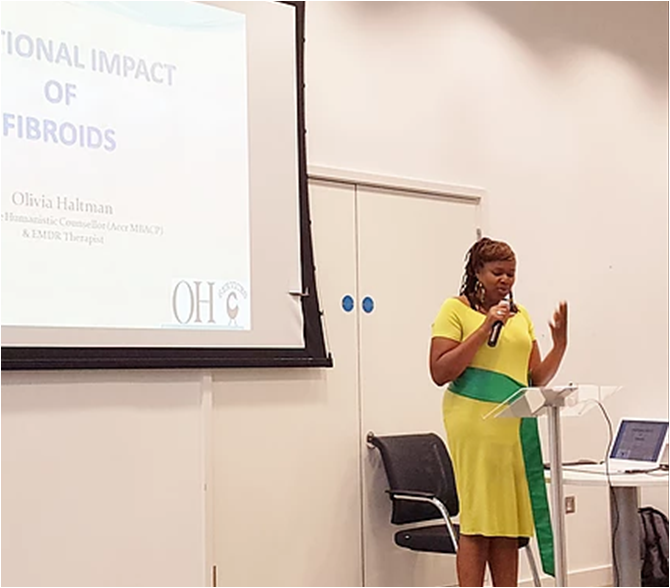
So, we decided to reach out to counsellor, Olivia Haltman, the founder of OH Services to speak at our Fibroid Focus event, a conference we held in 2016 for women with fibroids.

Olivia gave an excellent presentation that explored the emotional impact of fibroids explaining how fibroids can affect not just women’s physical health but their mental health too. The reaction from women after her presentation was profound, a stunned recognition that:

  • Other women feel the way I do
  • What I have been feeling isn’t trivial
  • Someone articulated exactly how I was feeling in a way that I never could
  • There is a way to address this aspect of my experience with fibroids

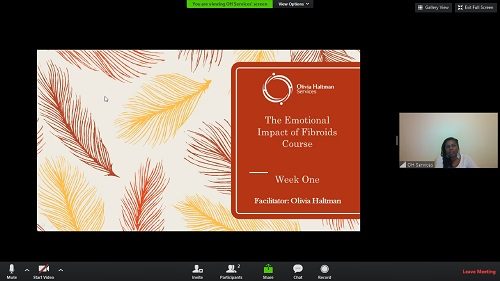
Following this event OH Services began work on developing their first 4-week online course on the emotional impact of fibroids. Not only was it a first for them but, to our knowledge, it is the first ever course on this topic. This course was launched in November 2018 and we had the pleasure of attending.

Over the 4 weeks OH Services created a safe space for women to come together to discuss the emotional impact of fibroids. As we listened to the discussion, we realised this was the first time that attendees were exploring this side of fibroids, and it was challenging. They were given the opportunity to reflect and explore their emotions and how these have been impacted by their experience with fibroids.

Ms Haltman explained with some clarity what specific emotions many women feel categorising them into the emotions that women may experience before and after a diagnosis, as well as some general emotions.

We learnt of the fear, anxiety and uncertainty that can occur in the lead up to a diagnosis which is particularly significant as many women with fibroids have symptoms weeks, months and sometimes years before receiving a confirmed diagnosis.

We also learnt of the emotional toll that managing symptoms such as pain, heavy bleeding and anaemia can have on a woman’s quality of life, affecting her personality, relationships, effectiveness at work and restricting the activities she can participate in.

Ms Haltman also described the difficulty of having to deal with treatment decisions, the potential of  a loss of fertility and the possibility of a recurrence after treatment.

The discussions during this course were insightful and thought-provoking and to ensure that participants made the most of each session, participants were given activities after each session to consolidate their learning.

The course ended on a positive note, one of hope and sisterhood with Ms Haltman taking participants through methods and techniques to address these emotions and start a self-development journey.

We really liked that the way this course was delivered. It was interactive and practical with participants being split up into groups to share experiences and explore specific topics. Also, the homework ensured that what was learnt in each session was explored further and applied immediately.

This course fills a huge gap and we believe it is much-needed so that women with fibroids have the support they need. Therefore, we highly recommend this course to anyone who has been affected by fibroids or is supporting a friend, family member or client with fibroids.

The next course starts on 6th March at 7pm UK time and you can register online here or for more information you can email ohservices@counsellor.com

More Resources and Information

Gardening for Good Mental Health
BlogGardening

Gardening for Good Mental Health

Welcome back to our Gardening and Health Blog Series!

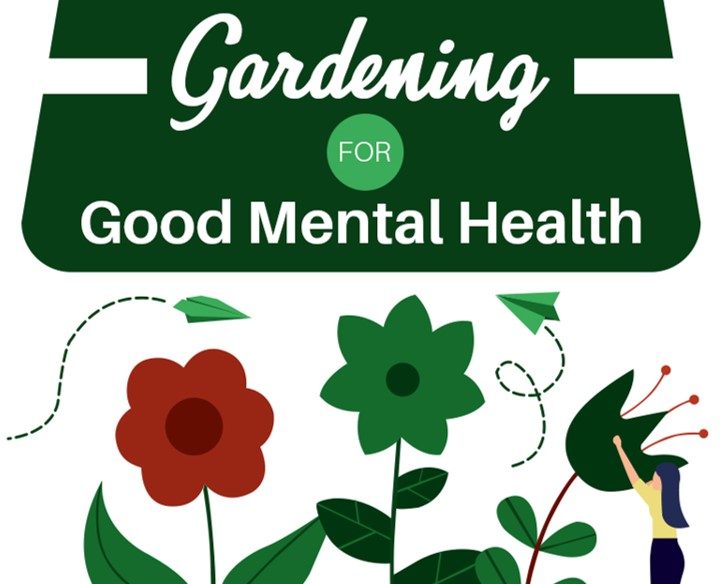
So far, this blog series has mostly discussed the benefits that gardening can have on your physical health. However, getting green fingered can also have a hugely positive effect on your mental health and wellbeing. This month’s post is brought to you by the folks at Capitial Garden Services and focuses on the mental health benefits of gardening which they illustrate very effectively in their infographic here.


The famed biologist, E.O. Wilson, once quipped that “Nature holds the key to our aesthetic, intellectual, cognitive and even spiritual satisfaction.” He coined the term Biophilia to describe human kind’s innate need to connect with the natural world, positing that this is why we tend to find it soothing to spend time in the great outdoors.

Numerous studies have highlighted various mental health and therapeutic benefits of gardening. For example, gardening has been found to energise the body and mind. The process of tending to plants has also been proven to help people develop nurturing skills. It has even been found to improve sleep quality. These outdoor activities can help to reduce stress by providing a much-needed refuge from the stresses of the fast-paced modern world.

In particular,  gardening is a perfect opportunity to practice mindfulness. By completing tasks that connect you with the natural world, you can engage all of your senses to appreciate the various sights, sounds, smells, tastes and textures of your surroundings. There are a few things you can do to put a mindful spin on common gardening jobs. For example, before getting started take a few moments pause to breathe and meditate. It’s also a good idea to incorporate elements into your garden design that stimulate the various senses, for example wind chimes or scented flowers.

To learn more, take a look at the infographic below from the team at Capital Garden Services which offers some great insights on why gardening is good for your mental wellbeing and provides several tips on how to garden for good mental health.

Infographic

Check out Capital Garden Services infographic on gardening for good mental health below.

null

null

Previous Blogs

If you missed the previous blogs in this series you can read through them here:

  1. Improving Our Health and Wellbeing Through Gardening: An Introduction
  2. How I Got Started
  3. Growing Tomatoes
  4. Growing Okra
  5. Growing Peppers
  6. Sour Oranges and Mangoes
  7. Soursop and Guava
Stress Management Through Emotional Intelligence
BlogMental Health

Stress Management Through Emotional Intelligence

Welcome back to our blog! Today, we’re delighted to have a guest blog submitted by Nina Johnson-Campbell of the NJC Therapy Practice.

Nina discusses how we can manage stress through emotional intelligence and provides some really useful tips that just require 10 minutes of your day. 

This is the second blog from Nina Johnson-Campbell, in her first blog Nina explored a new tool to support the wellbeing of children and adults. You can read her first post here


What Exactly is Stress?

Stress is a necessary, innate/natural part of our survival instinct and physiological make up; it motivates us to take action to keep us safe or to keep reaching just that bit further to achieve our dreams and aspirations; it’s the ‘fuel’ that propels us.

Stress only becomes a problem when the physiological and physical symptoms build up in our body without being released and as a result starts to negatively impact our: memory, concentration, emotions, thinking abilities, health, our overall wellbeing and eventually our mental health.

What is Emotional Intelligence(EI*)?

EI is the ability to recognise and understand your emotions and those of others; the ability to use that information to guide your thoughts and actions; the ability to empathise (and therefore build better, successful relationships).

How can Emotional Intelligence (EI) help to manage stress effectively?

  • Helps you to reduce excess stress as you better understand your emotions (becoming more self-aware);
  • Use that information to guide your thoughts and actions;
  • Increase your empathy through better understanding of others’ emotions, which in turn
  • Improves your relationships, at school, at home, in the work place** and socially.
  • Improving your emotional intelligence will help you to discover your inner strengths, remain calmer and in control in any situation.

Start to improve your Emotional Intelligence right now, today, by doing this simple exercise:

Set aside just 10  mins.

  1. Think of the last time you had a strong negative feeling towards someone, it may be a friend, partner, work colleague or even a stranger.
  2. Name the exact emotion you were experiencing in that moment (maybe anger, resentment, frustration, disappointment etc)
  3. Next take a few moments to explore why you were feeling that emotion (for example you may have felt mistreated, undervalued, ignored, inadequate, unloved).
  4. Now consider how the other person may have felt in that moment too, could they have been experiencing similar emotions? How do you know for sure how or what they were really thinking?
  5. As you’re now aware, you cannot be sure without further information what they were feeling/thinking. In light of this new awareness,
  6. Consider how you could have responded in a better/constructive way for you.
  7. What did you learn from that situation, good or bad?
  8. What will you do differently next time?

As it’s your response and not the situation that determines your outcome, take time to pause and by practising the few simple steps outlined above, I guarantee you will start to see better results as you  reduce your stress by taking control of your emotions, instead of them controlling you and allow space for you to think more clearly.

Remember as Confucius said:

‘Mighty is the man who can command an army of thousands, Mightier still is the man who can command himself’.

If you would like to discover how managing stress through EI could improve other areas of your life, please contact me at: Johnsm2643@gmail.com or visit my website www.life-njctherapy.co.uk


Notes

*M. Beldoch c.1964

** Some studies have shown that job candidates with higher levels of EI are often more successful; perform better once employed; make great managers and business owners ( Forbes.com; Times on Sunday; Harvard Business School)

The above article was  published in  2016: http://jamaica-gleaner.com/article/health/20161116/stress-management-through-emotional-intelligence

Copyright N.Johnson-Campbell (2016)

OH Services Emotional Impact of Fibroids Online Course
FibroidsNewsOH Services

OH Services Emotional Impact of Fibroids Online Course

OH Services will be launching their four-week Emotional Impact of Fibroids online course on 7th November. This course is aimed at women who have been affected by fibroids, professionals who would like to support and understand their clients better and family members and friends who would like to learn more about fibroids so they can help their loved ones.

The course will be led by Olivia Haltman who is an accredited Integrative Humanistic Counsellor and an Eye Movement Desensitization Reprocessing (EMDR) Therapist.  She is also a member of British Association for Counselling and Psychotherapy (BACP), EMDR UK & Ireland and BAATN (Black and Asian Therapist Network). Ms Haltman has over 10 years experience working in the mental health sector having worked for organisations like Mind and established her organisation to support people who want to develop their lives on a personal level and reach their best potential. Of her approach to tackling mental health issues she says:

“I believe everyone is different, with unique needs and aspirations so I use an integrative approach to apply and integrate the most suitable solutions for my clients. Within my practice, I also apply (where necessary) a holistic approach to help clients enjoy the essential benefits of wellbeing and healing processes.”

The Aim of the Course

This course will empower attendees, enabling them to

  • Get an understanding of how fibroids affect your emotions and life
  • Create a stepping stone to start a routine to work on their self-care
  • Create their own self-care plan
  • Learn how to support and understand others with fibroids
  • Start a self-development journey to improve their general wellbeing

It will be interactive and include: a lecture, break out exercises, Q & A, guest speakers, home work, hand-outs and a Certificate of Attendance upon attending the full 4 weeks.

Why Four Weeks? 

Usually workshops or seminars are a few hours with very important information, but once these sessions are over many people go back to their normal routine and lose motivation.  With a four week course OH Services will help you start to create a habit and assist you in dealing with what is going on in your life. This is a journey of reflection to explore how your emotions and fibroids are linked.

To give an extra boost to your journey OH Services has added a BONUS week (week 5) a few weeks after the course ends so you can check-in and monitor your progress.

We’ve Teamed Up With OH Services

We’re delighted to have formed a partnership with OH Services. We’ll be hosting a Fibroids Self-Care Webinar Series which starts on 27th October with a session on Fibroids, Diet and Hormones. The first few people who register for our webinar can claim a £5 discount on OH Services’ online course in November.

And, if you’ve already registered for the OH Services course and were one of the first 10 people to do so, you can claim a 10% discount on one of the seminars in our Fibroids Self-Care Series.

More Information

For more information you can visit OH Services Eventbrite page, visit their website or email us

Be Prepared. Period.

Disclosure: this post contains an affiliate link. Find out more here

Episode 13: Public Health Project Spotlight – Brothers Thrive
PodcastsUncategorized

Episode 13: Public Health Project Spotlight – Brothers Thrive

Wednesday 9th May, 2018

In this episode we put the spotlight on an interesting public health project, Brothers Thrive, a community-based mental health project aimed at black men in New York.

Our May #FibroidsChat is with Olivia Haltman
FibroidsNewsOH Services

Our May #FibroidsChat is with Olivia Haltman

We’re delighted to announce that our May Fibroids Twitter Chat is with Olivia Haltman on 30th May 2018 at 7pm, GMT (that’s 11am PST, 2pm EST and 2pm AST).

Olivia Haltman is an accredited Integrative Humanistic Counsellor and an Eye Movement Desensitization Reprocessing (EMDR) Therapist.  She is also a member of British Association for Counselling and Psychotherapy (BACP), EMDR UK & Ireland and BAATN (Black and Asian Therapist Network).

Olivia set up OH Services in 2010 to support people who want to develop their lives on a personal level and reach their best potential. She is passionate about self-development and helping others take positive steps on their life journey. ​

She has worked in the Mental Health Sector for over 10 years, supporting people from all backgrounds, genders and lifestyles.  She believes everyone is different, with unique needs and aspirations so she uses an integrative approach to apply and integrate the most suitable solutions for her clients.

​She also applies (where necessary) a holistic approach to help clients enjoy the essential benefits of wellbeing and healing processes.

We’ll be discussing the emotional impact of fibroids and how women with fibroids can improve their emotional wellbeing.

Join us for a very important and useful exploration of how fibroids impacts a women’s mental health. To take part in this conversation find us on Twitter on 30th May and use the hashtag #FibroidsChat

You can find out more about Olivia and the services she offers here: www.ohcounsellingservices.com

Episode 7: We talk to counsellor Olivia Haltman about the emotional impact of fibroids
PodcastsUncategorized

Episode 7: We talk to counsellor Olivia Haltman about the emotional impact of fibroids

Wednesday 28th March, 2018

In this week’s episode we had a really interesting and informative discussion with Olivia Haltman about the emotional impact of fibroids and how women with fibroids can improve their emotional wellbeing.